Products
 Bars
Bars
 Beads & Spheres
 Bolts & Nuts
 Crucibles
 Discs
Discs
 Fibers & Fabrics
 Films
Films
 Flake
Flake
 Foams
Foams
 Foil
Foil
 Granules
 Honeycombs
 Ink
Ink
 Laminate
 Lumps
Lumps
 Meshes
 Metallised Film
 Plate
Plate
 Powders
 Rod
Rod
 Single Crystals
 Sputtering Target
 Tubes
Tubes
 Washer
 Wires
Wires
 Converters & Calculators
 Write for Us



What Are the Types of Optical Materials?

What Are Optical Materials
Optical materials are substances that react to electromagnetic radiation in the visible, ultraviolet (UV), or infrared (IR) spectrum. Their shared characteristic is their interaction with light: they can bend it (refraction), absorb it (attenuation), reflect it (mirrors and coatings), or allow it to pass through (lenses and windows).
These interactions are based on the materials' optical constants, mainly the refractive index (n) and extinction coefficient (k), which are decided by their bonding and atomic structure. Transparent materials like fused silica, for instance, have low absorption and a constant refractive index, making them ideal to be used in lenses and optical fibers.
Optical materials can be natural, such as quartz, calcite, or sapphire, or man-made, such as lithium niobate, gallium arsenide, and designed polymers. Their microstructure and chemical makeup determine how well they manage light for a specific task.
How to Classify Optical Materials
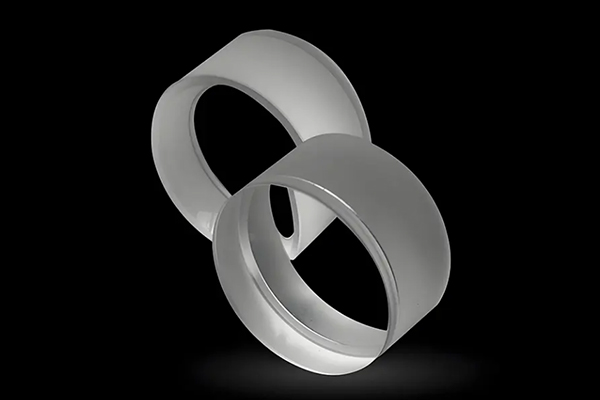
They are compositionally categorized into inorganic and organic materials. Inorganic materials like optical glass, single crystals, and ceramics are valued for their stability, hardness, and resistance to high temperature. Organic materials are mostly polymers and plastics that offer lightweight, flexible, and inexpensive solutions for optical components.
By optical function, materials are categorized according to the way they interact with light. Transparent materials such as quartz and silica allow light to pass through them with minimal loss and are thus utilized in lenses and windows. Reflective materials such as aluminum and silver coatings are designed to reflect light efficiently and are applied in mirrors. Refractive materials like optical glass are meant to bend or focus light with accuracy, while diffractive or photonic materials, like photonic crystals, manipulate light through interference patterns or periodic nanostructures for highly specialized optical effects.
Finally, optical materials are classified by application. Passive materials—like glass lenses, mirrors, and transparent windows—are employed mainly to guide, transmit, or transform light without altering its basic properties. Active materials, like electro-optic and nonlinear optical crystals, are capable of modifying their optical properties in response to external factors such as electric fields, temperature, or light intensity.
Types and Examples of Optical Materials
1. Optical Glass
Optical glass is probably the most fundamental optical material. It's valued for its clarity, homogeneity, and for refracting light accurately. Common examples are crown glass (soda-lime based) and flint glass (lead based), both of which have different refractive indices as well as dispersion properties.
• Applications: Camera lenses, microscope lenses, telescope lenses, and eyeglasses.
• Example: BK7 glass, a borosilicate crown glass, is widely used due to its low inclusions and high transmission.
• Case Example: The Hubble Space Telescope employs super-pure optical glass mirror coatings of aluminum and magnesium fluoride to give high reflectivity across UV to IR wavelengths.
2. Optical Crystals
Crystals possess ordered atomic structures that result in exceptional optical effects like birefringence, nonlinear frequency conversion, and electro-optic modulation.
• Typical Crystals: Quartz (SiO₂), sapphire (Al₂O₃), lithium niobate (LiNbO₃), and potassium dihydrogen phosphate (KDP).
• Uses: Frequency doubling of lasers (e.g., green laser pointers make use of KTP crystals), acousto-optic modulators, and optical switches for fiber-optic systems.
• Example: Lithium niobate is extensively used in 5G telecommunication system modulators thanks to its strong electro-optic effect.
Crystals also perform well under extreme conditions—sapphire windows, for instance, can resist temperatures above 1500 °C and high pressure, making them a good choice for aerospace and industrial sensors.
3. Polymers
Optical polymers are replacing glass in applications where cost, weight, and flexibility are most important. These polymers can be molded into complex shapes and are extremely optically clear.
• Typical Polymers: Polymethyl methacrylate (PMMA), polycarbonate (PC), and cyclic olefin polymers (COP).
• Uses: Displays for smartphones, covers for LED lights, lenses for virtual reality, and headlamps for cars.
• Example: PMMA (acrylic) having a refractive index of around 1.49 transmits around 92% of visible light—comparable to glass at half the weight.
A practical application is the use of polycarbonate lenses in safety goggles and helmet visors, where impact strength and optical transparency are both wished for.
4. Thin Films
Thin films are nanometer- to micrometer-thick layers deposited on surfaces to modify their optical properties. They control reflection, transmission, and absorption by the utilization of interference effects between layers.
• Materials Used: Oxides (SiO₂, TiO₂, Al₂O₃), metals (Ag, Au, Al), and nitrides.
• Applications: Anti-reflective coatings on camera lenses, solar cell layers, optical mirrors, and filters.
• Example: The standard anti-reflective coating utilizes alternating thin layers of silicon dioxide and magnesium fluoride (MgF₂) for reducing glare on glass lenses by more than 95%.
Case Example: Multilayer thin films in solar cells enhance light trapping and efficiency, resulting in higher power output.
5. Photonic Crystals
Photonic crystals are advanced materials with periodic structures that control the movement of light—just like semiconductors control electrons. Their structure allows for photonic bandgaps, which block specific wavelengths and allow others.
• Applications: Optical fibers, sensors, LEDs, and laser cavities.
• Example: Silicon photonic crystals are instrumental in developing integrated optical circuits that replace traditional copper wiring in data centers, allowing for faster and more energy-efficient communication.
• Research Frontiers: Scientists are working on photonic crystal fibers that transmit light with virtually no loss, making ultra-high-capacity internet transmission a future possibility.
Conclusion
Optical materials form the foundation of modern photonic and optical technologies. Optical materials range from the glass lenses of everyday cameras to lithium niobate crystals in telecommunications equipment and photonic crystals facilitating next-generation computing. Each type—glass, crystal, polymer, thin film, or photonic structure—possesses a unique set of optical and physical properties suitable for specific demands. For additional technical information and specialty optical materials, visit Stanford Advanced Materials (SAM).
Frequently Asked Questions
Q: One of the ordinary glasses for use in optical instruments is what?
A: Crown glass is utilized very often in optical lenses and other precision components because it has clarity and a moderate refractive index.
Q: In what ways are polymer optical materials different from glass?
A: Polymers are lighter in weight and more flexible, while glass has higher optical clarity and better scratch and heat resistance.
Q: Why are crystalline materials special in optics?
A: Quartz and calcite crystals are birefringent and exhibit electro-optic effects, making them essential for laser systems, modulators, and polarizing devices.
 Chin Trento