
 Products
 Bars
Bars
 Beads & Spheres
 Bolts & Nuts
 Crucibles
 Discs
Discs
 Fibers & Fabrics
 Films
Films
 Flake
Flake
 Foams
Foams
 Foil
Foil
 Granules
 Honeycombs
 Ink
Ink
 Laminate
 Lumps
Lumps
 Meshes
 Metallised Film
 Plate
Plate
 Powders
 Rod
Rod
 Single Crystals
 Sputtering Target
 Tubes
Tubes
 Washer
 Wires
Wires
 Converters & Calculators
 Write for Us



Metal Injection Molding: Everything You Need to Know

Description
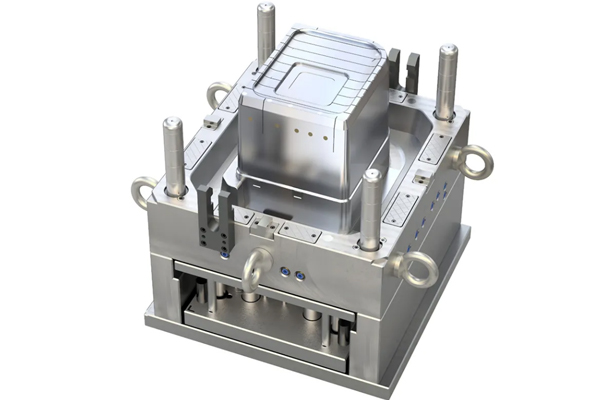
Metal injection molding is a process that combines the best parts of metal working and plastic molding. It uses fine metal powders and binder materials. These are mixed into a feedstock that is injected into a mold. The process is similar to plastic injection molding. After molding, the part goes through a debinding and sintering stage to remove the binder and fuse the metal particles. The result is a dense and strong component.
This method has helped many industries. It allows the production of complex and precise parts. It is a cost-effective way to produce small parts in large volumes. The technique adds consistency to every part based on the same mold. The result is a high degree of accuracy with a smooth surface finish.
Understanding Metal Injection Molding
Metal injection molding is not a new concept. It has been around for many years. The process was developed to address the limits of traditional metal casting and machining. Early research came from the need to make parts for the defense and automotive industries. In simple words, metal injection molding fills a gap where precision and high volume meet.
The process works in several steps. First, a feedstock is prepared by mixing fine metal powders with a binder. Next, this blend is injected into a precision-made mold. The molded part then goes through a debinding step where most of the binder is removed. The final step is sintering, where heat bonds the metal particles. This heat treatment gives the part strength and durability.
Research over the years has improved the process. Many experts now use it for a range of sizes and shapes. The process benefits from advances in material science and machinery. It is an example of how old methods can be improved with modern technology.
Why Is Metal Injection Molding Widely Used?
Metal injection molding is widely used for several reasons. First, it makes it possible to manufacture very complex parts that would be hard to produce with traditional techniques. Second, it offers excellent repeatability and precision. Companies that need many similar components benefit from this consistency.
Cost is another factor. The process reduces material waste because of its near-net-shape production. In many cases, there is less need for additional machining. This efficiency helps lower overall production costs.
Many industries rely on metal injection molding. The automotive sector uses it to produce small, high-performance parts. The medical field uses it for precision surgical instruments. Even the electronics industry has adopted the process for making critical components. The method has been proven time and again as a solid choice for high-volume production.
Materials Suitable for Metal Injection Molding
Various metals work well with injection molding. Stainless steel is the most common material used. It is strong and resistant to rust. Stainless steel parts often appear in the automotive and medical fields.
Other metals are also suitable. Titanium is often chosen for its strength and light weight. It can handle high stress and harsh environments. Copper and its alloys show good electrical and thermal properties. These metals are popular in the electronics industry. Additionally, nickel and cobalt alloys are used. They offer high strength and wear resistance, which is useful in aerospace applications.
Even though metal injection molding can work with many metals, the choice of material usually depends on the application. In some cases, a company might choose a material for its cost efficiency. In others, strength or conductivity might be a deciding factor. Many companies run trials to decide which material offers the best balance of properties.
Key Applications of Metal Injection Molding
Metal injection molding finds use in a range of applications. In the automotive industry, one common example is the production of small, precision components like gears and filters. These parts benefit from the tight tolerances that the process offers.
In the medical field, the process is used to create surgical tools and implantable components. Parts made from biocompatible metals pass strict quality standards. In the electronics sector, metal injection molding is used to produce switches, connectors, and casings for electronic devices.
Another key application is in the aerospace field. The process helps in creating components that must withstand high levels of stress and temperature changes. Parts produced by metal injection molding often have complex geometries that traditional methods cannot achieve easily. The process also helps when weight is critical. Parts can be engineered to be both light and strong.
Manufacturers have turned to metal injection molding when they need parts with intricate designs and fine details. The method allows the production of components that would be nearly impossible using conventional machining.
Conclusion
Metal injection molding is a mature and trusted method in the world of manufacturing. It brings together precision, efficiency, and a wide range of applicable materials. Many industries rely on this process for high-quality parts. With advances in technology and materials, its use is set to increase even more. Today, the process stands as a reliable option for creating small, high-performance, and cost-effective components.
Frequently Asked Questions
F: What is metal injection molding?
Q: Metal injection molding is a process that forms components by injecting a
metal-binder mix into a mold.
F: How are the parts strengthened?
Q: The molded parts are heated in a sintering process to bond metal particles
and build strength.
F: What industries use this process?
Q: Automotive, medical, aerospace, and electronics industries rely on metal
injection molding.

 Chin Trento