
 Products
 Bars
Bars
 Beads & Spheres
 Bolts & Nuts
 Crucibles
 Discs
Discs
 Fibers & Fabrics
 Films
Films
 Flake
Flake
 Foams
Foams
 Foil
Foil
 Granules
 Honeycombs
 Ink
Ink
 Laminate
 Lumps
Lumps
 Meshes
 Metallised Film
 Plate
Plate
 Powders
 Rod
Rod
 Single Crystals
 Sputtering Target
 Tubes
Tubes
 Washer
 Wires
Wires
 Converters & Calculators
 Write for Us



Alumina Ceramics for the Structural Parts of Nuclear Reactors

Introduction
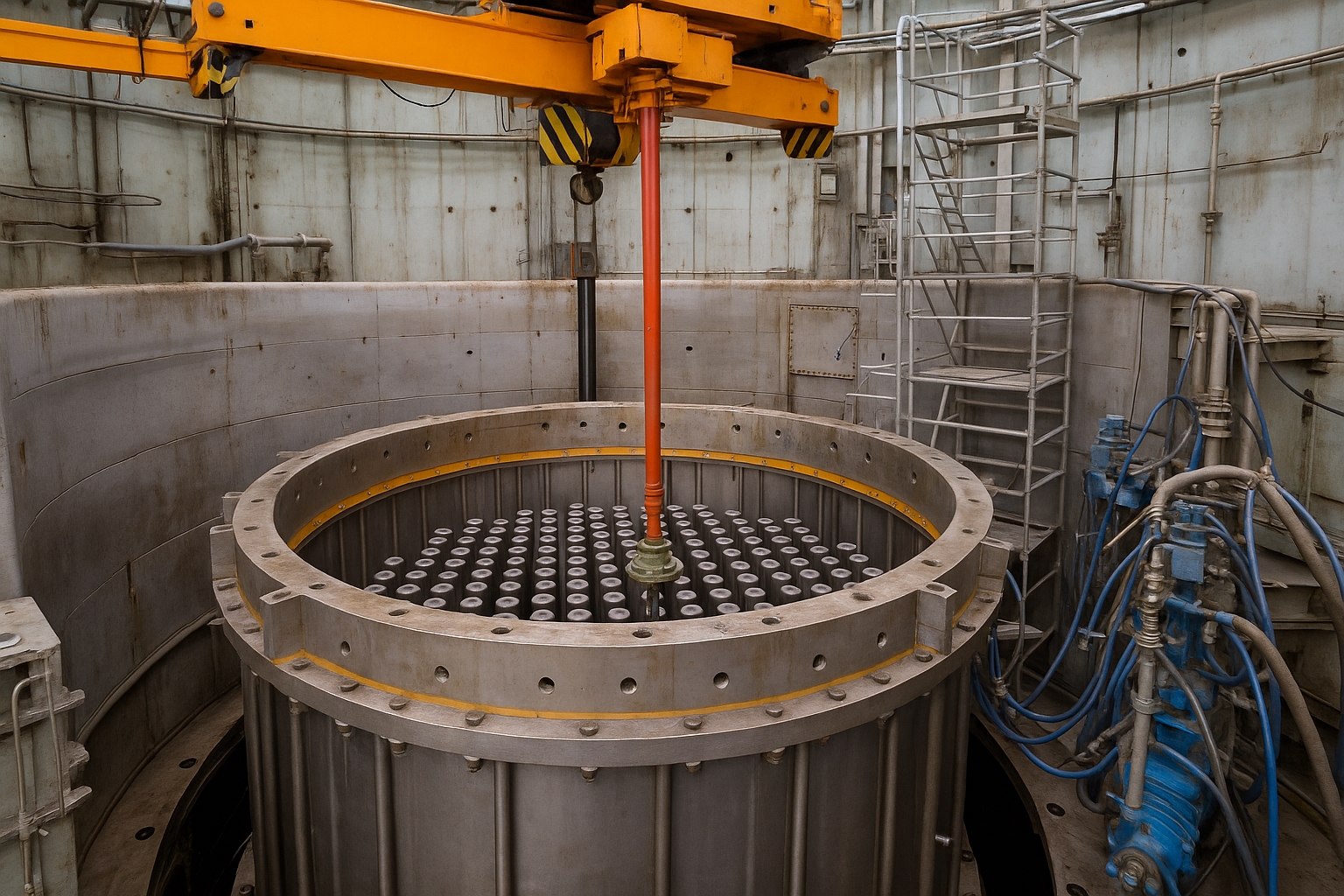
Nuclear reactors need materials that can tolerate high temperature, radiation, and stress. Reactor components need to be operated at high temperatures and high loads. They also need to be resistant to corrosion and radiation damage. Ceramics play a great role in advanced nuclear materials as they are not volatile under harsh conditions. Alumina ceramics, or aluminum oxide, stand out with their hardness, stability, and inertness.
Alumina ceramics are strongly resistant to melting and reactiveness. They are able to survive extreme operating conditions. Due to their properties, alumina ceramics are an ideal choice for nuclear reactor structures. The majority of scientists and engineers nowadays admire alumina for its performance in harsh nuclear environments.
Key Properties of Alumina Ceramics for Nuclear Applications
Alumina ceramics have a series of excellent properties that play a pivotal role in nuclear technology. Alumina ceramics have thermal stability and a melting point above 2000°C. They can therefore operate even if temperatures reach very high temperatures in reactor cores. Their mechanical strength is also remarkable. Alumina ceramics maintain hardness and are wear-resistant, thereby helping to reduce damage in reactor operation.
Radiation is a pervasive issue in nuclear reactors. Alumina ceramics are resistant to radiation. They are weakly activated by neutrons, i.e., they do not get radioactivity when bombarded by neutrons. They are less prone to corrosion due to their inertness. This is important as conditions in the reactor are likely to be chemically corrosive. All these properties make alumina ceramics an ideal material for critical nuclear uses.
Uses of Alumina Ceramics in Nuclear Reactor Bodies
Fuel Cladding and Coatings
Alumina ceramics are utilized in fuel cladding and coatings. They form a protective layer around the fuel rods. Ceramic coatings reduce wear and prevent corrosive conditions. Alumina can be employed as a barrier coating in certain designs. This prevents the emission of fission products, reducing risks from contamination.
For example, fuel rod coatings in certain advanced reactor designs have been greatly enhanced by alumina ceramics. The hardness and corrosion resistance of ceramic coatings enhance the fuel cladding life. Enhanced overall reactor safety has been a byproduct of alumina coating strength.
Insulators and Electrical Components
Nuclear reactor electrical components must be safe to operate at high temperatures. Alumina ceramics are excellent electrical insulators. They are used in instrumentation and control systems of reactors. Their dielectric strength is strong even under increased temperatures. Their ability to insulate proportionally is a feature that engineers find attractive when designing safe reactor control panels.
Electrical insulation of reactor cores is assisted by the high non-conducting properties of alumina. They lower the chance of fault at elevated temperatures. The majority of older nuclear plants as well as newer designs utilize alumina-based insulators.
Structural Components and Supports
Structural parts of reactor cores may also be fabricated with alumina ceramics. Filters, spacers, and support grids are some of the parts which benefit from the material's high strength. Alumina parts offer an excellent combination of thermal resistance and mechanical strength in high temperature gas-cooled reactors and other next-generation types of reactors.
Using alumina in structural support helps reduce the weight of reactor component parts. It also helps maintain the performance of reactors in conditions of stress. Ceramic supports have been used in designs where regular metals would fail under severe heat and radiation loading.
Neutron Moderator and Reflector Uses
In specific reactor designs, neutron reflection and moderation play an important role. Alumina ceramics serve their purpose in such applications. In some cases, alumina parts are positioned to change the direction of neutrons. Their utilization in neutron moderation helps manage the nuclear reaction to its appropriate level. Such adaptation improves reactor performance and safety through proper control of neutron flux.
Fabrication Techniques for Nuclear-Grade Alumina Ceramics
Certain specific fabrication procedures are needed for application in nuclear reactors using alumina. Techniques like powder processing and sintering are advanced for nuclear technologies. These processes entail careful grain size and densification control. Small grain size can improve radiation tolerance.
A number of coating deposition techniques are employed. Chemical vapor deposition is among them. This produces dense, uniform coatings that protect reactor materials. Manufacturing processes are engineered over time to meet strict nuclear regulatory requirements. These processes have been refined by engineers to obtain ceramic parts that meet the stringent nuclear industry requirements.
Conclusion
Alumina ceramics are a promising material for nuclear reactor structural components. They have good thermal stability at elevated temperatures, mechanical strength, radiation resistance, and chemical inertness. Application in fuel cladding, insulators, support structures, and neutron moderation helps increase performance and safety in reactors. Fabrication processes are adhered to rigidly such that ceramics are processed to nuclear-grade standard. With industry growth, the role of alumina ceramics will become increasingly significant in the design of next-generation reactors. For more advanced ceramics, please check Stanford Advanced Materials (SAM).
Frequently Asked Questions
F: Why is alumina ceramic employed in nuclear reactors?
Q: Because it possesses high thermal stability, satisfactory mechanical strength, and does not destabilize when exposed to radiation.
F: In what way does alumina ceramic protect fuel rods?
Q: It is used as a coating that protects fuel rods from wear, corrosion, and fission product release.
F: What is one common fabrication method employed in alumina ceramics?
Q: Powder processing and sintering operations, along with chemical vapor deposition for coating deposition, are generally employed.
 Chin Trento