Products
 Bars
Bars
 Beads & Spheres
 Bolts & Nuts
 Crucibles
 Discs
Discs
 Fibers & Fabrics
 Films
Films
 Flake
Flake
 Foams
Foams
 Foil
Foil
 Granules
 Honeycombs
 Ink
Ink
 Laminate
 Lumps
Lumps
 Meshes
 Metallised Film
 Plate
Plate
 Powders
 Rod
Rod
 Single Crystals
 Sputtering Target
 Tubes
Tubes
 Washer
 Wires
Wires
 Converters & Calculators
 Write for Us



Surface Functionalization of Alumina and Its Use in Antibacterial Materials

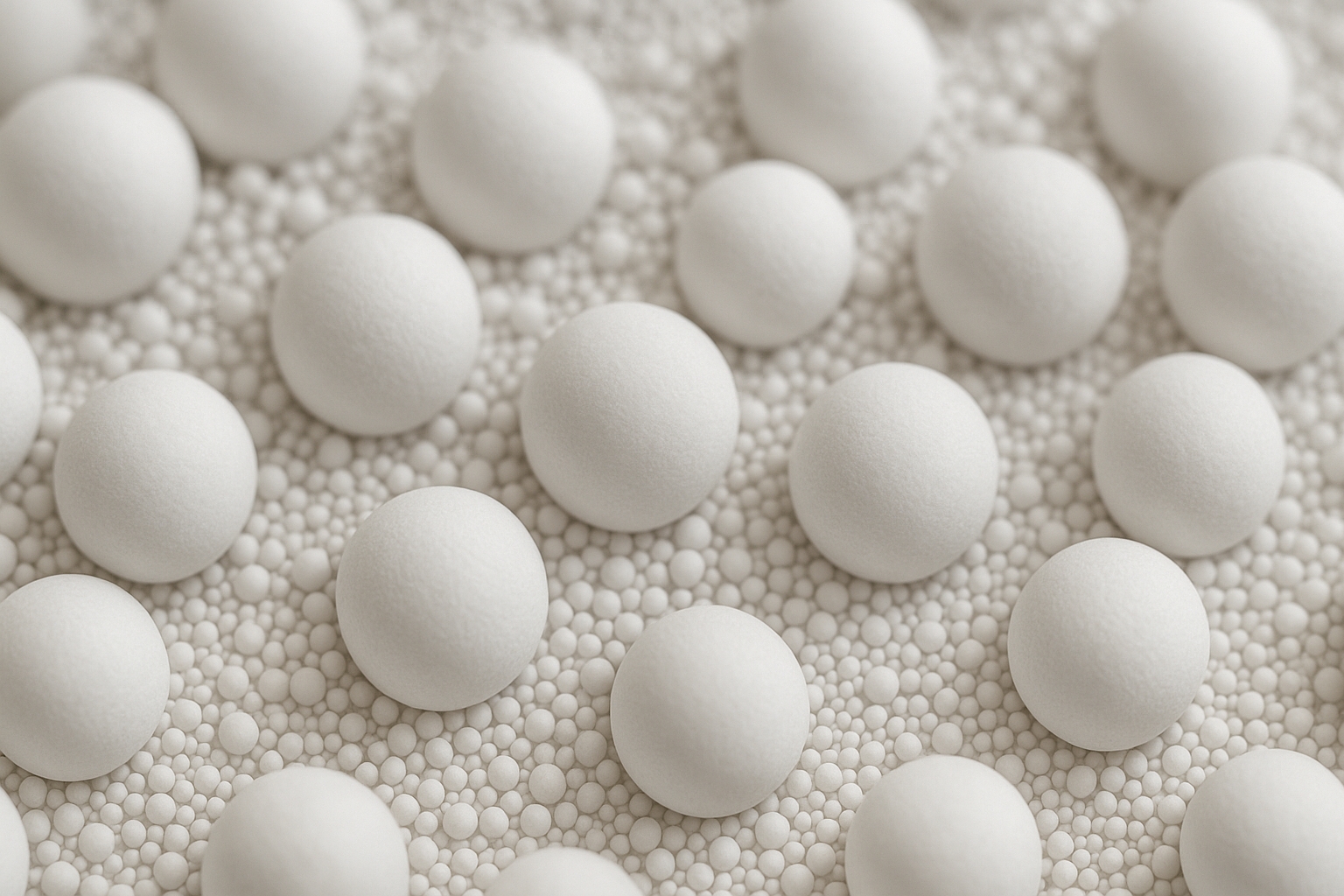
Alumina (Al₂O₃) is one of the most popularly used ceramic materials, valued for its thermal stability, mechanical strength, and chemical inertia. By nature, alumina is biologically inert. Within the last decade, surface functionalization has turned out to be a feasible way to extend the applications of alumina into biomedical and hygiene areas, especially for antibacterial purposes.
1. Overview of Methods for Surface Functionalization
In the general context, surface functionalization means modification of the material's outer layer in order to confer new chemical, physical, or biological properties to the material without altering its bulk characteristics. In the case of alumina, these are usually performed for enhancing surface reactivity, tuning wettability, improving its biocompatibility, or even making active antibacterial functions possible.
1.1 Silanization
Silanization is synonymous with anchoring organosilane molecules onto the hydroxylated surface of alumina. These silanes could bear epoxy, thiol, or amine groups to allow further chemical modification or immobilization of biomolecules. For instance, 3-aminopropyl-triethoxysilane (APTES) introduces amine groups which will later bind AgNPs or quaternary ammonium compounds.
1.2 Plasma Treatment
Plasma treatment changes the surface energy by bombarding ions of high energy and providing functional groups such as –OH or –COOH. These solvent-free activations have immense biomedical applications. For example, alumina treated with oxygen plasma enhances hydrophilicity and promotes adhesion of antibacterial coatings.
1.3 Atomic Layer Deposition (ALD)
Atomically precise ultra-thin antibacterial films, such as ZnO and TiO₂, are deposited using ALD onto porous or dense alumina surfaces. This technique uniformly coats substrates, even those with complex geometries, such as porous alumina scaffolds used in medical implants.
1.4 Layer-by-Layer Assembly
LbL assembly usually builds up multilayer films through the sequential deposition of oppositely charged polyelectrolytes or nanoparticles. This technique is particularly convenient to immobilize bioactive agents such as lysozyme or antimicrobial peptides on alumina surfaces.
2. Surface Modification-Based Antibacterial Mechanisms
Main pathways through which surface-modified alumina may exhibit antibacterial activity include:
- The release of antibacterial ions, such as Ag⁺ and Zn²⁺, is as a result of diffusion into bacterial cells, leading to the disruption of enzymatic processes.
- Contact-killing surfaces, with immobilized agents such as quats that compromise bacterial membrane stability upon contact.
- Generation of ROS-es especially in the case of photocatalytic coatings, like for example, TiO₂, which further induce cell components such as DNA and proteins to damage.
3. Experimental Studies & Data
3.1 Silver Functional
Wang et al. (2019) prepared alumina discs that were surface-treated using APTES silanization and in-situ reduction of silver. The outcome: Bacteria-killing rate exceeding 99.9% for both S. aureus and E. coli in four hours. Scanning electron microscopy revealed severe membrane damage. However, the result from the Inductively Coupled Plasma Optical Emission Spectrometry analysis showed Ag+ ion release for more than one week.
3.2 Zinc Oxide Films by ALD
In the study conducted by Zhao et al. in 2021, alumina substrates were plated with ZnO films using atomic layer deposition. A 50-cycle ZnO layer resulted in a 4 log reduction of CFU in P. aeruginosa after six hours of dark incubation, primarily due to the release of zinc ions. The ZnO films showed excellent antibacterial properties with low cytotoxicity towards human fibroblasts.
3.3 TiO₂–Alumina Composites
A study published in *Surface & Coatings Technology* in 2020 found a sol-gel TiO2 coating on alumina was able to reduce E. coli by more than 95% in two hours under UV-A lighting, with a strong photocatalytic ability and insignificant ion leakage of titanium even after several rounds (Chen et al., 2020).
4. Biomedical and Hygienic Applications
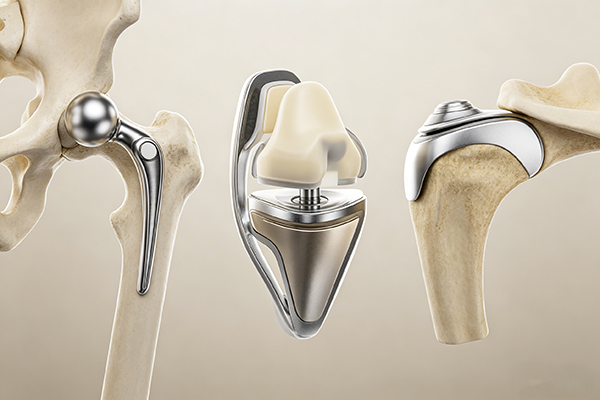
Functionalization of the surface of alumina ceramics has found increasing applications in many fields. The use of silver or ZnO-coated porous alumina structures finds applications as medical implants to reduce post-operative infections. The antimicrobial-functionalization of the surface of alumina finds application as surgical equipment and high-touch surface areas in hospitals to control the risk of infection. The use of an antimicrobial agent-functionalized alumina membrane is applied in water filtration to provide both filtration and antimicrobial actions. Antibacterial ceramic-coated surfaces are applied in the food sector to enhance hygienic processing and packaging. Conclusion With the introduction of active chemical species and manipulation of surface properties, surface functionalization can greatly expand the applications of alumina against bacteria. Evidence supports the increasing use of functionalized alumina ceramics in biomedical, environmental, and sanitary applications.
Frequently Asked Questions
1. What is alumina surface functionalization?
It's the chemical modification of the alumina surface to include antibacterial or other functionality.
2. Why is alumina not antibacterial in nature?
Because it is chemically inert and lacks biologically active surface sites.
3. How is alumina functionalized?
Some of the typical methods are silanization, plasma treatment, ALD, and layer-by-layer coating.
4. How do bacteria kill?
Through ion release (e.g., Ag⁺, Zn²⁺), contact with the surface, or ROS formation by photocatalytic coatings.
5. How effective is silver-coated alumina?
>99.9% bacterial removal in 4 hours (Wang et al., 2019).
6. Is ZnO-coated alumina biocompatible?
Yes. It is extremely antibacterial with minimal toxicity (Zhao et al., 2021).
References
Chen, L., Huang, Z., & Zhao, Y. (2020). Alumina coated with TiO₂ and its photocatalytic and antibacterial activity under UV-A illumination. Surface & Coatings Technology, 385, 125411.
Wang, Y., Liu, X., & Wang, H. (2019). Antibacterial performance of silver-functionalized porous alumina ceramics. Materials Science and Engineering: C, 102, 686–692.
Zhao, J., Zhang, D., & Li, Q. (2021). Atomic layer deposition of ZnO coatings on alumina for antibacterial applications. Journal of Biomedical Materials Research Part B: Applied Biomaterials, 109(2), 222–229.
 Chin Trento