
 Products
 Bars
Bars
 Beads & Spheres
 Bolts & Nuts
 Crucibles
 Discs
Discs
 Fibers & Fabrics
 Films
Films
 Flake
Flake
 Foams
Foams
 Foil
Foil
 Granules
 Honeycombs
 Ink
Ink
 Laminate
 Lumps
Lumps
 Meshes
 Metallised Film
 Plate
Plate
 Powders
 Rod
Rod
 Single Crystals
 Sputtering Target
 Tubes
Tubes
 Washer
 Wires
Wires
 Converters & Calculators
 Write for Us



Applications of Alumina in Optical Coating

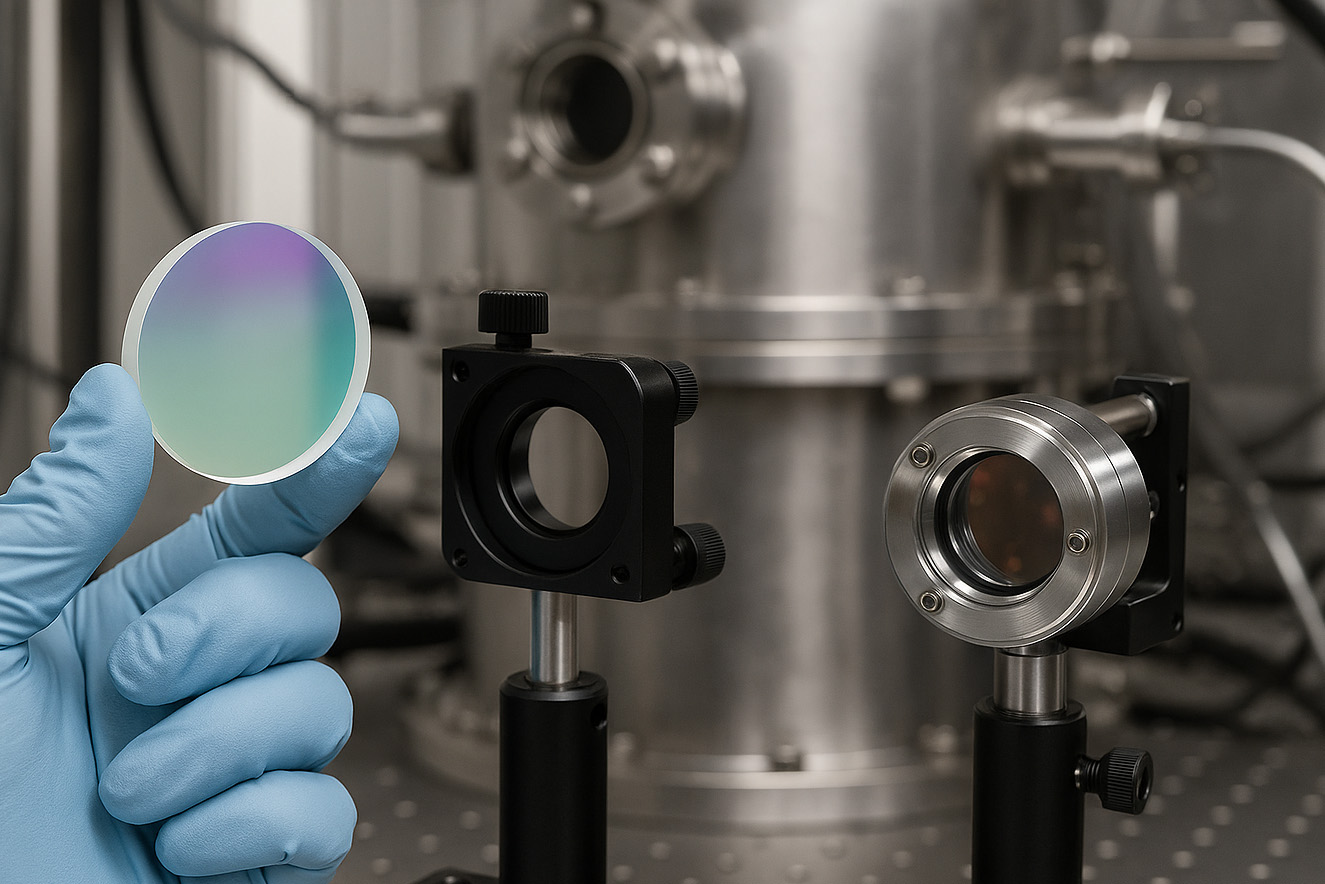
Alumina is a material that has found its place in optical coatings over the years. It is known for its stable physical properties and ease of use. In optical coatings, alumina adds strength, durability, and precision. Many optical devices depend on coatings that reduce glare, enhance light transmission, or protect delicate surfaces. Alumina is one of the best choices for these purposes.
Key Properties of Alumina
|
Property Type |
Property |
Typical Value / Description |
Relevance to Optical Coatings |
|
Optical |
Refractive Index |
~1.76 (at 550 nm) |
Suitable for anti-reflective and multilayer coatings |
|
Optical Transparency |
Transparent in 200 nm – 5 µm range |
Enables use in UV, visible, and IR optics |
|
|
Birefringence |
Low (isotropic in amorphous form) |
Minimizes distortion in optical paths |
|
|
Absorption Coefficient |
Very low (especially in IR range) |
Ensures minimal signal loss |
|
|
Laser Damage Threshold |
>10 J/cm² (1064 nm, ns pulses) |
Withstands high-energy laser exposure |
|
|
Mechanical |
Hardness |
~2000 HV (Vickers) |
Resists abrasion and wear |
|
Young's Modulus |
~380 GPa |
Provides mechanical stability in coatings |
|
|
Thermal Expansion Coefficient |
~8 x 10⁻⁶ /°C |
Compatible with many substrate materials |
|
|
~2072°C |
Excellent thermal durability |
||
|
Chemical |
Chemical Stability |
High (inert to most acids and alkalis) |
Long-lasting performance in harsh environments |
|
Moisture Resistance |
Excellent |
Prevents degradation in humid conditions |
|
|
Corrosion Resistance |
Strong resistance to oxidation and corrosion |
Ensures optical clarity over time |
Types of Optical Coatings Utilizing Alumina
Alumina is used in different kinds of optical coatings. Anti-reflective coatings using alumina reduce glare from instruments. Alumina can be combined with other materials in certain cases to achieve the best anti-reflective properties. Protective coatings is another application where alumina creates a scratch and wear protective covering. Alumina also has use in certain optical filters since it retains color and brightness. Use of alumina in multilayer films enables the management of multiple wavelengths within visible and infrared wavelengths. This efficiency is the reason why many organizations focus on alumina-based optical coatings for high-tech goods.
Techniques of Deposition for Alumina Optical Coatings
There are several methods utilized for depositing alumina in thin film form on surfaces. Sputtering is one of the most common methods wherein atoms are evaporated from a target material and condense in a thin film on the substrate material. The method produces coatings with improved adhesion and homogeneous thickness. Evaporation is another method that deposits alumina through controlled heating. Atomic Layer Deposition is also a common technique. It gives atomic-level thickness and film composition control. Every process is beneficial in its own right. Simply put, the choice depends on the need of the device and the end product desired. Most applications require strict control, and one of these methods is employed to make sure that alumina performs optimally.
Applications in Industries
Several industries leverage the properties of alumina in optical coatings. In the motor vehicle industry, alumina-treated coatings improve headlight lenses and instrument clusters. Alumina coatings in the aeronautics industry protect optical sensors in harsh environments. In semiconductors, films of alumina are employed in light-emitting components and protective covers over sensitive components. The healthcare industry uses alumina coatings in sterilizable devices that must be resistant. Even consumer electronics, like smartphone screens and camera lenses, benefit from scratch resistance and protection through alumina. In every situation, alumina provides stability, clarity, and durability to the optical systems.
Conclusion
The use of alumina in optical coatings is a fine example of blending basic science with practical application. Alumina offers clear optical performance combined with strong mechanical and chemical resistance. The layering of alumina in coatings provides protection and helps control how light behaves. Its proven performance over the years makes it a go-to material when a dependable optical coating is needed. For more advanced materials, please check Stanford Advanced Materials (SAM).
Frequently Asked Questions
F: What is the main benefit of using alumina in optical coatings?
Q: Alumina offers high optical clarity, scratch resistance, and chemical stability.
F: How is alumina typically applied as a coating?
Q: Methods include sputtering, evaporation, and atomic layer deposition.
F: In which industries are alumina optical coatings common?
Q: They are used in automotive, aerospace, semiconductor, and consumer electronics.
 Chin Trento