
 Products
 Bars
Bars
 Beads & Spheres
 Bolts & Nuts
 Crucibles
 Discs
Discs
 Fibers & Fabrics
 Films
Films
 Flake
Flake
 Foams
Foams
 Foil
Foil
 Granules
 Honeycombs
 Ink
Ink
 Laminate
 Lumps
Lumps
 Meshes
 Metallised Film
 Plate
Plate
 Powders
 Rod
Rod
 Single Crystals
 Sputtering Target
 Tubes
Tubes
 Washer
 Wires
Wires
 Converters & Calculators
 Write for Us



Common Metals for Biomedical Devices

Metals form a central part of biomedical devices. Their strength, durability, and biocompatibility make them suitable for many uses.
1. Titanium and Titanium Alloys
Titanium is the most widely used metal in permanent implants because it combines high strength with exceptional biocompatibility. With a high strength-to-weight ratio, titanium provides excellent mechanical support while remaining significantly lighter than steel or cobalt alloys. Its most important advantage is the spontaneous formation of a stable titanium oxide layer on the surface, which protects the metal from corrosion and promotes direct bonding with bone tissue, a process known as osseointegration.
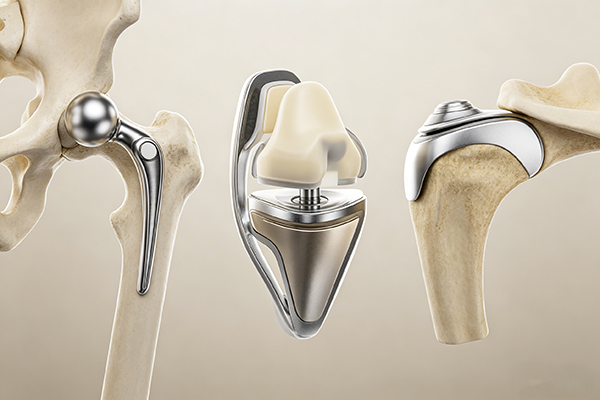
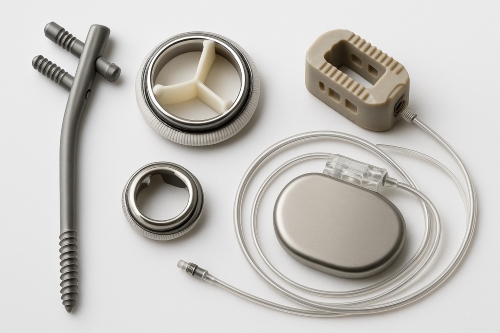
In orthopedic and dental applications, titanium alloys such as Ti-6Al-4V are commonly used for hip and knee replacements, bone plates, screws, spinal fixation systems, and dental roots. The oxide surface not only resists attack from chloride-rich body fluids but also reduces the release of metal ions, minimizing inflammatory reactions and long-term toxicity. In cardiovascular devices, titanium is valued for its fatigue resistance and non-magnetic behavior, making it suitable for pacemaker housings and implantable electronic enclosures. Its long clinical history and excellent performance make titanium the benchmark material for load-bearing and permanent implants.
2. Stainless Steel
Stainless steel remains a versatile and economical choice for temporary and reusable biomedical devices. Medical-grade stainless steels, particularly austenitic grades such as 316L, offer good mechanical strength, reasonable corrosion resistance, and excellent manufacturability. Their corrosion resistance is provided by a chromium-rich passive film that forms naturally on the surface and protects the underlying metal from oxidation in physiological environments.
Because stainless steel is cost-effective and easy to machine, it is widely used for surgical instruments, orthopedic fixation devices, guide wires, and temporary implants such as bone screws and plates intended for later removal. In vascular medicine, stainless steel has also been used in early generations of stents and guide catheters. However, compared with titanium and cobalt–chromium alloys, stainless steel is more susceptible to localized corrosion and nickel ion release, which can cause allergic reactions in sensitive patients. For this reason, its use in permanent implants has gradually declined, while it remains indispensable in surgical tools and short-term applications.
3. Cobalt–Chromium Alloys
Cobalt–chromium alloys are preferred when extreme strength, wear resistance, and long-term durability are required. These alloys exhibit very high tensile strength, excellent fatigue resistance, and outstanding resistance to abrasion, making them ideal for articulating joint surfaces exposed to millions of loading cycles. A chromium-rich oxide layer provides strong protection against corrosion and limits ion release under normal conditions.
In orthopedic surgery, cobalt–chromium alloys are widely used in hip and knee joint replacements, particularly for femoral heads and bearing components where wear resistance is critical. In dentistry, they are employed for crowns, bridges, and partial denture frameworks due to their rigidity and dimensional stability. While cobalt and chromium ions can be biologically active, careful alloy design and surface finishing ensure acceptable biocompatibility in clinical use. Their combination of mechanical strength and tribological performance makes cobalt–chromium alloys indispensable for high-load, high-wear biomedical applications.
4. Tantalum
Tantalum stands out for its exceptional corrosion resistance and excellent tissue compatibility. In physiological environments, tantalum forms a highly stable and inert oxide film that renders it almost completely immune to chemical attack. This outstanding corrosion resistance, combined with high biocompatibility, makes tantalum particularly attractive for long-term implants and devices exposed to blood and interstitial fluids.
One of tantalum's unique advantages is its radiopacity, which allows it to be clearly visualized under X-ray and fluoroscopic imaging. This property is valuable in vascular stents, embolization coils, and pacemaker leads, where precise positioning must be monitored after implantation. Porous tantalum structures are also used in orthopedic bone graft substitutes, as their open architecture promotes bone ingrowth and stable fixation. Although tantalum is dense and relatively expensive, its unmatched chemical stability ensures long service life in demanding biomedical environments.
5. Platinum and Platinum Alloys
Platinum is indispensable in biomedical devices that require chemical inertness and high electrical conductivity. As a noble metal, platinum resists corrosion and oxidation even in highly aggressive biological media. Its surface remains chemically stable over long implantation periods, preventing the release of toxic ions and ensuring reliable electrical performance.
Platinum and platinum–iridium alloys are widely used in implantable electrodes for cardiac pacing, cochlear implants, deep brain stimulation systems, and neural recording devices. They are also employed in catheters, guide wires, and marker bands for radiographic visibility. In neurostimulation and cardiac rhythm management, platinum's stable electrode–tissue interface allows precise electrical signaling with minimal inflammatory response. Although expensive, platinum's unique combination of inertness, conductivity, and long-term reliability makes it irreplaceable in electrically active medical implants.
6. Magnesium and Biodegradable Alloys
Magnesium represents a new generation of biodegradable metals designed to dissolve safely inside the body after healing. With a density and elastic modulus close to natural bone, magnesium-based alloys reduce stress shielding and promote more natural load transfer in orthopedic applications. Their most distinctive feature is controlled biodegradation: over time, magnesium gradually corrodes into biocompatible byproducts that are absorbed or excreted by the body.
This behavior makes magnesium especially attractive for temporary implants such as fracture fixation screws, pins, and plates that are only needed during the healing phase. Once the bone has recovered, the implant disappears, eliminating the need for a second surgical removal procedure. The main challenge lies in controlling the corrosion rate, as excessive degradation can weaken mechanical support or generate hydrogen gas. Ongoing alloy development and surface treatments continue to improve the safety and reliability of magnesium-based biomedical devices.
Conclusion
The selection of metals for biomedical devices reflects a careful balance between mechanical performance, corrosion resistance, biological safety, and clinical function.
- Titanium dominates permanent load-bearing implants because of its unmatched combination of strength, corrosion resistance, and osseointegration.
- Stainless steel remains essential for surgical tools and temporary devices where cost and manufacturability are critical.
- Cobalt–chromium alloys provide superior wear resistance for joint replacements, while tantalum offers exceptional chemical stability and imaging visibility for specialized implants.
- Platinum enables reliable electrical interfaces in cardiac and neural devices, and magnesium introduces the promising concept of biodegradable metallic implants.
Summary Table: Common Metals for Biomedical Devices
Here's a concise overview of common metals used in biomedical devices.
|
Metal |
Key Properties |
Common Applications |
|
• High strength-to-weight ratio • Excellent biocompatibility • Corrosion-resistant (oxide layer) |
Implants (hip, dental), bone screws, pacemaker cases |
|
|
Stainless Steel |
• Good mechanical strength • Corrosion resistance (chromium passive film) • Cost-effective |
Surgical instruments, temporary implants, stents |
|
Cobalt-Chromium (Co-Cr) |
• Very high tensile strength • Wear and corrosion resistance • Biocompatible (when properly alloyed) |
Joint replacements, dental prosthetics |
|
• Excellent corrosion resistance • High biocompatibility • Radiopaque |
Bone grafts, pacemaker wires, vascular stents |
|
|
Platinum (Pt) |
• Chemically inert • High conductivity • Biocompatible |
Electrodes, catheters, neurostimulation devices |
|
Magnesium (Mg) |
• Lightweight • Biodegradable in the body • Good mechanical properties |
Temporary implants, orthopedic screws |
 Chin Trento