Products
 Bars
Bars
 Beads & Spheres
 Bolts & Nuts
 Crucibles
 Discs
Discs
 Fibers & Fabrics
 Films
Films
 Flake
Flake
 Foams
Foams
 Foil
Foil
 Granules
 Honeycombs
 Ink
Ink
 Laminate
 Lumps
Lumps
 Meshes
 Metallised Film
 Plate
Plate
 Powders
 Rod
Rod
 Single Crystals
 Sputtering Target
 Tubes
Tubes
 Washer
 Wires
Wires
 Converters & Calculators
 Write for Us



Narrow Particle Size Distribution Alumina Powder in Precision Ceramics

Alumina powder has long been a trusted material in ceramics and engineering. Its unique properties make it a valuable resource in many advanced applications. When the alumina powder has a narrow particle size distribution, the results are even more reliable and consistent. This article takes a straightforward look at why such powders are important for precision ceramics and composite materials.
Characteristics of Narrow Particle Size Distribution Alumina Powder
This alumina powder comes in particles that are very similar in size. For example, the particles may typically range between 0.1 and 1.0 microns with very little variation. Such a tight distribution means that one can count on consistent behavior during processing. The uniformity helps to improve the strength and reliability of the final product. In this kind of powder, there are fewer oversized or undersized particles. This uniformity makes the sintering process smoother and helps control shrinkage.
In many tests, powders with narrow particle sizes have shown better performance under heat and pressure. Their consistent behavior is a sign of quality control. Even in cases where high density or fine microstructures are needed, such powders stand out. Manufacturers use advanced milling and classification methods to achieve this narrow distribution.
Benefits in Precision Ceramics
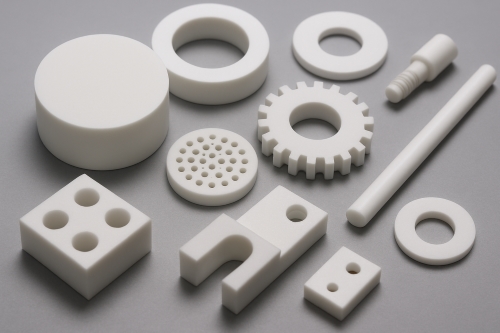
For precision ceramics, quality control is paramount. The alumina powder, with its narrow particle size distribution, meets the high quality requirements. The consistent sizes of the alumina particles ensure consistent packing in the green body stage. This, in turn, ensures consistent densification of the ceramic part in the sintering stage. The end product is a ceramic part with enhanced mechanical properties and a highly consistent microstructure.
For example, in the case of electronic substrates or ceramic components used in the aerospace industry, changes in the microstructure of the ceramic part may be costly. The alumina powder with consistent sizes is beneficial in ensuring minimal risks. The alumina particles ensure minimal defects and dimensional control, which are critical in the production of precision ceramic parts.
Role in Composite Materials
Composite materials are also the recipients of the benefits offered by these powders. For instance, alumina powders are often used in polymer and metallic composites for the purpose of improvement. The addition of these powders ensures an improvement in the stiffness and wear resistance of the composite material. In addition, the narrow distribution of the sizes of the powders ensures an improvement in the thermal stability of the composite material.
A good example of the application of the benefits of alumina powders is seen in the improvement of the properties of brake pads or cutting tools. In this case, the alumina powder ensures the uniform distribution of stress within the material. In addition, the narrow distribution of the sizes of the alumina powder ensures the bonding between the alumina and other materials.
Processing Advantages
Using alumina powder with a narrow particle size distribution brings clear processing benefits. The powder flows better and spreads more uniformly in molds or during coating processes. Predictable sintering behavior reduces the guesswork during temperature control. This minimizes production uncertainties and helps in scaling up manufacturing.
In practice, parts produced with such powders show fewer defects. They tend to have less porosity and improved density. These properties are a boon during quality control inspections. When engineers know the behavior of the powder, they can optimize firing profiles and reduce waste. This makes the overall manufacturing process safer and more efficient.
Applications
There are several sectors that utilize alumina powder with a narrow particle size distribution. In high-precision ceramics, it is used in the production of substrates for electronics, cutting tools, and wear-resistant parts. Most medical equipment can also utilize the high precision that this powder offers. In composite materials, it is used in the construction industry, automotive parts, and even aerospace components.
For instance, a manufacturer may decide to utilize this powder in the production of a ceramic heater element. The uniform particle distribution ensures that thermal expansion is well managed. Similarly, composite panels for transportation can also benefit from the added strength and stability that alumina powder offers.
Conclusion
Narrow particle size distribution alumina powder is an important material for precision ceramics and composite components. It offers uniformity, predictable sintering, and excellent mechanical properties. Both designers and engineers benefit from its consistent performance. This material stands as an excellent choice when quality and reliable performance are essential. The benefits stretch from better processing to improved final properties in various applications. For more alumina products, please check Stanford Advanced Materials (SAM).
Frequently Asked Questions
F: What means narrow particle size distribution in alumina powder?
Q: It means the particles are very similar in size with little variation.
F: How does uniform particle size help ceramics?
Q: Uniformity gives way to better densification and fewer defects during sintering.
F: What role does alumina powder play in composites?
Q: It improves stiffness, wear resistance, and helps in even stress distribution.
 Chin Trento