Products
 Bars
Bars
 Beads & Spheres
 Bolts & Nuts
 Crucibles
 Discs
Discs
 Fibers & Fabrics
 Films
Films
 Flake
Flake
 Foams
Foams
 Foil
Foil
 Granules
 Honeycombs
 Ink
Ink
 Laminate
 Lumps
Lumps
 Meshes
 Metallised Film
 Plate
Plate
 Powders
 Rod
Rod
 Single Crystals
 Sputtering Target
 Tubes
Tubes
 Washer
 Wires
Wires
 Converters & Calculators
 Write for Us



High-Thermal-Conductivity Alumina Powder in Electronic Cooling

Introduction
As electronic parts shrink and become more powerful, effective heat management has never been more crucial. High-thermal-conductivity (HTC) alumina powder has emerged as a crucial material in addressing this issue. Its ideal balance of electrical insulation and high thermal conductivity makes it the ideal product for a range of electronic cooling applications—from power modules to LEDs.
1. What Is High-Thermal-Conductivity Alumina Powder?
Alumina (Al₂O₃) is hard, chemically inert, and thermally stable ceramic. HTC alumina powder is engineered to be higher in thermal conductivity—typically up to 20–35 W/m·K depending on particle size, purity, and processing. This contrasts sharply with usual alumina (approximately 10–15 W/m·K).
Through controlled synthesis, such as solid-state reaction or sol-gel processes, HTC alumina powder is made to form high packing density, low porosity, and high-purity microstructures that promote effective heat transfer.
2. Why Thermal Conductivity is Important in Electronics
Heat is the reliability nemesis of electronic equipment. Elevated temperatures lead to premature failure of components such as semiconductors, capacitors, and LEDs. To prevent this, materials used in heat sinks and packaging need to be effective in conducting heat away from sensitive components quickly.
HTC alumina is especially beneficial because it possesses good thermal conductivity along with ideal electrical insulation (typically >10¹⁴ Ω·cm) and thus can be used safely in direct contact with electrical components.
3. Important Properties
|
Property |
Typical Value |
|
Thermal Conductivity |
20–35 W/m·K |
|
Electrical Resistivity |
>10¹⁴ Ω·cm |
|
Density |
~3.9 g/cm³ |
|
Melting Point |
~2050°C |
|
Dielectric Strength |
>10 kV/mm |
|
Chemical Stability |
Inert in most environments |
All of these properties make HTC alumina appropriate for application in areas requiring high thermal performance along with electrical insulation.
4. Application Areas
a. LED Lighting
HTC alumina powder is used to produce ceramic substrates and phosphor converters in LED applications. The powder enables efficient heat transfer, enabling brighter and more durable LEDs.
b. Power Electronics
In power modules and IGBTs, HTC alumina ceramics are used as baseplates and insulating layers and ensure thermal balance even during high current and voltage loads.
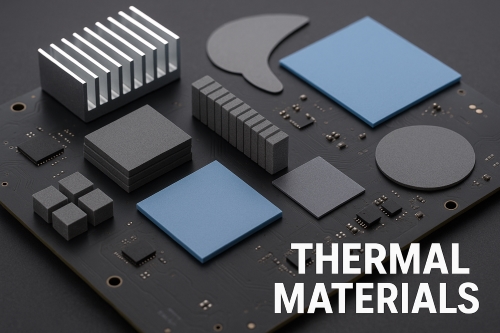
c. Thermal Interface Materials (TIMs)
HTC alumina is used as a filler in greases and thermal pastes. The substance enhances the thermal conductivity of such products without reducing electrical insulation, ideal for use in CPUs, GPUs, and automotive ECUs.
d. High-Frequency Devices
High-frequency devices experience strong heat generation in compactly packaged packages. HTC alumina substrates offer the required balance of dielectric loss reduction and thermal control—critical to ensure stability of performance.
5. Processing and Forming
HTC alumina powder can be formed using various methods of ceramic processing like tape casting, injection molding, and sintering. High-performance sintering aids and nano-additives are usually used to improve density and reduce grain boundaries, which have the advantage of raising thermal conductivity.
For TIMs and composites, surface treatment of alumina particles (e.g., silanes or coupling agents) increases polymer matrix compatibility and maximizes thermal transfer.
6. Future Outlook
With increasing popularity of electric cars, 5G base stations, and wearables, HTC material demand will boom. HTC alumina powder is at the forefront of this trend as a scalable, economical, and high-performance thermal management option.
Research today is focused on nano-engineered alumina networks and hybrid composites that continue to push the boundaries of conductivity even further—presumably above 50 W/m·K.
Conclusion
High-thermal-conductivity alumina powder provides a superior balance of heat transfer efficiency and electrical insulation. Its efficacy and versatility make it essential for the cooling technology of contemporary electronics. As technologies advance and thermal requirements expand, HTC alumina will remain a core material in ensuring electronic devices' safety, reliability, and longevity. For more alumina products, please check Stanford Advanced Materials (SAM).
 Chin Trento