
 Products
 Bars
Bars
 Beads & Spheres
 Bolts & Nuts
 Crucibles
 Discs
Discs
 Fibers & Fabrics
 Films
Films
 Flake
Flake
 Foams
Foams
 Foil
Foil
 Granules
 Honeycombs
 Ink
Ink
 Laminate
 Lumps
Lumps
 Meshes
 Metallised Film
 Plate
Plate
 Powders
 Rod
Rod
 Single Crystals
 Sputtering Target
 Tubes
Tubes
 Washer
 Wires
Wires
 Converters & Calculators
 Write for Us



Advantages of Alumina Powder in Thermal Spraying

Introduction
Alumina powder is significant in thermal spray coating processes. Thermal spraying is depended upon by most businesses to offer protective coatings on equipment and components.
Material Properties that Make Alumina Appropriate
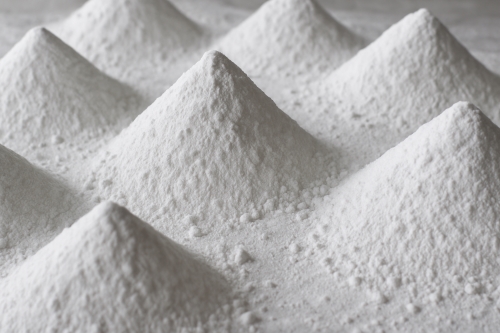
Alumina powder has several properties that make it ideal for spraying applications. The powder typically has a high melting point, often in the range of 2050°C. This means that when used in the form of a spray, it easily lays down a stable coating. Another property is high hardness and wear resistance. In practical applications, alumina coatings have reduced wear in turbine blades and foundry tools. The structure is chemically stable. Its thermal resistance and corrosive resistance are requirements. Its low thermal conductivity is also an asset in processes where heat transfer must be limited. I have seen one test example where alumina cooled a temperature-sensitive piece by limiting thermal transfer. Alumina can also be produced in fine grain sizes, which is essential for uniform, even coatings.
Compatibility with Thermal Spray Techniques
Alumina powder is very compatible with the majority of thermal spray processes. The powder can be easily utilized with plasma spray processes. Plasma spraying employs alumina powder and melts it at high speeds. Parts are coated by depositing rapidly solidified material. Plasma spray alumina's most popular application is thermal barrier coatings for engines. High velocity oxy-fuel spraying is another compatible process with alumina powder. With this method, the high speed of particles results in a dense deposit on the substrate. Alumina has been applied in practice with both methods to enhance the life of stressed and heat parts.
Functional Advantages in Coating Utilization
The functional advantages of alumina powder emerge in the usage of the coating. Thermal sprayed alumina, for instance, provides a hard and homogeneous layer. This uniformity results in fewer chances of cracking when components undergo thermal cycling. My colleagues and I have been working on assignments where alumina coats prevented micro-cracking in high-temperature operating equipment. Alumina increases wear resistance as well. An example is its usage in industry where moving parts expose themselves to abrasion, and alumina coatings reduce material loss. The coating is equally valued for being chemically inert. Alumina-coated surfaces do not easily react with acids or other corrosives. Also, alumina coatings allow for least heat transfer. This advantage extends equipment service life in applications of high temperature. All instances I have experienced prove that application of alumina powder leads to more efficient, cost-effective protective coating.
Materials for Thermal Spray Techniques
A majority of materials cooperate with alumina in the material list for thermal spray coating. Nickel and cobalt alloys are representative examples. They are quite excellent in adhesion and toughness. Ceramics do possess very high heat resistances. Alumina itself is a very well-known among the ceramics. Alumina is less expensive and simpler to process compared to yttria-stabilized zirconia. Silicon carbide and chromium oxide are representative examples of common powders. Every material is applied for a different use but alumina ensures a balanced performance in terms of hardness, wear resistance, and insulation. Real-world practical engineers select materials based on environment, strength required, and economics. Whenever the problem is high temperature along with extreme wear, alumina powder has proven to be the best.
Conclusion
Alumina powder is a strong contender for thermal spraying protective coatings because of its melting point, hardness, and chemical stability. It is major benefits. It mixes well with conventional thermal spray technologies like plasma spray and high velocity oxy-fuel spray. For more information, please check Stanford Advanced Materials (SAM).
Frequently Asked Questions
F: Why is alumina powder ideal in thermal spraying?
Q: Alumina provides high melting point, hardness, and chemical stability. It forms hard, dense coatings.
F: Why is alumina powder beneficial for heat control?
Q: Alumina powder has low thermal conductivity. It inhibits the passage of heat and shields sensitive surfaces from destruction.
F: What are some conventional thermal spray techniques used with alumina powder?
Q: Alumina powder can be successfully utilized in combination with plasma spray and high velocity oxy-fuel spray techniques.
 Chin Trento