Products
 Bars
Bars
 Beads & Spheres
 Bolts & Nuts
 Crucibles
 Discs
Discs
 Fibers & Fabrics
 Films
Films
 Flake
Flake
 Foams
Foams
 Foil
Foil
 Granules
 Honeycombs
 Ink
Ink
 Laminate
 Lumps
Lumps
 Meshes
 Metallised Film
 Plate
Plate
 Powders
 Rod
Rod
 Single Crystals
 Sputtering Target
 Tubes
Tubes
 Washer
 Wires
Wires
 Converters & Calculators
 Write for Us



How Alumina Powder Shapes the Future of Technical Ceramics

Introduction
Today, the progress continues to be alumina powder that brings secure quality and performance into ceramics. Let us look at the progress over time.
Basic Properties of Alumina Powder
Alumina powder consists mainly of aluminum oxide. Particle size is typically 0.1 to 10 micrometers. Particle size defines the properties of technical ceramics. Alumina possesses good hardness, excellent wear resistance, and good heat stability. Industrial test reports provide information that alumina-based ceramics remains stable even above 1600°C. Chemical inertness of alumina is another reason for uninterrupted use. For example, in environments exposed to highly corrosive media, alumina ceramics maintain their shape.
Grades of 99.5% or higher are typical in demanding applications. In most cases, the higher the proportion of alpha-phase alumina, the higher the strength and toughness. This is frequently supported by laboratory proof and on-site performance. These results confirm the confidence of engineers who specify with technical ceramics.
In simple terms, the shapes' uniformity and small particle size distribution produce good packing density. Such a density increases the sintering process. High-sintered ceramic produces a strong final product with few defects. Scientists and craftsmen always refer to alumina powder whenever they look for trustworthy and reproducible material properties.
Alumina Powder in Ceramic Fabrication Processes
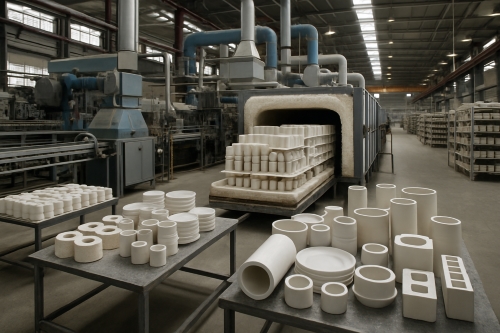
Technical ceramics require stable materials. Alumina powder provides reliability on that. During the forming process, alumina powder is mixed with binders and additives. It is subsequently pressed into shape prior to sintering at high temperatures. When heated, the alumina particles fuse together to create a solid ceramic structure. I have discovered that small variations in powder properties can alter sintering behavior. Technical centers monitor parameters like particle size and distribution closely to achieve optimum results.
Employing a powder with an average particle size of about 1 micrometer added to the density. The resulting ceramic was stronger and less prone to wear. In another common example, alumina powder has been used in cutting tool manufacture. These products require ceramics that can withstand high stress and friction. Alumina-based components are common in drill bits and cutters of high speed.
Powder quality consistency is critical. Several manufacturing processes depend upon the stable and consistent nature of alumina. This yields minimum wastage with consistent product quality.
Key Applications in Technical Ceramics
The use of alumina powder is not limited to structural components. It is also important in advanced applications. Electronics is one such important area. Electronic components demand high purity as well as particle size control for substrates. Apart from that, alumina is used in insulators which work in high voltage areas. Technical ceramics made from alumina powder usually replace metals in certain applications due to corrosion resistance as well as electrical insulation functions.
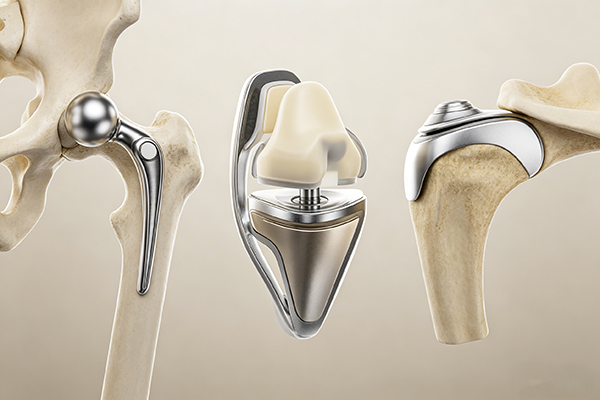
In yet another major field, alumina ceramics are involved in biomedical implants. They are biocompatible and thus suitable for use as artificial joints and dental implants. They are useful for patients as the ceramics are effective within the human body without triggering biological reactions. There are many examples of the reduced failure rates for technical ceramics compared to conventional materials.
Automotive and aerospace industries also employ alumina ceramic components. Engine parts and heat shields, for instance, often incorporate alumina. It is heat-resistant and lighter than metal. The ceramix is tough in harsh environments such as engine combustion chambers. The widespread utilization of alumina powder in the past has an obvious implication that it will play an important role in the future.
Conclusion
Alumina powder is the cornerstone of the future of technical ceramics. The simple yet unique characteristics of alumina have transformed the functionality of ceramics. Through its purity, uniformity, and enhanced thermal and mechanical properties, alumina powder gives credibility to any ceramic manufacturing. The future of technical ceramics is bright, and the centerpiece of it is alumina powder.
Frequently Asked Questions
F: Why is alumina powder important in technical ceramics?
Q: Alumina powder provides high strength, thermal stability, and wear resistance that improve the quality of ceramics.
F: What is standard particle size of alumina powder?
Q: Alumina powder typically has particle sizes ranging from 0.1 to 10 micrometers.
F: How is alumina powder used in processing ceramics?
Q: Alumina powder is mixed with binders, pressed, and sintered to produce strong ceramic components.
 Chin Trento