Products
 Bars
Bars
 Beads & Spheres
 Bolts & Nuts
 Crucibles
 Discs
Discs
 Fibers & Fabrics
 Films
Films
 Flake
Flake
 Foams
Foams
 Foil
Foil
 Granules
 Honeycombs
 Ink
Ink
 Laminate
 Lumps
Lumps
 Meshes
 Metallised Film
 Plate
Plate
 Powders
 Rod
Rod
 Single Crystals
 Sputtering Target
 Tubes
Tubes
 Washer
 Wires
Wires
 Converters & Calculators
 Write for Us



Prospects of Boron Carbide Powder in Electronic Ceramic Materials

1. Introduction
Boron carbide powder has been utilized for the last several decades in high-performance materials. I have been in the field of material research long enough to see its steady rise to prominence. Its hardness and unique properties render it a desirable product for many different applications in ceramics. In electronic ceramics, boron carbide powder adds stability, durability, and better thermal properties.
2. Physical and Chemical Properties of Boron Carbide Powder
Boron carbide is very hard. It possesses a hardness value of nearly 9.5 on the Mohs scale of hardness. Because it is so hard, it is highly suitable for wear resistance. The powder is very chemically stable. Even in harsh conditions, boron carbide remains strong. It is of light weight but possesses high strength. The density of boron carbide is about 2.52 grams per cubic centimeter.
Another excellent property is thermal stability. It can resist temperatures up to 2000°C for a limited time. Its resistance to heat makes it a suitable applicant as electronic ceramics in high-temperature conditions. Furthermore, boron carbide is well endowed with thermal conductivity. It assists in the regulation of heat within electronic applications where excessive heat can cause failure.
Chemically, boron carbide is extremely inert. Its resistance to oxidation, alkalis, and acids is famous. For example, several reports recorded that boron carbide shows very small reaction in normal chemical conditions. Stability in corrosive conditions is described. This feature is important while selecting material for electronic ceramics under various atmospheres and long service life.
Its composition is complex but robust. Boron carbide's crystal structure consists of icosahedral boron clusters bound together by carbon atoms. This arrangement contributes to giving it both hardness and its thermal stability. Engineers like many appreciate the strength of this in their ceramic applications.
3. Main Applications of Boron Carbide Powder in Electronic Ceramics
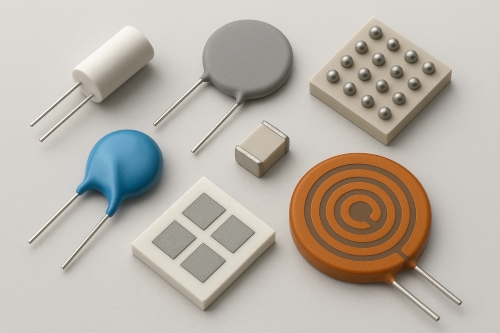
Boron carbide powder finds use in numerous electronic ceramic applications. One of the most obvious is in substrates for high power and high frequency devices. The material acts as a heat spreader. Effective heat dissipation is greatly needed in substrates. Electronic device failure happens because components overheat. Boron carbide powder keeps temperature conditions stable.
Another significant application is in the protective coatings for ceramic capacitors. These elements require materials with wear and chemical attack resistance. Boron carbide powder meets such demands. It also has an insulating property. This is significant in elements that must have accurate electrical insulation.
Boron carbide composites are being used in power module thermal management. A number of researchers have reported increased thermal conductivity when boron carbide powder is embedded in ceramics. This reduces the size of cooling devices. Lighter and smaller electronic designs are the outcome of smaller cooling requirements.
It is also used in sensors and other systems requiring dielectrically stable material. Maintaining stable electrical characteristics, such sensors can work properly across a broad range of temperatures. Over decades, the role of boron carbide towards making sensors more reliable has significantly been seen.
Conclusion
Boron carbide powder is widely present in the field of electronic ceramics due to its high hardness, chemical inertness, and thermal stability. Its high hardness, heat resistance, and chemical stability make it a perfect choice for electronic ceramics. For more information, please check Stanford Advanced Materials (SAM).
Frequently Asked Questions
F: Why is boron carbide powder widely used in electronics?
Q: Its high hardness, heat resistance, and chemical stability make it suitable for electronic ceramics.
F: How is boron carbide powder treated for applications in ceramics?
Q: It is treated with processes like cold isostatic pressing, sintering, and polymer-derived ceramics processes.
F: How are the applications of boron carbide powder typical in electronics?
Q: The applications are substrates for high power devices, protective coatings in capacitors, and thermal management in power modules.
 Chin Trento