Products
 Bars
Bars
 Beads & Spheres
 Bolts & Nuts
 Crucibles
 Discs
Discs
 Fibers & Fabrics
 Films
Films
 Flake
Flake
 Foams
Foams
 Foil
Foil
 Granules
 Honeycombs
 Ink
Ink
 Laminate
 Lumps
Lumps
 Meshes
 Metallised Film
 Plate
Plate
 Powders
 Rod
Rod
 Single Crystals
 Sputtering Target
 Tubes
Tubes
 Washer
 Wires
Wires
 Converters & Calculators
 Write for Us



Properties and Applications of Boron Carbide in Nuclear Reactors

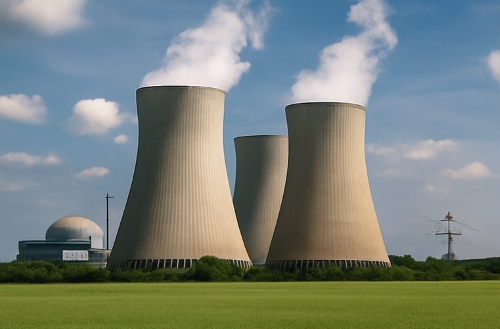
Boron carbide is an important compound in the field of nuclear reactor technology. It has a history of use in harsh environments and is known for its strength and resilience. Many engineers and researchers trust boron carbide for its ability to control nuclear reactions.
Properties of Boron Carbide Relevant to Nuclear Applications
Boron carbide is known for its high hardness and low density. It ranks near the top among ceramics for hardness. The material can have a Vickers hardness value exceeding 30 GPa. It is also lightweight. The combination of hardness and low density makes it a candidate in areas where weight and durability matter.
One important property is the compound's high melting point. It can withstand temperatures over 2400°C in inert conditions. This is useful in reactors where temperatures can spike. Boron carbide is chemically stable even in aggressive environments. The material is also resistant to radiation damage. Over time, radiation can weaken many materials, but boron carbide remains stable. It shows low thermal expansion and good thermal conductivity. Low thermal expansion helps minimize stress under temperature changes.
Boron carbide has a high boron content. This gives it a unique ability in nuclear settings. The naturally occurring boron has a weight percentage of up to 78% in boron carbide, a value that is instrumental when controlling reactor operations. The material is produced with controlled stoichiometry. This results in consistent quality and predictable behavior in reactor environments.
Simple experiments have shown that boron compounds work well when placed in nuclear reactor controllers. Several reactor designs include components that are coated or mixed with boron carbide. The research data confirms that the neutron absorption performance is tied closely to the boron content and the overall structure of the material.
Role of Boron Carbide as a Neutron Absorber
Boron carbide is also known for its neutron-absorbing properties. It absorbs neutrons through the presence of the isotope boron-10. In fact, this isotope is known for having an exceptionally high cross-section for neutron absorption. This is why boron carbide can play an important role in controlling nuclear reactions.
In the case of nuclear fission, the control of stray neutrons is considered very important. Due to the presence of the boron carbide, the free neutrons will decrease. This acts as a safety mechanism in the event of unexpected variations. When boron carbide is incorporated, it converts the energy of the neutrons to heat. This aspect serves the purpose of regulating safety, keeping the controls within the limit. Boron carbide is in the form of rods and shields. This substance is used for the purpose of controlling the rate of the nuclear reactor.
In fact, standard design data for a typical reactor indicates that boron carbide decreases neutron flux levels. There are a number of reactor test cases that corroborate this data. In fact, theoretical calculations often include boron carbide's known capacity to absorb neutrons. This provides the engineer with a theoretical figure.
Applications of Boron Carbide in Nuclear Reactor Components
A lot of reactor parts are made with boron carbide. The most common use is in control rods. Control rods are put into a nuclear reactor to control the chain reaction speed. The rods enriched with boron carbide allow the operators of this reactor to control the power output. Another application can be found in shielding tiles around the reactor core. These tiles help block neutrons that stray from causing damage to other components.
In some reactor designs, the lining material incorporates boron carbide. The lining contributes to protection for the reactor wall and enhances the general safety. Nuclear research facilities have tested extra layers of defense in the form of boron carbide panels. Additional applications of the material include reactors being constructed for long-term operation. Engineers have observed that such boron carbide withstands long-term exposure to radiation with minimal wear.
The examples in reactor design include the fuel element coatings experiments. Thin films of boron carbide coated fuel elements have indicated less deterioration with time. Data from such trials have also been encouraging. The tests showed consistent performance even under high radiation. Several real-world reactor maintenance cases highlight the benefits of replacing older, less stable materials with boron carbide.
Conclusion
Boron carbide holds an important position in nuclear reactor technology. Its hardness, high melting point, and neutron absorption capability make it useful across many reactor applications. The material has been included in control rods, shielding components, and protective linings. For more information, please check Stanford Advanced Materials (SAM).
Frequently Asked Questions
F: What makes boron carbide useful in nuclear reactors?
Q: Its high hardness, low density, high melting point, and strong neutron absorption help control reactor reactions.
F: How does boron carbide absorb neutrons?
Q: The boron-10 isotope in boron carbide absorbs neutrons by converting neutron energy and lowering free neutron numbers.
F: In what reactor parts is boron carbide used?
Q: It is used in control rods, shielding tiles, and protective linings to ensure safe reactor operations.
 Chin Trento