Products
 Bars
Bars
 Beads & Spheres
 Bolts & Nuts
 Crucibles
 Discs
Discs
 Fibers & Fabrics
 Films
Films
 Flake
Flake
 Foams
Foams
 Foil
Foil
 Granules
 Honeycombs
 Ink
Ink
 Laminate
 Lumps
Lumps
 Meshes
 Metallised Film
 Plate
Plate
 Powders
 Rod
Rod
 Single Crystals
 Sputtering Target
 Tubes
Tubes
 Washer
 Wires
Wires
 Converters & Calculators
 Write for Us



Spherical Vanadium Powder in Three-Dimensional Printing

Introduction
Three-dimensional printing has changed the way we build parts and tools. It has emerged as a significant contributor to various domains. Nowadays, we are looking at spherical vanadium powder.
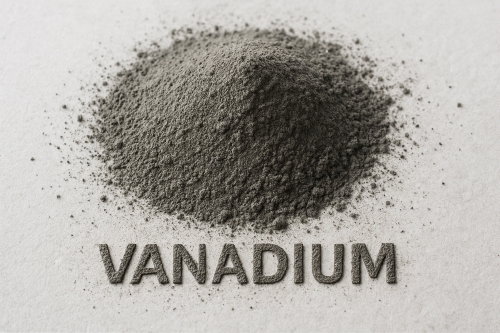
Critical Properties of Vanadium for Three-Dimensional Printing
Vanadium is very strong and resistant to wear. Its lightness is what makes it used in alloys. Numbers show that when vanadium is incorporated into steel, there is increased hardness and corrosion resistance. Steels microalloyed with vanadium, for instance, contain yield strengths of up to 800 megapascals. Its low concentration in steels provides notable gains in toughness and ductility.
Vanadium helps grain refinement. This leads to a finer microstructure in printed parts. In three-dimensional printing, high strength and fine microstructure lead to parts having improved mechanical performance. The element is also resistant to high temperatures. This makes it suitable for aerospace and automotive applications.
Vanadium's unique characteristics benefit the printing process. It is able to withstand rapid heating and cooling cycles prevalent in three-dimensional manufacturing with ease. Its chemical stability is a drawback during unwanted reactions in printing. These characteristics enable engineers to produce parts that require minimum post-processing requirements.
Benefits of Spherical Powder Morphology
Spherical powder possesses many advantages over irregular powder. First, it exhibits improved flow through the printer machine. Even flow implies that even layers are deposited. Second, spherical particles reduce the risk of clogging and differential melting. This translates into accurate builds.
When a spherical powder is used, the layers set evenly. Spherical powders were found to increase packing density by around 10% compared to irregularly shaped powders. The density causes printed parts to contain fewer voids and better mechanical properties. The even shape also increases the transfer of heat during printing. This results in stress-free parts internally.
Handling spherical powder usually decreases machine downtime. It also minimizes the requirement for further processing and enhances part quality. Customers like the consistency and fewer mistakes when handling spherical powders during three-dimensional printing.
Production of Spherical Vanadium Powder
Spherical vanadium powder is prepared through processes like gas atomization. In gas atomization, molten vanadium alloy is broken down into tiny droplets. The droplets instantly cool down to form spherical particles. The process utilizes inert gases like argon to prevent oxidation. The end product is consistent powder of excellent quality.
Some other production methods include plasma spheroidization and centrifugal atomization. These are applied to retain powder structure. They allow for fine control of particle size distribution. The average particle size is typically between 15 and 45 micrometers. It forms good flow behavior as well as repeatable print results.
Applications of Three-Dimensionally Printed Vanadium and Vanadium-Containing Alloys
Vanadium is used in three-dimensional printing not just in structural parts. Its properties also enhance alloys to work more effectively in most fields. Vanadium alloys in the aerospace field give a balance of strength and light weight. Engine parts, for example, benefit from better wear resistance as well as thermal stability.
Car parts, such as high-stress housings and brackets, utilize vanadium-enriched alloys. Increased mechanical properties help in extending part lifetimes. Vanadium alloys are researched in the medical field for biocompatibility. They are tested for use in implants and surgical devices. Corrosion resistance against harsh environments is done with vanadium, according to some research.
I have seen great performance using three-dimensional prints and vanadium alloys to manufacture parts. The parts attain optimal performance and high safety standards. Machine parts manufactured using vanadium powder are highly resistant. The above examples across different industries lay out the merit of incorporating vanadium into additive manufacturing.
Conclusion
Spherical vanadium powder is one of the most crucial materials in three-dimensional printing. It offers stable flow, higher packing density, and great builds. The inherent features of vanadium such as strength and resistance to heat make it popular. Production methods offer a regular source of spherical powder. For more spherical powder, please check Stanford Advanced Materials (SAM).
Frequently Asked Questions
F: What is vanadium used for in three-dimensional printing?
Q: It strengthens alloys and increases heat resistance, creating high-quality components for application across a number of industries.
F: Why spherical powders over irregular powders?
Q: Spherical powders improve flow, packing density, and layer uniformity in three-dimensional printing.
F: How is spherical vanadium powder produced?
Q: It is produced by atomization techniques like gas atomization, enabling uniform particle shape and size.
 Chin Trento