Products
 Bars
Bars
 Beads & Spheres
 Bolts & Nuts
 Crucibles
 Discs
Discs
 Fibers & Fabrics
 Films
Films
 Flake
Flake
 Foams
Foams
 Foil
Foil
 Granules
 Honeycombs
 Ink
Ink
 Laminate
 Lumps
Lumps
 Meshes
 Metallised Film
 Plate
Plate
 Powders
 Rod
Rod
 Single Crystals
 Sputtering Target
 Tubes
Tubes
 Washer
 Wires
Wires
 Converters & Calculators
 Write for Us



Niobium Halides: Classification, Properties, Synthesis, and Uses

Introduction
Niobium halides have been of interest to the majority of researchers for decades. They are used in various chemical and industrial processes.
Classification of Niobium Halides
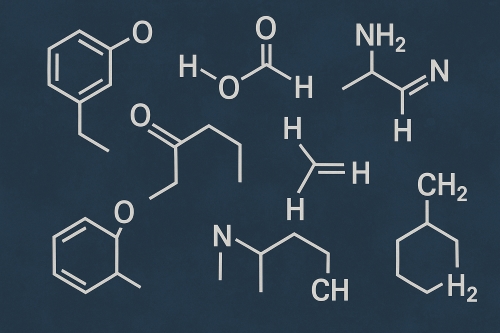
Niobium forms different halide compounds with different halogen atoms. They are mostly niobium pentahalides and niobium trihalides. Both of them possess different structures and reactivity. Nibium pentachloride and niobium pentafluoride are a few examples. Halides in which niobium is present in lower oxidation states are used in special chemical reactions. This classification helps to understand their varied nature in different environments.
Physical and Chemical Properties (Color, Crystal Structure, Volatility, Reactivity)
Niobium halides are dark red in color or yellow. The color may differ based on the purity of the halide and the halide itself. Niobium pentahalides tend to be of defined crystalline form. They are volatile at high temperatures, and this aspect has to be taken into consideration when they are applied in the process of vapors. They are strongly reactive in nature, especially when moisture in the air is present. For instance, niobium pentachloride is a reactive species that immediately reacts with water to form oxychlorides. The simple crystal structures and characteristic colors make the compounds easy for technicians and chemists to identify in the laboratory.
Synthesis Methods (Direct Halogenation, Halide Exchange)
There are two primary methods of synthesizing the niobium halides that are common. The first is direct halogenation. In this process, elemental niobium reacts directly with the halogen gas. The process is very easy if controlled conditions are used. The second method is through halide exchange. Here, a pre-formed niobium compound exchanges its halide with another source of halide. It is a suitable method when direct reaction is too harsh or a more controlled reaction is required. Both of the synthesis methods are widely used in research and industry due to their efficiency and dependability.
Use as Precursors in: Chemical Vapor Deposition, Atomic Layer Deposition, Metal-Organic Chemical Vapor Deposition
Niobium halides play a significant role as precursors in many deposition techniques. In Chemical Vapor Deposition, one produces a vapor of the niobium halide, which deposits thin films on a substrate. Atomic Layer Deposition does the same idea but in layer-by-layer growth. Metal-Organic Chemical Vapor Deposition utilizes the organic ligands and the halide to produce high purity films. In all these methods, the reactivity and volatility of niobium halides are desirable. They yield good control over the thickness and the composition of the film. The accuracy with which these methods enable is applicable in industrial processes.
Use in Coordination Chemistry and Ligand Exchange Reactions
Niobium halides also have use in coordination chemistry. They can coordinate with various ligands to form stable complexes. These kinds of reactions are useful when the metal coordination sphere needs to be altered. Ligand substitution reactions with niobium halides can be done under very mild conditions. These reactions enable chemists to tailor the properties of final compounds. Many coordination complexes of niobium are catalysts for chemical reactions and the production of specialty materials.
Applications of Niobium Halides
Practical uses of niobium halides are numerous areas. They play a vital role in the fabrication of electronic materials. They acquire importance in deposition techniques and hence in the manufacture of thin film semiconductors. Niobium halide precursors are utilized in the production of superconducting devices based on high purity and controlled deposition. They are used in the manufacture of catalysts that aid a variety of organic reactions in coordination chemistry. Scientists in laboratories also utilize niobium halides to produce materials with unique optical and magnetic properties. All these uses show their applicability and usefulness.
Handling, Storage, and Safety Considerations
The niobium halides should be handled with utmost care. The high reactivity is a guarantee that water is strictly out of the question. Storage in sealed containers with inert gas under pressure is recommended. Personal protective equipment such as gloves and eye protection is always to be used. The reactions must be performed in ventilated spaces or fume hoods. Removal and cleaning of waste must be performed under strict controls. All these precautions ensure individuals handling the niobium halides remain safe, and the environment too is safe.
Conclusion
Niobium halides remain a major concern for modern chemistry and materials science. They are great precursors in new deposition techniques. In addition, their utilization in coordination chemistry leads to useful catalysts and materials. They are a mainstay in research and industrial processes as well.
Frequently Asked Questions
F: What are the major types of niobium halides?
Q: Niobium forms pentahalides and trihalides with different halogen atoms.
F: What is the function of niobium halides during deposition processes?
Q: They serve as precursors which enable thin film synthesis in Chemical Vapor Deposition and other methods.
F: What safety measures are needed for handling niobium halides?
Q: Offer airtight storage, wear protective gear, and handle in ventilated conditions.
 Chin Trento