
 Products
 Bars
Bars
 Beads & Spheres
 Bolts & Nuts
 Crucibles
 Discs
Discs
 Fibers & Fabrics
 Films
Films
 Flake
Flake
 Foams
Foams
 Foil
Foil
 Granules
 Honeycombs
 Ink
Ink
 Laminate
 Lumps
Lumps
 Meshes
 Metallised Film
 Plate
Plate
 Powders
 Rod
Rod
 Single Crystals
 Sputtering Target
 Tubes
Tubes
 Washer
 Wires
Wires
 Converters & Calculators
 Write for Us



Applications of Niobium Carbide Powder in Cemented Carbide

Introduction to Niobium Carbide Powder
Niobium Carbide powder is hard and refractory in character. It possesses a high melting point and is highly wear-resistant. In other words, it is stable in harsh conditions. Practice and research have proven that niobium carbide is able to reinforce the inherent strength of cemented carbide overall. The powder is usually manufactured in finely ground state so as to provide even distribution throughout the metal matrix.
Years of metallurgical experience have convinced us that a sufficient quantity of a good additive can change the behavior of a material. In the inclusion of niobium carbide in other constituents in cemented carbide, it can be applied to control the grain size. Uniform grain size results in improved hardness and wear characteristics. In fact, the industry trials did show that an addition of two to three percent by weight of this powder does yield a noticeable improvement in the end-product's microstructure.
Role of Niobium Carbide in Cemented Carbide
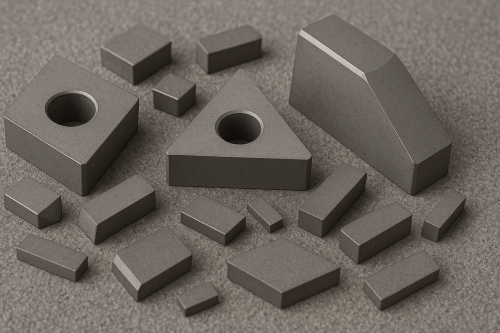
Niobium Carbide has several critical roles to play in cemented carbide tools. It is a grain refiner initially. In most cases, there is enhanced mechanical property such as increased impact strength and toughness with a finer grain size. Cemented carbide with large grains and without proper control can lead to premature cracking or chipping.
Another important role is its heat resistance function. The cemented carbide parts suffer from severe heat while in service, and niobium carbide is better suited to manage temperature fluctuations than some additives. The product material resulting from it is therefore capable of taking heavier loads like drilling and cutting. The literature indicates that the benefits of niobium carbide can be seen even at low volume fractions.
Performance Advantages
Some benefit is derived in terms of performance when the powder of niobium carbide is blended with cemented carbide. An important benefit comes from its impact on abrasion resistance. As an example, studies indicate that adding two percent can increase wear resistance by up to 20 percent. This has importance when the tools are in constant use in metal-cutting or mining environments.
Another advantage is enhanced hardness without causing an excessive increase in brittleness. Since longevity is a critical area in industrial applications, higher hardness and wear resistance mean that tools need to be replaced less often. As seen in practice, individuals have found that better carbide microstructure tools last longer and function efficiently under stress conditions. The combination brings about a compromise between hardness and toughness, which is highly desirable when it comes to cutting and drilling tools.
Key Application Areas of Niobium Carbide Powder
Niobium carbide powder is utilized in various industries. Cemented carbide is best known for its broad use in cutting tools used in metal machining and shaping. In most workshop facilities, end mills and drill bits reinforced with this powder exhibit greater durability.
It is also in wear parts utilized in construction and mining. In these industries, even small improvements in wear resistance translate to considerable cost savings. Niobium carbide has also been used in some high-performance automotive and aerospace parts since it can withstand extreme temperatures as well as high stress.
Typical Additive Ratios and Effects
In cemented carbide, typical additive proportions of niobium carbide range between one and five percent by weight. In most experiments and in the case of industrial usage, the proportion of two to three percent is common. Using these quantities, the powder improves grain refinement without adding so much hardness to cause brittleness.
Additive ratio variations may impact the macro microstructure. Too low a level will be inadequate to strengthen. At the other extreme, too much addition will result in a hard-enough composition that is prone to uncontrolled fracture. Three percent experience suggests a good compromise. Metallurgical research and plant testing have all consistently shown that the advantages level off at this addition level and therefore provides the optimum performance.
Processing Considerations of Niobium Carbide Powder
Handling should be done carefully in order to achieve the expected benefits from niobium carbide powder. The powder must be distributed among other powders in a suitable manner before sintering. Mixing operations such as ball milling are usually employed in the process in order to obtain an even distribution.
Temperature control during sintering is imperative. Cemented carbide sinters in the range of 1400°C to 1500°C. Under these conditions, the niobium carbide reacts with the binder phase and the tungsten carbide matrix to give a homogeneous structure. Stable process conditions lead to reproducible and uniform mechanical properties of the final product.
For individuals with decades of experience working in the field, paying heed to these steps is hugely valuable and a difference maker in part quality as well as all-around performance. Every step in the process will impact how long the end product will last with tough applications.
Conclusion
Overall, niobium carbide powder plays an important role in enhancing cemented carbide. Its benefit is improved wear resistance, higher hardness, and a more refined microstructure. It is well suited for application in cutting tools, mining parts, and high-performance components. For more niobium products, please check Stanford Advanced Materials (SAM).
Frequently Asked Questions
F: What is the primary advantage of incorporating niobium carbide powder into cemented carbide?
Q: It improves wear resistance and grains fines the structure for increased hardness.
F: What is the usual additive proportion of niobium carbide to cemented carbide?
Q: Most applications involve between one and five percent by weight, with two to three percent being typical.
F: How does niobium carbide influence the processing of cemented carbide?
Q: It requires homogeneous mixing and sintering under controlled conditions to bring the best material property improvements.
 Chin Trento