Products
 Bars
Bars
 Beads & Spheres
 Bolts & Nuts
 Crucibles
 Discs
Discs
 Fibers & Fabrics
 Films
Films
 Flake
Flake
 Foams
Foams
 Foil
Foil
 Granules
 Honeycombs
 Ink
Ink
 Laminate
 Lumps
Lumps
 Meshes
 Metallised Film
 Plate
Plate
 Powders
 Rod
Rod
 Single Crystals
 Sputtering Target
 Tubes
Tubes
 Washer
 Wires
Wires
 Converters & Calculators
 Write for Us



Common Uses of Niobium Pentoxide

Introduction to Niobium Pentoxide
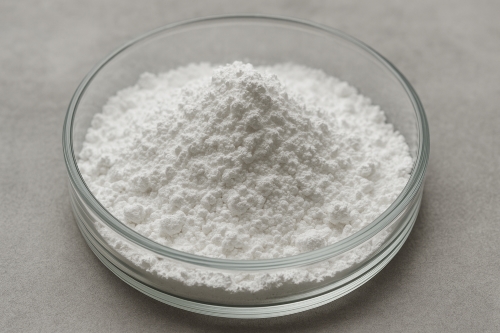
Niobium pentoxide is a chemical compound and its molecular formula is Nb2O5. Niobium pentoxide has found application in numerous industrial uses. Niobium pentoxide is stable and hard. The compound is white crystalline and usually is in the form of a fine powder. It is used as a catalyst for most reactions. It is also capable of transforming light and electricity into useful states. It has a high melting point and is not corrosive, making it to be utilized in heavy industry.
Optical Uses of Niobium Pentoxide
Niobium pentoxide has uses in glass production and optical coating. It contributes refractive index to specialty glasses and to optical fibers. High refractive index materials form the core of most optical devices. Niobium pentoxide-doped glass finds use in laser systems for performance optimization. Its use is prevalent in anti-reflective coatings. Added in trace amounts, it improves the transmission of light. Niobium pentoxide finds use in optical waveguides too. It requires a stable index of refraction in these products. Its ability to be easily controlled optically enables it to easily guide the light in products.
Electronic and Dielectric Applications
Niobium pentoxide finds its application in electronic devices. It is used to produce dielectrics for capacitors. I have seen capacitors become efficient using this material. It has a high dielectric constant. Engineers appreciate that it works at high temperatures and frequencies. In a single example, a niobium pentoxide capacitor demonstrated reliable performance in harsh environments. With most modern devices, materials that do not alter their properties even when temperature or voltage alters are required. That is something this substance can provide. Some of its uses in electronics are memory devices and microelectronic circuits based on reliable dielectric material.
Catalysis
Niobium pentoxide has enormous application in catalysis. Catalysts speed up chemical reactions. This chemical is a good catalyst for oxidation reactions. It helps in the synthesis of important chemical products. Low concentrations can increase reaction rates and product yields in industrial production. I have seen the application of niobium pentoxide in factories as a measure to decrease energy consumption because it facilitates reactions at lower temperatures. Its stability makes it better in extreme chemical conditions. The compound is typically mixed with other metals to form composite catalysts. The use of the compound in most chemical reactions is an affirmation of its reactivity and stability.
Ceramics and Refractories
Ceramic and refractory compounds are highly benefited by the properties of niobium pentoxide. The strength and heat stability are improved when used in ceramics. Manufacturers of furnace linings or high-temperature insulators utilize materials like niobium pentoxide. The compound is used to improve thermal and mechanical stress tolerance. In a particular case, a ceramic cook top that is required to tolerate thermal shock was strengthened successfully by applying niobium pentoxide. The compound has the ability to provide long-lasting resistance in tough conditions. Refractory coatings and bricks sometimes utilize the compound to shield against prolonged exposure to high temperatures, thereby increasing their durability.
Energy Storage and Batteries
Niobium pentoxide is used in energy storage systems, including some forms of batteries. It has the ability to retain and supply charge efficiently. In a battery cell, it helps in improving cycling performance and stability. Minor amounts of niobium pentoxide on electrodes have been added in some lithium batteries to benefit them. The compound helps in reducing degradation when charging and discharging. Its role is to act as a stabilizer for energy storage systems of high-energy. With increasing energy demands, such applications are of increasing importance.
Sensors and Functional Materials
The versatility of niobium pentoxide is also evident in the sensor market. It suits gas sensors particularly well, where varying electrical resistance is an indicator of the presence of particular gases. Its sensitivity to the environment is an advantage point. Functional materials with niobium pentoxide tend to give consistent performances over a long period. In industrial sensors, this chemical is used to measure chemical processes with steady output. Some advanced sensor architectures use niobium pentoxide in order to achieve faster response and low signal drift. Its use in such precise devices is a reflection of its robust performance.
Conclusion
Niobium pentoxide is an all-purpose material. I have seen it used in optical devices, electronic equipment, and catalytic processes. It also enhances ceramics and energy storage devices. Sensors capitalize on its predictable behavior. Across various industries, its unique properties help to improve products. For more niobium contained materials, please check Stanford Advanced Materials (SAM).
Frequently Asked Questions
F: What is the role of niobium pentoxide in optical devices?
Q: It increases the refractive index in specialty glass and optical coatings.
F: In what ways does niobium pentoxide enhance capacitor performance?
Q: It is a dielectric and enhances high-frequency stability.
F: Is niobium pentoxide used in battery technology?
Q: Yes, enhancing stability and charge cycling of energy storage devices.

 Chin Trento