Products
 Bars
Bars
 Beads & Spheres
 Bolts & Nuts
 Crucibles
 Discs
Discs
 Fibers & Fabrics
 Films
Films
 Flake
Flake
 Foams
Foams
 Foil
Foil
 Granules
 Honeycombs
 Ink
Ink
 Laminate
 Lumps
Lumps
 Meshes
 Metallised Film
 Plate
Plate
 Powders
 Rod
Rod
 Single Crystals
 Sputtering Target
 Tubes
Tubes
 Washer
 Wires
Wires
 Converters & Calculators
 Write for Us



What Are The Uses of Copper Powder?

Introduction to Copper Powder
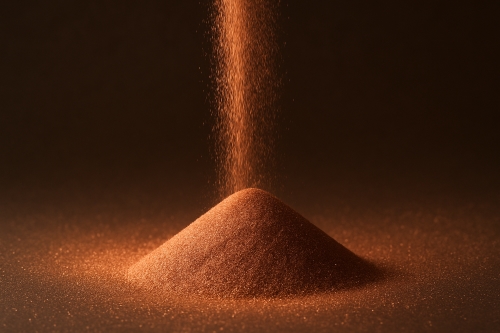
Copper powder is a finely divided form of copper. It is known for its excellent electrical and thermal conductivity. Copper powder is produced by different processes such as atomization or chemical reduction. Its particle size is usually less than 100 micrometers. This powder has a high surface area that makes it reactive. It is useful in many settings where copper is needed in a small, free-flowing form. Even people who work in small-scale engineering projects or in laboratories use copper powder for its unique abilities.
Electrical and Electronic Applications
Copper is a good conductor of electricity. The powder form of copper is used to produce conductive inks. These inks can be printed on circuit boards. The copper particles help conduct electricity across the routes. In addition, copper powder is a part of pastes that join components in electronics during the assembly process. In many cases, copper powder is used as a sintering aid. Sintering sintered parts in electrical connectors, for example, is a common case. Specific data show that copper has a conductivity of about 5.96 x 10^7 S/m, which is very high compared to many metals. This makes it a favored material in applications where electrical performance is key.
Powder Metallurgy and Additive Manufacturing
Powder metallurgy involves the pressing and sintering of metal powders. Copper powder is mixed with other metals to form alloys or used alone. Parts produced in powder metallurgy can have precise shapes and controlled porosity. Engineers use this technique for making gears and bearings where specific tolerances are required. In additive manufacturing, the powder is laid down layer by layer and fused with a laser. This process, often known as 3-D printing with metals, makes it possible to create complex parts. In the automotive and aerospace industries, copper powder contributes to lightweight parts with good strength and durability. Many practical cases include the production of heat sinks that maintain power efficiency.
Catalysts and Chemical Industry
Copper powder finds use in the chemical industry as a catalyst. It helps speed up various reaction processes. Some reactions in organic chemistry use copper powder to assist in coupling reactions. There are documented cases in labs, where copper powder is mixed with other chemicals to create active catalysts. In the production of plastics and synthetic fibers, copper powder assists with reaction efficiency. Engineers appreciate its stability and reactivity at moderate temperatures. The specific surface area of the powder allows the catalyst to work immediately upon contact with the reactants.
Thermal Management
Copper powder’s high thermal conductivity makes it perfect for thermal management. It can be used to fill gaps in heat sinks. It helps transfer heat away from sensitive electronic parts. In power electronics and LED lighting, copper powder mixed into thermal pastes improves heat flow. Specific examples include circuit boards in computers where overheating is a common problem. The powder increases the contact area and helps prolong the life of the electronic device. The idea is simple: better heat transfer leads to longer device life.
Friction Materials and Lubricants
Friction and wear are important concerns in moving machine parts. Copper powder is added to special lubricants to reduce friction. In brake pads and clutch plates, controlled amounts of copper powder help manage heat and wear. Studies in friction materials show that copper powder offers good wear resistance and improves the stability of friction. Many mechanics in the auto industry have observed improvements in durability when copper powder is used in material blends. Such cases include industrial machines where metal bearings work under high pressure.
Decorative and Pigment Uses
Copper powder also has a role in art and design. It is mixed into paints to give them a metallic shine. In ceramics and glass works, copper powder provides an attractive copper hue. Craftsmen often use it to add an antique look to items. With proper surface treatment, copper powder can be protective as well as decorative. Its fine particles help create a consistent texture in coatings used in decorative finishes. Even in household items, a touch of copper powder can bring warmth and style.
Conclusion
Copper powder is a versatile material with diverse uses. Its use in electrical circuits, metallurgy, and chemical reactions benefits many industries. It facilitates thermal control and strengthens friction materials. The use in decorative applications adds beauty to many products. The diversity of copper powder uses makes it an essential material in modern technology and industry. Its reliability and performance have been tried and established for many decades by both engineers and artisans. For more powder products, please check Stanford Advanced Materials (SAM).
Frequently Asked Questions
F: Can copper powder be used at high temperature applications?
Q: Yes, copper powder performs well at high temperature applications due to its high thermal conductivity.
F: Is copper powder safe to handle?
Q: Generally yes. Standard safety precautions must be taken when handling fine metal powders.
F: Does copper powder need special storage?
Q: It is best kept under dry, clean conditions to avoid oxidation and maintain activity.
 Chin Trento