Products
 Bars
Bars
 Beads & Spheres
 Bolts & Nuts
 Crucibles
 Discs
Discs
 Fibers & Fabrics
 Films
Films
 Flake
Flake
 Foams
Foams
 Foil
Foil
 Granules
 Honeycombs
 Ink
Ink
 Laminate
 Lumps
Lumps
 Meshes
 Metallised Film
 Plate
Plate
 Powders
 Rod
Rod
 Single Crystals
 Sputtering Target
 Tubes
Tubes
 Washer
 Wires
Wires
 Converters & Calculators
 Write for Us



Introduction to Spherical Alumina Powder

Introduction
Spherical alumina powder is spherical aluminum oxide powder. It has been utilized by technicians and engineers for several decades. It is widely used across industries for performance and reliability. We will discuss what spherical alumina powder is, its properties, its production process, and why it is preferred in various industries.
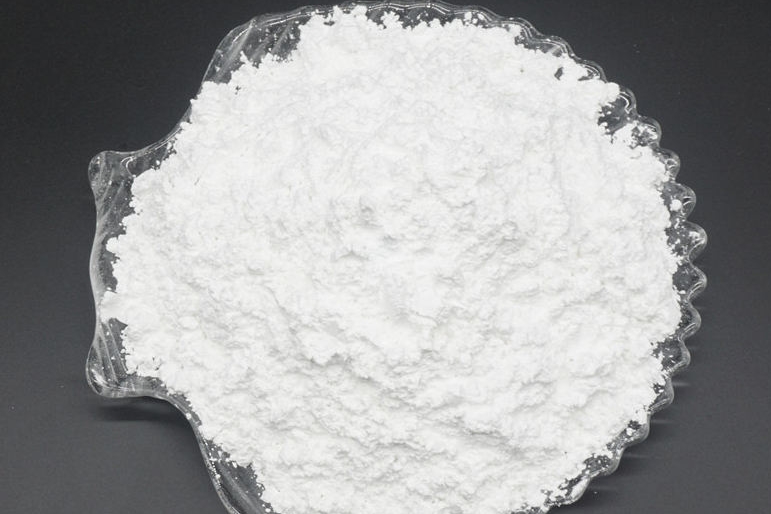
What Is Spherical Alumina Powder?
Spherical alumina powder is aluminum oxide of nearly perfect spherical shape. The powder is not like other powders that have sharp ends or flat surfaces. Its spherical shape enables it to flow like liquid when poured. It also fills containers uniformly. The product is used as an additive in different high-temperature and wear-resistant products. Its spherical shape makes it easier to use in automated processes and high-end ceramic mixes.
Key Physical and Chemical Properties
Spherical alumina powder has many excellent properties. The purity is potentially more than 99% aluminum oxide. Particle size is from sub-micron to several microns depending on the application. The density is typically between 3.95 grams per cubic centimeter. This is for the purpose of a high-stability structure in applications of high performance. In addition, spherical morphology is for better flowability. This is very important when mixing the powder with other materials.
The melting point of alumina, which is about 2,050°C, is extremely high and therefore ideal for use in high-temperature applications. Its inertness also causes it to be non-reactive with other materials under extreme conditions. Many industries take advantage of its insulating, abrasive, and structural properties. Some uses are in thick-film technology and wear-resistant coatings.
Manufacturing Methods
There are several methods to produce spherical alumina powder. One common method is a flame spray process. In this, aluminum oxide droplets are melted and spheroidized at high temperatures. Yet another process uses plasma spheroidization. High-energy plasma is used to melt irregular particles and cool them to form a sphere. Sol-gel techniques are another technique that regulates the particle growth from a solution. Production under controlled conditions ensures uniform size in the powder and smoothness on the surface. These processes require utmost precision, and due to this, experienced operators are tasked with managing production.
Advantages of Spherical Alumina Powder
The spherical nature of the powder has several advantages. First, the spherical nature results in outstanding flowability. That is, it flows well through equipment without clogging. Secondly, it is of high packing density. High packing density can result in improved material uniformity in coatings or ceramics. Thirdly, the even shape is accountable for a uniform performance in stress-bearing conditions. Spherical alumina powder is also commonly used by engineers where uniformity is required. Finally, the powder is easier to mix with binder agents, which is a positive trait in advanced manufacturing.
Common Use of Spherical Alumina Powder
Spherical alumina powder has numerous uses, primarily in the following sectors:
- Thermal Conductive Filler: Due to its high thermal conductivity as high as 200W/mK or even higher, spherical alumina powder can significantly improve the thermal conductivity of silicone, epoxy resin, plastics, and so on. It has wide applications in heat dissipation of electronic devices, thermal conductivity of automotive components, and chemical pipeline insulation.
- Wear-Resistant Materials: With its high hardness (Mohs hardness ≥ 9) and excellent wear resistance, spherical alumina powder can also be used for the manufacturing of wear-resistant components, abrasives, and polishing agents, thus prolonging the service life of equipment and machinery and increasing production efficiency.
- Catalyst Support: High specific surface area (up to 100m²/g) and excellent activity of spherical alumina powder make it an excellent catalyst support, significantly improving the efficiency of catalytic reaction and reducing the cost of production. It finds extensive applications in the chemical, petroleum, pharmaceutical, and other related industries.
- Other Applications: Spherical alumina powder also has its uses in other sectors such as ceramics, electronics, medicine, etc., such as manufacturing ceramic tiles, electronic parts, and medical devices.
Spherical Alumina and Other Alumina Powders
Regular alumina powders come in many different shapes, i.e., irregular and flake-shaped. These others have higher surface area because of their edges and surfaces. They can be applied where maximum reactivity is needed, such as in catalyst supports. However, they are not as fluid. Their propensity to create irregular shapes can be an issue in automated processing and mixing. Spherical alumina, however, has more regular packing and smoother flow. For that reason, it is the better choice where precision counts and consistency is important.
Conclusion
Spherical alumina powder is an invaluable resource in various industries. The spherical form offers benefits in density and flowability. The powder is extremely thermally and chemically stable. Industries involving accuracy and uniformity utilize the material instead of other forms of alumina.
Frequently Asked Questions
F: Which industries employ spherical alumina powder?
Q: Ceramic, coating, electronic, and refractory industries employ spherical alumina powder.
F: Why is the spherical shape beneficial?
Q: The spherical shape ensures perfect flowability, high packing density, and consistent behavior.
F: Which manufacturing process assures the best spherical quality?
Q: Plasma spheroidization and flame spray processes produce high-quality spherical alumina powder.
 Chin Trento