Products
 Bars
Bars
 Beads & Spheres
 Bolts & Nuts
 Crucibles
 Discs
Discs
 Fibers & Fabrics
 Films
Films
 Flake
Flake
 Foams
Foams
 Foil
Foil
 Granules
 Honeycombs
 Ink
Ink
 Laminate
 Lumps
Lumps
 Meshes
 Metallised Film
 Plate
Plate
 Powders
 Rod
Rod
 Single Crystals
 Sputtering Target
 Tubes
Tubes
 Washer
 Wires
Wires
 Converters & Calculators
 Write for Us



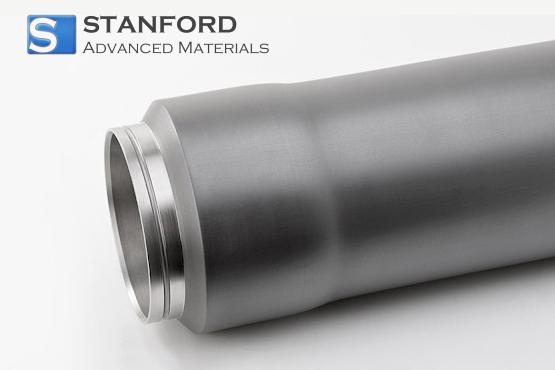
Mo Tube Targets for Liquid Crystal Display and Organic Light Emitting Diode

Introduction
Molybdenum is a critical element in the majority of high-technology uses. Molybdenum tube targets have become well known in liquid crystal display and organic light emitting diode manufacturing. They are applied in sputtering processes to apply thin films. These films play a significant role in the building of electronic displays.

Material Properties of Molybdenum
Molybdenum is a refractory metal. It possesses one of the highest melting points, around 2623°C. The metal has excellent thermal and electrical conductivity. It can withstand wear and chemical corrosion even under harsh conditions. The majority of manufacturers employ molybdenum due to its high stability against sputtering rate. Purities above 99.9% in laboratory tests have achieved uniform deposition layers. Its low vapor pressure facilitates the improvement of thin films' uniformity, states engineers. The metal is not easily oxidized, which adds more durability when being produced. Typical uses are in electronic components and elements of high-temperature furnaces, which also have these properties.
Design and Fabrication of Mo Tube Targets
Tube target design starts with the selection of high-purity molybdenum. The material must be free from contaminants. Geometry in the fabrication of tube targets is designed carefully. A cylindrical shape is common as it allows for even sputtering area. Proper machining is necessary. They ensure that the shape and wall thickness of the tube are not altered when under stress. The production involves cutting, rolling, and annealing. Annealing reduces stresses within. Computer numerical control machines are used by most workshops to obtain precise dimensions. The tube is cleaned and polished afterward. Testing for defects and cracks is done by quality control. Senior technicians usually utilize non-destructive testing to confirm the structure. This is the critical step in preventing issues further along the manufacturing line.
Application in Liquid Crystal Display and Organic Light Emitting Diode Fabrication
Liquid crystal displays and organic light emitting diodes depend on precise thin films. Mo tube targets are employed in sputtering chambers. Molybdenum is sputtered and deposited onto substrates in these chambers. The process creates conductive layers essential for display functioning. A common use is the production of transparent electrodes in liquid crystal panels.
In organic light emitting diode manufacturing, molybdenum aids in current distribution. Deposition rates exhibit high uniformity under controlled testing. Tube design accommodates uniform thickness on large panels. Operators report fewer defects when other metals are substituted with molybdenum tube targets. Pilot run data typically exhibit yield enhancements of as much as 10 percent when using high-purity molybdenum targets. Such consistency makes these tube targets highly preferred in the current display manufacturing plants.
Conclusion
Molybdenum tube targets provide a reliable approach to liquid crystal display and organic light emitting diode manufacturing. Their outstanding material properties and rugged structure have proven themselves over time. Simple but precise manufacturing methods allow steel to set a high standard of performance on the steel production line. Consistent film deposition and testing further place them in a position of superiority in today's production. Targeted material is benefited by the electronics industry through lower defects and better overall yield. Targeting solely quality and precision, molybdenum tube targets are still an essential part of high-technology display manufacturing. For more molybdenum products, please visit Stanford Advanced Materials (SAM).
Frequently Asked Questions
F: What is a molybdenum tube target?
Q: It is an molybdenum tube target utilized for depositing thin films in sputtering systems.
F: How does the material property of molybdenum help display production?
Q: Its low vapor pressure and high melting point ensure stable and consistent deposition of thin films.
F: Why is quality control important in manufacturing molybdenum tube targets?
Q: Quality control prevents defects and ensures that the target meets the precise requirements for stable operation.
 Chin Trento