
 Products
 Bars
Bars
 Beads & Spheres
 Bolts & Nuts
 Crucibles
 Discs
Discs
 Fibers & Fabrics
 Films
Films
 Flake
Flake
 Foams
Foams
 Foil
Foil
 Granules
 Honeycombs
 Ink
Ink
 Laminate
 Lumps
Lumps
 Meshes
 Metallised Film
 Plate
Plate
 Powders
 Rod
Rod
 Single Crystals
 Sputtering Target
 Tubes
Tubes
 Washer
 Wires
Wires
 Converters & Calculators
 Write for Us



Why to Utilize High Purity W Sheet in High Temperature Applications

Introduction
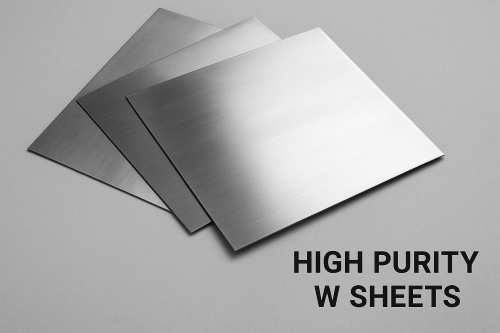
High purity tungsten sheet plays an important role in many high-temperature applications. As a veteran chemist and engineer, I can speak with confidence that high purity metals promote performance and dependability. Tungsten possesses a very high melting point and retains strength at high temperatures. This renders tungsten as an appropriate choice for rigorous applications. We will be dealing with the performance, application, and advantage of high purity tungsten sheet in this article.
High-Temperature Performance and Features
High purity tungsten sheet has a number of features that set it apart from other products. Firstly, tungsten has a melting point of approximately 3422°C. Its high melting point means that it does not lose strength even at high temperature. Two, it has high thermal conductivity. This feature guarantees effective heat transmission and the lack of vulnerable points. Three, high purity tungsten brings oxidation resistance at high temperatures.
Its microstructure is homogeneous. Lower impurity content ensures lower tendencies of cracking with sudden changes in temperature. In addition, the sheet offers superior stability in harsh environments. Some tungsten sheet grades are also proven to perform well with continuous exposure to heat and battery testing. One common application is in heat shields, whereby temperatures' cycles are constant. Field test results show that 99.95% pure tungsten sheets demonstrate long service life even under severe thermal loads.
Application in High-Temperature Conditions
The high purity tungsten sheet is applied in many applications involving materials subjected to high temperatures. Its properties make it a strong candidate for use in situations where metals become weak or fail with ease. There are many examples involving optimized performance and safety of components through the use of high purity tungsten. Let us discuss common areas of application.
Aerospace: Turbine Components, Heat Shields, and Nozzles
High purity tungsten sheet is used in the aerospace sector to fabricate turbine components, heat shields, and nozzles. Aircraft turbine components need to withstand the harsh heat of combustion. With its high melting point, tungsten makes sure that turbine components can work at elevated temperatures with reduced failure risks. High purity tungsten shields against severe re-entry temperatures for usage as heat shields. In nozzles, the material makes sure it still maintains very precise forms despite very rapid cycles of heat and cool. Field reports by aerospace engineers verify that components made from high purity tungsten suffer less from wear and tear and last longer.
Electronics: High-Power Resistors, X-Ray Targets
Electronic devices often need more power and heat-resistance parts. High-purity tungsten sheet is used in high-power resistors. The resistors produce a large amount of heat, but tungsten can handle it without experiencing loss of functionality. In yet another use, tungsten is used in X-ray targets in imaging devices. Its properties help produce fine, consistent X-ray beams. Technical uses seen by electronic hardware makers include tungsten targets offering consistent output for repeated uses.
Industrial: Crucibles, High-Temperature Molds, and Furnace Components
In the majority of industrial processes, components like crucibles and high-temperature molds are exposed to heat that the majority of metals cannot tolerate. High purity tungsten sheet is an ideal fit for such uses. Crucibles made from tungsten can maintain metals at very high melting temperatures in the production of alloys without adulterating the blend. High-temperature molds made of tungsten sheet produce components with tight tolerances. Furnace components made from this material continue to operate in repeated heat cycles of application. Testimonials coming from industrial plants name tungsten parts as reliable, with less holdup in manufacture and a lower chance of mechanical failure.
Advantages over Alloys or Lower-Purity Tungsten
There are several reasons why high purity tungsten would be more desirable than lower purity tungsten or other metals. First, lower purity tungsten can lead to premature failures within heat cycles because of impurities. High purity tungsten lowers the risk of microcracking and oxidation by a great extent. Second, alloys can be strong but compromise on other benefits like thermal stability. High purity tungsten sheet is still effective even if the temperature rises significantly. Third, employing high purity tungsten can reduce overall maintenance downtime as the material needs fewer repairs. A few engineers opine that investing in high purity tungsten is cost-effective in the long run.
Conclusion
High purity tungsten sheet is among the finest choices for applications at high temperatures. It resists extreme temperatures, delivers consistent performance, and stands up to aerospace, electronics, and industrial uses. Careful selection yields increased safety and dependability under harsh conditions. The reward comes in the form of increased service life and consistent performance. High purity tungsten sheet is a wise selection for those who need stable performance under duress. This article has presented clear benefits and practical illustrations illustrating why high purity tungsten is the preferred selection for high-heat applications.
Frequently Asked Questions
F: Why is high purity tungsten sheet employed in heat-intensive applications?
Q: It has a very high melting point and also maintains strength at high temperatures.
F: How does tungsten sheet protect aerospace components?
Q: It withstands intense heat, protecting turbine components, nozzles, and heat shields.
F: Why is tungsten sheet better than lower purity tungsten?
Q: Lower impurities lead to greater thermal stability and longer component life.
 Chin Trento