
 Products
 Bars
Bars
 Beads & Spheres
 Bolts & Nuts
 Crucibles
 Discs
Discs
 Fibers & Fabrics
 Films
Films
 Flake
Flake
 Foams
Foams
 Foil
Foil
 Granules
 Honeycombs
 Ink
Ink
 Laminate
 Lumps
Lumps
 Meshes
 Metallised Film
 Plate
Plate
 Powders
 Rod
Rod
 Single Crystals
 Sputtering Target
 Tubes
Tubes
 Washer
 Wires
Wires
 Converters & Calculators
 Write for Us



Why Palladium is the Material of Choice for Marker Bands

Introduction
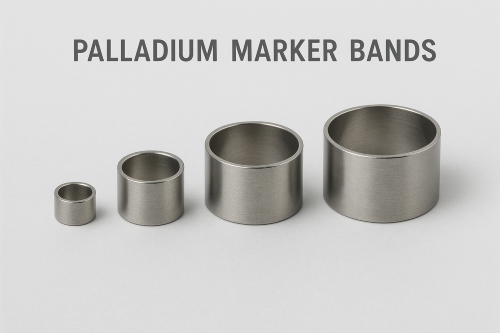
Palladium is also found to be of much use in a wide range of high-tech devices. Palladium is employed in marker bands because of their reliability and hardness. The quality of palladium has been surprising scientists and engineers for many years. Its hardness and consistent quality have made marker bands precise and tougher.
Role of Marker Bands
Marker bands serve as guides or markers in the majority of equipment. Marker bands are employed to identify important points and to align structures in operations. For example, in medical devices, marker bands are used to identify and locate positions. In industry, they guide parts of machinery and measure positions with accuracy. The kind of construction in marker bands determines their performance. Lightweight yet strong materials ensure that they perform optimally. Marker bands made of palladium show stability and do not warp easily. This gives technicians and doctors greater confidence when using these devices.
Palladium's Key Properties
Palladium has many essential properties for marker bands. Palladium is also resistant to corrosion and oxidation. Palladium is stable in air and other chemicals. For instance, experiments show that under harsh chemical environments, palladium loses less than 0.1% of its weight. It is also thermally well stabilized, which means that it endures high temperatures without any problems. Its melting point is more than 1554°C. All these attributes are useful in demanding applications.
In addition to these, palladium is highly ductile. It can be elongated or distorted but not cracked. This type of property becomes useful in the shaping process during the forming process. Its conductivity in terms of electricity is also another benefit in some uses. These properties make palladium superior in scenarios where performance and safety matter most.
Palladium vs Other Materials
Other metals like platinum, gold, and nickel are sometimes used in marker bands. Palladium, however, generally wins when it comes to value, durability, and performance. First, palladium is less expensive compared to platinum but almost as good under harsh conditions. Palladium gives a similar look but with much superior mechanical properties than gold. Nickel is perhaps tough, but sometimes it corrodes and causes allergic reactions in medical applications.
In usual uses, palladium marker bands have shown fewer defects and longer lifetimes. The reliability translates to lower expense in maintenance and replacement over the long run. In the majority of the tests, palladium marker bands have proven stable and resilient under stress, outperforming most alloys in comparison.
Further reading: Marker Bands for Medical Devices: A Comprehensive Overview
Manufacturing Considerations
The production process for palladium marker bands is very common to producers. The character of the metal allows good forming and machining processes. In a typical procedure, palladium is rolled, cast, and then precisely cut into bands. Such processes are not as energy-consuming as some metals that need to undergo other treatments to avoid brittleness.
In addition, quality control becomes easier with palladium since its way of behaving is the same regardless of the conditions. This makes it possible to decrease waste and maximize production output. For these reasons, most factories prefer using palladium when producing marker bands so that each component measures up to high standards with little variability.
Clinical Advantages
Marker bands are used in the majority of clinical applications. If surgery or diagnostic procedures need reliable location markers, the consistency of the band is most important. The corrosion resistance and durability of palladium ensure that the marker band remains in position throughout long procedures. This stability helps reduce risks in operations.
Also, palladium is less likely to cause allergic reactions compared to other metals like nickel. This is to the advantage of the patients. Palladium marker bands have also been found in research to be well-tolerated since they do not deform or corrode in the human body. This has been a factor in its clinical application over time.
Conclusion
Palladium is the material of choice for marker bands due to its unique properties. The metal is stable, robust, and reliable. Its resistance to corrosion and heat makes it an excellent choice. Palladium trumps other traditionally used materials in terms of performance in most sectors and worth in manufacture and medical use. With performance having been proven in safety and longevity, palladium marker bands continue to be a trusted solution in many uses. For more medical devices, please check Stanford Advanced Materials (SAM).
FAQs
F: How does palladium improve marker band performance?
Q: It is very resistant to corrosion, thermally stable, and mechanically strong.
F: Is palladium marker band safe for use in clinical settings?
Q: Yes, its biocompatibility reduces allergic reaction and resists procedures intact.
F: How do manufacturing processes utilize palladium?
Q: Its reliable properties allow effective forming and reliable quality control during manufacture.
 Chin Trento