
 Products
 Bars
Bars
 Beads & Spheres
 Bolts & Nuts
 Crucibles
 Discs
Discs
 Fibers & Fabrics
 Films
Films
 Flake
Flake
 Foams
Foams
 Foil
Foil
 Granules
 Honeycombs
 Ink
Ink
 Laminate
 Lumps
Lumps
 Meshes
 Metallised Film
 Plate
Plate
 Powders
 Rod
Rod
 Single Crystals
 Sputtering Target
 Tubes
Tubes
 Washer
 Wires
Wires
 Converters & Calculators
 Write for Us



Molybdenum Disulfide Crystals: Structure, Growth, and Performance

Introduction to Molybdenum Disulfide Crystals
Molybdenum disulfide crystals belong to a family of layered materials known for their unique physical and chemical properties. They have been utilized in various fields for many years.
Structure of Molybdenum Disulfide Crystals
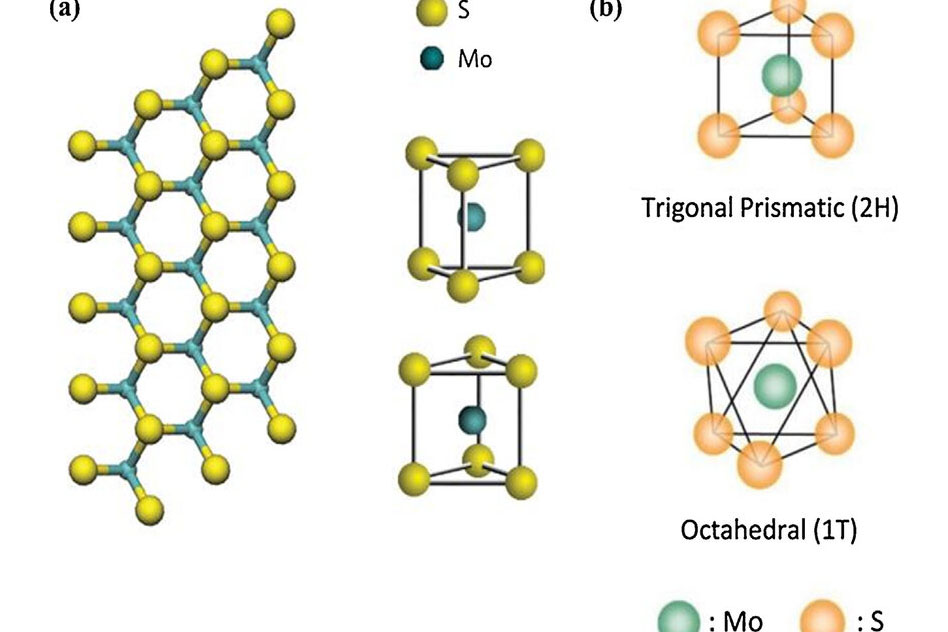
At the atomic level, molybdenum disulfide forms in a layered structure. In each layer, one sheet of molybdenum atoms separates two sheets of sulfur atoms. The strong covalent bonds in each layer give the crystal stability. The layers stack on top of one other due to weak van der Waals forces. This allows the layers to slide past one another easily.
This type of structure is behind many physical properties. For instance, when molybdenum disulfide is thinned down to a few layers, it shows a direct band gap. For bulk molybdenum disulfide, the band gap is indirect. Such changes influence how the material interacts with light and electricity. In practical terms, nanometer-thin samples have been used in transistors and sensors. Data from recent experiments have measured the interlayer spacing at about 0.62 nanometers. These numbers may vary slightly depending on the method used and the sample quality.
Growth Methods of Molybdenum Disulfide Crystals
Over the years, different methods have been used to grow molybdenum disulfide crystals. Chemical vapor deposition is one of the popular techniques. In this method, gaseous molybdenum and sulfur compounds react at high temperature on a substrate. Samples grown this way can achieve high uniformity. The process has been refined so that researchers can obtain layers just a few atoms thick.
Another method is mechanical exfoliation. This is a classical technique where layers are peeled off from a bulk crystal using simple tape. Although this quality is very high, it is not practical for large-scale production. Other methods such as liquid-phase exfoliation or sulfurization of molybdenum films are gaining ground. They offer a balanced approach by combining ease of fabrication with good quality for electronic applications.
Performance Characteristics of Molybdenum Disulfide Crystals
Molybdenum disulfide crystals show performance characteristics that suit modern electronics and mechanical systems. Data indicate these materials have high carrier mobility. For instance, measured values often reach a few hundred square centimeters per volt-second. This means carriers can move quickly under an electrical field. Their direct band gap in thin layers makes them efficient for light absorption and emission in optoelectronic devices.
Thermal conductivity is also an important performance measure. Although it does not match that of graphene, molybdenum disulfide still handles moderate heat well. Mechanical tests have shown that the material has good resilience and can withstand bending. This is why these crystals are used in flexible electronics. I recall instances where molybdenum disulfide has been tested in field-effect transistors, showing reliable behavior over many cycles of bending and stretching.
Applications of Molybdenum Disulfide Crystals
The applications of molybdenum disulfide are many and practical. In electronics, thin films of molybdenum disulfide have been used in field-effect transistors with low power consumption and high on/off ratios. In one case, researchers reported devices with on/off ratios exceeding 10^6. These numbers provide a good basis for future commercial products.
Optoelectronic devices also benefit from the unique band gap properties. Light-emitting diodes that use this material have shown promise due to efficient light emission. In the area of sensors, its high surface-to-volume ratio makes it very sensitive to environmental changes. For example, sensors based on molybdenum disulfide have detected gas concentrations in the low parts-per-million range.
Additionally, these crystals have found use in lubrication. The layered structure allows for low friction between contacts. Many mechanical systems have used molybdenum disulfide powders to reduce wear and extend the lifetime of parts. In many industrial and automotive settings, such lubrication has proven to be both cost-effective and reliable.
Conclusion
Molybdenum disulfide crystals are a valuable material in modern science and industry. Their layered structure gives rise to beneficial properties such as excellent electrical behavior and mechanical flexibility. These traits lead to a wide range of applications that span from field-effect transistors and sensors to optoelectronic devices and lubricants in mechanical systems.
Frequently Asked Questions
F: What makes molybdenum disulfide crystals special?
Q: Their layered structure gives them unique electrical and mechanical properties that are ideal for modern electronic and mechanical applications.
F: Can molybdenum disulfide be used in flexible devices?
Q: Yes, its high resilience and thin-layer properties make it suitable for flexible electronics.
F: Are there common methods to grow high quality molybdenum disulfide?
Q: Chemical vapor deposition and mechanical exfoliation are well-established techniques for producing quality crystals.
Reference:
[1] Wu, Ming-hong & Li, Lin & Liu, Ning & Wang, De-jin & Xue, Yuan-cheng & Tang, Liang. (2018). Molybdenum disulfide (MoS 2 ) as a co-catalyst for photocatalytic degradation of organic contaminants: A review. Process Safety and Environmental Protection. 118. 10.1016/j.psep.2018.06.025.
 Chin Trento