
 Products
 Bars
Bars
 Beads & Spheres
 Bolts & Nuts
 Crucibles
 Discs
Discs
 Fibers & Fabrics
 Films
Films
 Flake
Flake
 Foams
Foams
 Foil
Foil
 Granules
 Honeycombs
 Ink
Ink
 Laminate
 Lumps
Lumps
 Meshes
 Metallised Film
 Plate
Plate
 Powders
 Rod
Rod
 Single Crystals
 Sputtering Target
 Tubes
Tubes
 Washer
 Wires
Wires
 Converters & Calculators
 Write for Us



Why Calcium Fluoride Windows Stands Out

Introduction
Calcium fluoride windows have gained attention in the field of optics. They offer a unique combination of clarity and reliability. Many optical systems use calcium fluoride for its strength and efficiency.
Calcium fluoride is not a new material. It has been used since the early days of optical instrument design. Manufacturers appreciate its light transmission quality. Engineers and scientists use it for critical optical applications. Its special traits have kept it in use over the years.
Calcium Fluoride Material Properties
Calcium fluoride is known for its excellent transmission in both ultra-violet and infrared ranges. It transmits light well from around 0.13 micrometers in the UV to 10 micrometers in the infrared. The material has a refractive index of about 1.43 at the visible light wavelength. Its low dispersion helps to reduce optical aberrations in high precision devices.
The structure of calcium fluoride is cubic. This structure leads to consistent performance when crystals are grown properly. Its hardness is around 4 on the Mohs scale which makes it soft compared to some glasses. However, its optical clarity and low absorption are qualities that many applications rely on.
Calcium fluoride has a melting point of 1418 degrees Celsius. This fact makes it stable under severe operating conditions. Its transmission spectrum and low dispersion make it a choice candidate where precision in the light path is necessary.
Calcium Fluoride Manufacturing and Forms
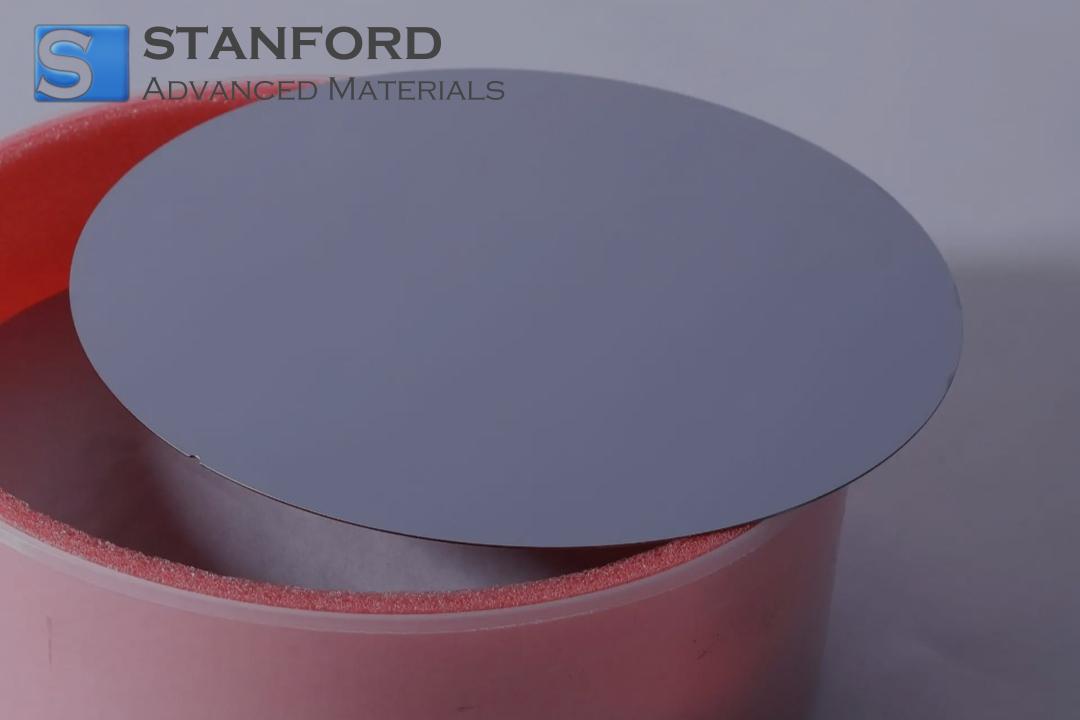
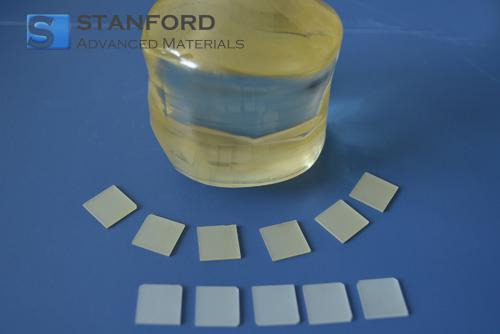
Calcium fluoride can be obtained from natural sources as well as produced synthetically. The natural mineral form is known as fluorspar. Refining and purification processes yield optical-grade crystals. These crystals show few defects and provide excellent clarity.
In manufacturing, the crystals can be grown using techniques like the Czochralski method. This technique leads to large and well-formed crystals. Manufacturers also use a process called sublimation to get high-purity materials. The end product can be shaped into windows, lenses, and prisms.
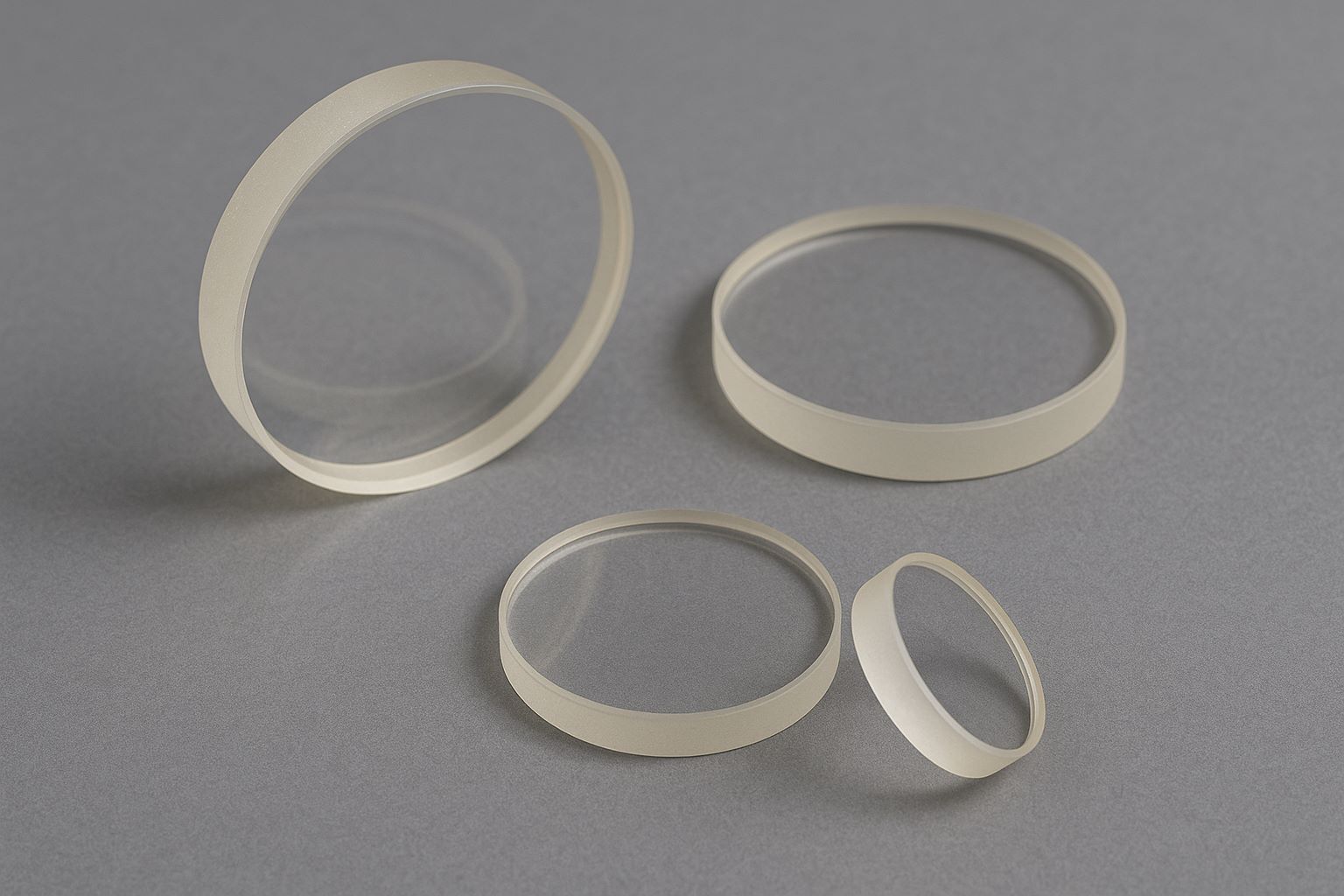
Calcium fluoride windows come in a range of thicknesses and diameters. Certain optical tools require a specific flatness and surface quality. The demand for high-performance optical devices drives manufacturers to produce calcium fluoride with tight tolerances. This commitment to quality pays off in advanced scientific applications and high-power laser systems.
Calcium Fluoride Applications
Calcium fluoride has many uses in optical devices. Its excellent light transmission makes it a favorite in high-power laser systems. Optical elements such as windows in lasers and lenses in projection systems use calcium fluoride due to its low refractive index and high transmission.
One common example is its use in ultraviolet lithography. Optical systems used in semiconductor manufacturing require materials that can handle intense UV radiation. Calcium fluoride windows are also used in telescopic systems where broad spectral performance is needed. Scientific instruments that require a clear picture rely heavily on its low dispersion properties.
In the world of infrared imaging, calcium fluoride serves a vital role. Its transmission in the mid-infrared is valuable for thermal cameras and sensors. Engineers look for materials that keep phase distortions low and calcium fluoride often meets this need.
Its role in medical imaging is also notable. Certain surgical tools and diagnostic devices incorporate calcium fluoride elements because they need clear, distortion-free optics. The stable performance of this material under a range of temperatures is a big plus for consistent results.
Calcium Fluoride vs Other Optical Materials
Many optical materials are available today. Fused silica and sapphire are often seen as contenders. Calcium fluoride offers unique advantages. Its low dispersion and high transmission in a broad spectral band set it apart.
Fused silica is strong and durable. However, it does not offer the same wide spectral range as calcium fluoride does in the ultraviolet domain. Sapphire is hard and scratch resistant. Yet, its optical clarity may not always match that of calcium fluoride in certain applications. Practical engineers often choose calcium fluoride when low light loss and dispersion are key concerns.
The light weight of calcium fluoride compared to some other crystals is also an advantage. Devices that require minimal optical distortions benefit from its properties. Calcium fluoride’s performance outweighs that of its alternatives.
Limitations of Calcium Fluoride
No material is without limits. Calcium fluoride is relatively soft. Its Mohs hardness of 4 means it needs careful handling. Optical surfaces require special polishing methods to prevent scratches.
The material is also sensitive to moisture. Prolonged exposure in adverse conditions can lead to a drop in performance. Engineers use protective coatings on calcium fluoride windows to minimize water damage. Temperature changes can also cause stress in the crystal structure. This sensitivity means that careful design is mandatory for reliable use in extreme environments.
Cost is another factor to consider. Producing high-quality optical grade calcium fluoride can be expensive. The production processes require precision and expertise. In specific high-performance cases, the cost is justified by the optical quality. However, in less demanding environments, other materials might serve as a more economical choice.
Conclusion
Calcium fluoride windows stand out because of their excellent optical properties. Their wide range of light transmission and low dispersion makes them ideal for many high-end applications. The production techniques ensure that high-quality materials are available. While there are some limitations, careful handling and proper design allow for their effective use. For more IR and UR materials, please check Stanford Advanced Materials (SAM).
Frequently Asked Questions
F: What makes calcium fluoride special in optical devices?
Q: It transmits a wide range of light with low dispersion and is used in
high-power laser and imaging systems.
F: How is calcium fluoride produced for optical use?
Q: It comes from natural minerals and can be synthetically grown using methods
like the Czochralski method.
F: What limits the use of calcium fluoride in optics?
Q: Its softness, sensitivity to moisture, and cost can limit its use in some
applications.
 Chin Trento