Products
 Bars
Bars
 Beads & Spheres
 Bolts & Nuts
 Crucibles
 Discs
Discs
 Fibers & Fabrics
 Films
Films
 Flake
Flake
 Foams
Foams
 Foil
Foil
 Granules
 Honeycombs
 Ink
Ink
 Laminate
 Lumps
Lumps
 Meshes
 Metallised Film
 Plate
Plate
 Powders
 Rod
Rod
 Single Crystals
 Sputtering Target
 Tubes
Tubes
 Washer
 Wires
Wires
 Converters & Calculators
 Write for Us



Magnesium Oxide Single Crystal Substrate: An Introduction

Introduction
Magnesium oxide in its single crystal form shows reliable performance in many technical fields. Its structure is uniform and its surface is smooth. These traits lower the risk of stress in electronic devices. We aim to provide a firm grounding in what magnesium oxide single crystal substrates are all about.
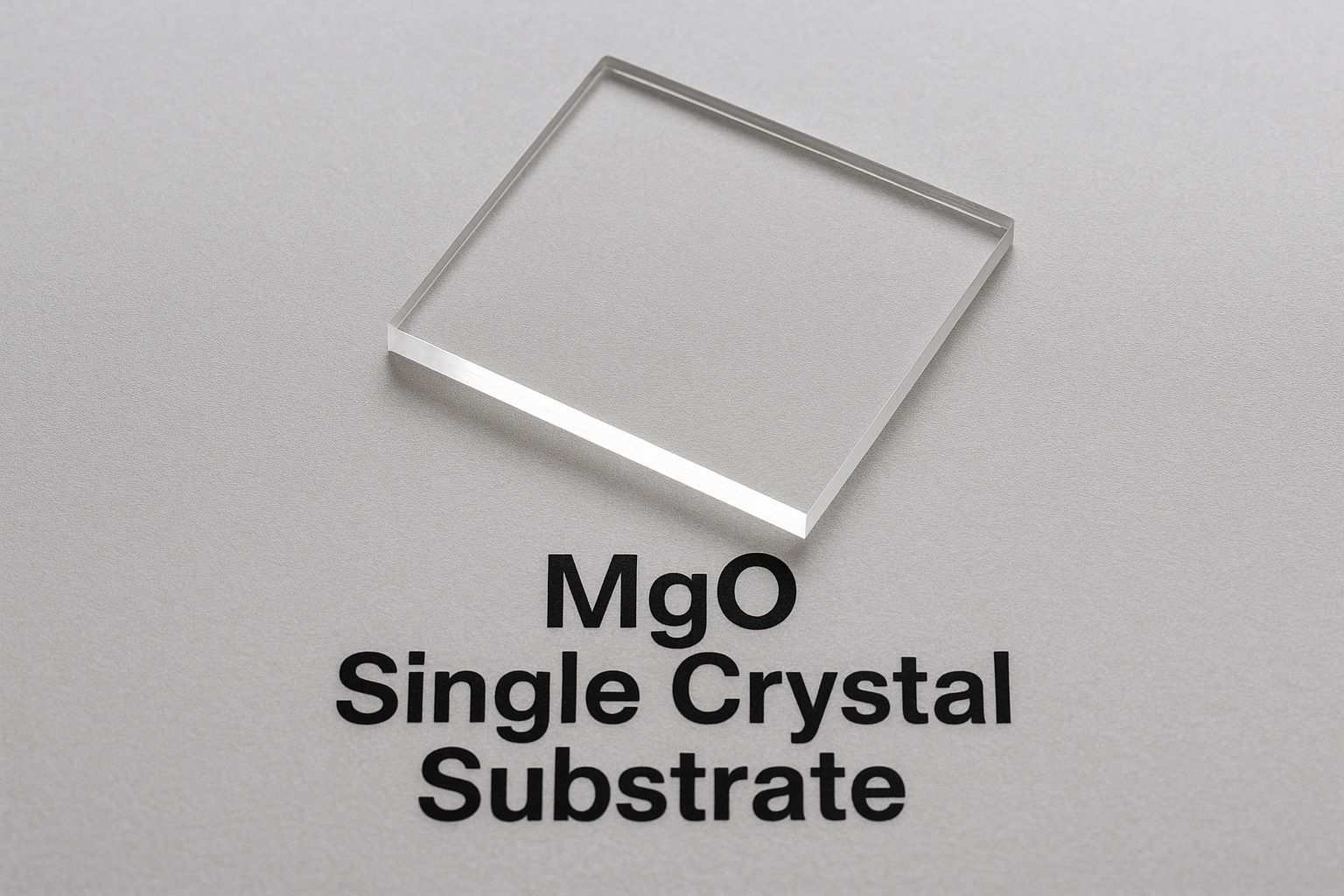
What Is Magnesium Oxide Single Crystal?
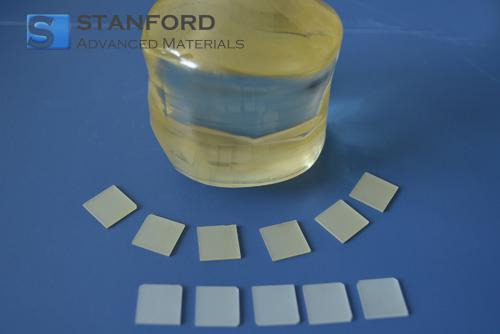
Magnesium oxide single crystal is a type of ceramic material. It has been carefully grown to form a continuous, unbroken crystal lattice. Each part of the crystal shows the same structure and quality. The uniformity is essential when the material serves as a substrate in electronic and optics devices.
In simple terms, a single crystal substrate is a highly ordered array of magnesium oxide. This order helps reduce imperfections in subsequent layers. Many researchers count on this material to act as a platform for the growth of other thin films. It is similar to having a smooth, consistent foundation for building a large structure.
Key Properties of Magnesium Oxide (Thermal Stability, Dielectric Constant, Hardness)
Let us now consider the key properties of magnesium oxide single crystal substrates:
1.
Thermal Stability
Magnesium oxide maintains its structure at extremely high temperatures. For
example, it can withstand heat up to nearly 2800 °C. This quality makes it a
good choice in environments where high heat or rapid temperature changes occur.
Devices that operate at high temperatures often use this substrate as a
reliable base.
2.
Dielectric Constant
The dielectric constant of magnesium oxide is near 9.8 at room temperature.
This feature matters for electronic applications where insulation is important.
The substrate serves to separate different layers in microelectronics. Its
dielectric quality helps minimize electrical loss in these systems. Many
engineers use it when a stable insulating material is required.
3.
Hardness
This material has a moderate hardness level. On the Mohs scale, the hardness
value is around 5. The hardness ensures that the substrate can support other
layers without early wear. For instance, in high-end semiconductor devices, a
stable substrate prevents breakdown under stress. A hard surface is also easier
to polish, which is beneficial in optical devices.
These properties are backed by decades of research. They have been confirmed in many tests and practical cases over time.
Applications of Magnesium Oxide Single Crystals
The uses of magnesium oxide single crystal substrates are varied. They play a role in many technological devices and scientific instruments.
One popular application is in electronics. The substrate is used to support layers of superconductors. In many cases, it provides a smooth platform for growing thin films. This is critical in the production of microwave devices and sensors. Many universities and research labs rely on these substrates in experiments related to high-temperature superconductivity.
Another area is in optics. Light-emitting devices and laser systems sometimes employ magnesium oxide single crystals. The material’s consistent structure aids in producing uniform light output. In many high precision measurements, the low defect density in the substrate adds to accuracy.
The substrate is also useful in the field of power electronics. It serves as an insulator between layers in devices that operate under electrical stress. Its thermal and dielectric properties help stabilize the device during high-speed operation. Many industries prefer it over other ceramics when long-term reliability is crucial.
Even in the coating and film industries, this material has found a place. It acts as a barrier layer for thin films, helping to prevent chemical reactions that can lead to device failure. Its strong performance in harsh environments makes it a favored option for advanced engineering applications.
Conclusion
In summary, magnesium oxide single crystal substrates are an essential material in many advanced technologies. They provide a reliable base due to high thermal stability, consistent dielectric properties, and reliable hardness. Their uniform structure makes them ideal for many modern applications including electronics, optics, and power devices. For more crystal materials, please visit Stanford Advanced Materials (SAM).
Frequently Asked Questions
F: What is the melting point of magnesium oxide?
Q: Magnesium oxide has a melting point close to 2800 °C, making it stable under
high heat conditions.
F: How does the uniformity of the crystal help device
performance?
Q: Uniform crystals lower the chance of defects, which improves device
reliability and performance.
F: Can magnesium oxide substrates work in optical
applications?
Q: Yes, they provide a smooth and consistent foundation that is beneficial in
optical device manufacturing.
 Chin Trento