
 Products
 Bars
Bars
 Beads & Spheres
 Bolts & Nuts
 Crucibles
 Discs
Discs
 Fibers & Fabrics
 Films
Films
 Flake
Flake
 Foams
Foams
 Foil
Foil
 Granules
 Honeycombs
 Ink
Ink
 Laminate
 Lumps
Lumps
 Meshes
 Metallised Film
 Plate
Plate
 Powders
 Rod
Rod
 Single Crystals
 Sputtering Target
 Tubes
Tubes
 Washer
 Wires
Wires
 Converters & Calculators
 Write for Us



Lithium Triborate Crystals: Advanced Nonlinear Optics

What Is Lithium Triborate Crystal?
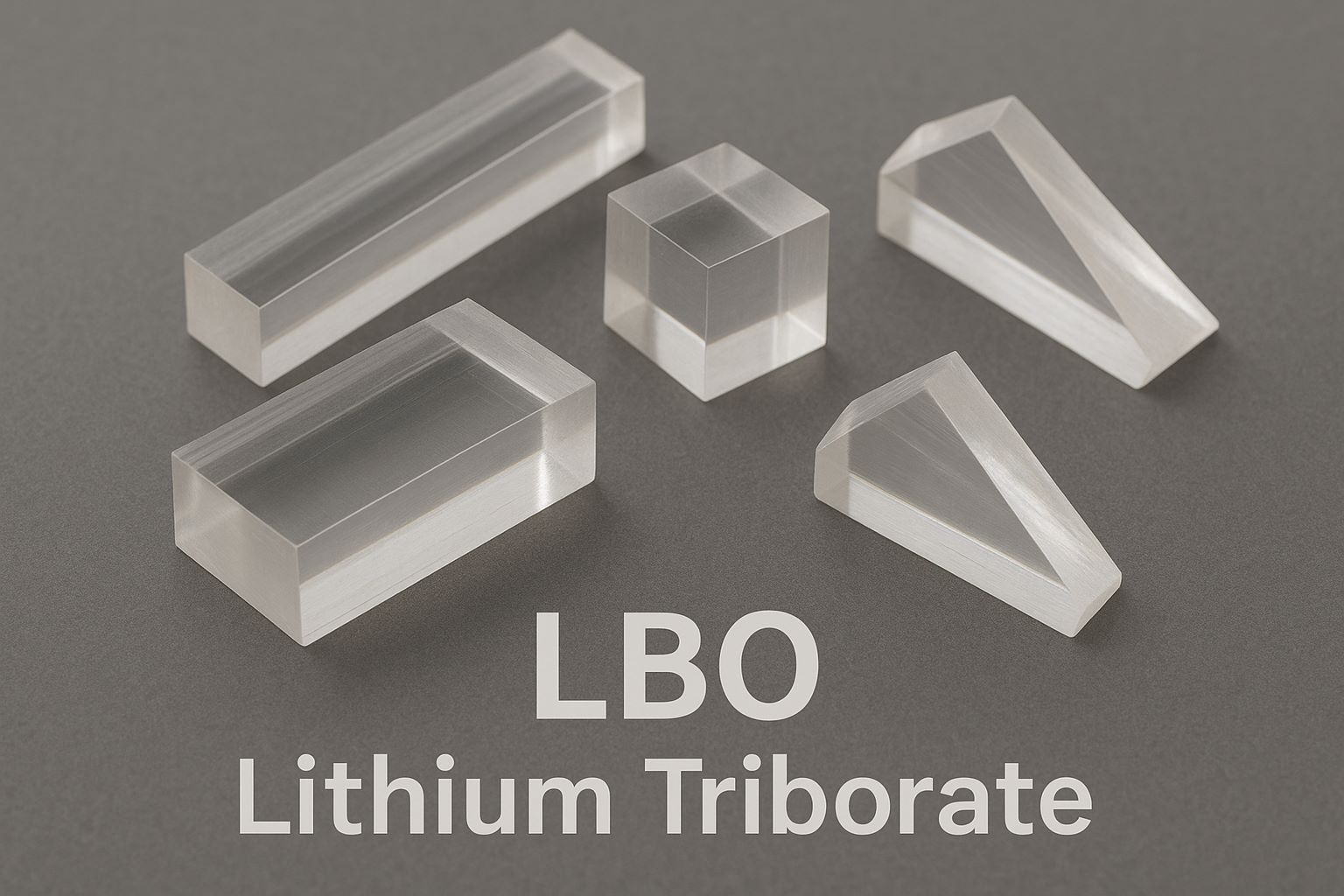
Lithium triborate crystal is a critical compound used in laser optics. It is utilized for frequency conversion. Lithium triborate crystal is preferred because it has high damage threshold and large transparency window. It is used in scientific and industrial laser systems. Scientists and engineers understand the physics of lithium triborate crystals. The crystal is used to improve the light conversion efficiency of laser systems. It is a stable material in high-end optics.
Key Material Features of Lithium Triborate
Lithium triborate crystals have some beneficial features. They have a broad transparency range from ultraviolet to near-infrared. Transparency range is typically between 160 nanometers and 2600 nanometers. Lithium triborate crystals have high damage threshold, and hence it can be employed in high-power lasers. Their moderate nonlinear optical coefficient with respect to that of certain other crystals, the crystals have low beam walk-off angles that reduce distortions in laser beams. Lithium triborate's mechanical strength and thermal stability are attributed to both its mechanical strength and thermal stability.
Manufacturing Processes and Crystal Forms
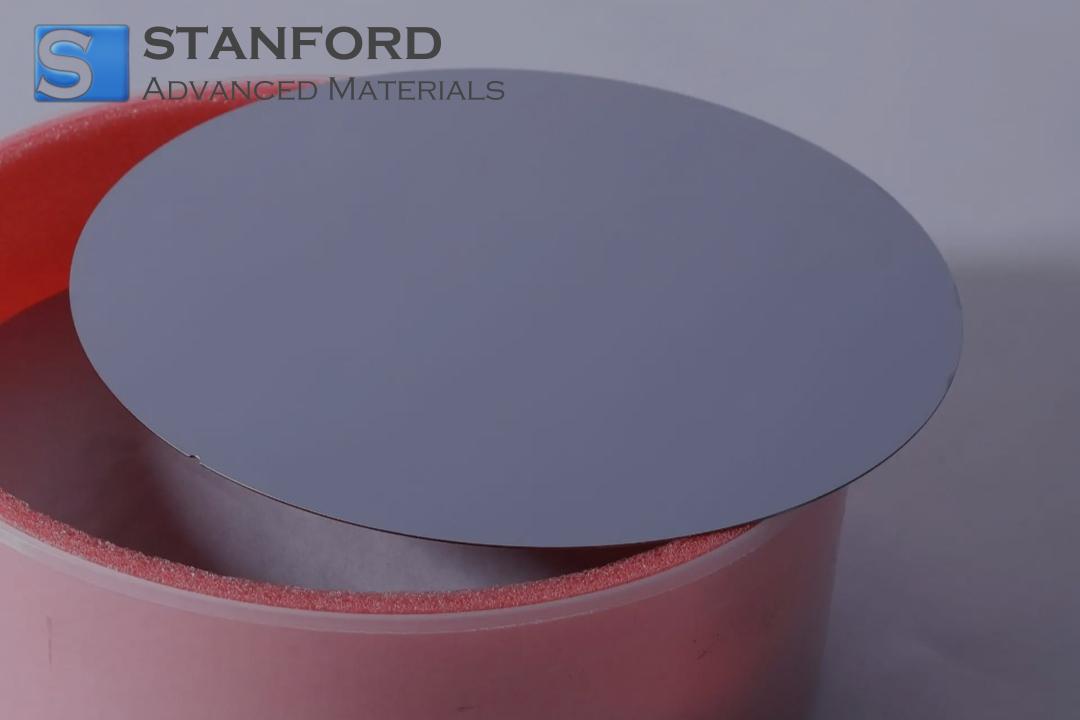
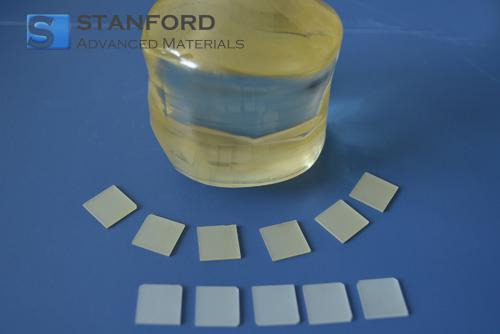
Lithium triborate crystals are manufactured from high-purity raw materials. Manufacturing involves processes such as the top-seeded solution growth process. In this method, a small seed crystal is used to draw the crystal structure out of a super-saturated solution. Growth is controlled very carefully to achieve high optical quality. The crystals are of various shapes and sizes, depending on the application with lasers. Plate and rod-shaped crystals are common. Quality control is essential. Every crystal is examined for optical clarity and homogeneity prior to optical device use.
Nonlinear Optical Applications of Lithium Triborate
--Second Harmonic Generation
Second harmonic generation is a process through which a laser beam doubles its frequency. When a laser beam is passed through a lithium triborate crystal, the light is converted into a new beam with half the wavelength of the initial beam. This technique is most commonly used to double the frequency of infrared light to visible light. Lithium triborate crystals possess a high damage threshold and can support the power of the powerful beam in frequency doubling. Many laboratories applied lithium triborate in second harmonic schemes due to its reliability.
--Optical Parametric Oscillators
Optical parametric oscillators are equipment that exploit nonlinear crystals to generate tuneable sources of light. Lithium triborate crystal is used in such systems to convert a given wavelength of laser into two separate wavelengths. The conversion splits the original photon into two new photons that are of equal energies. The tunability of such a procedure has it highly valued by engineers for application in spectroscopy and remote sensing tasks. The simple design and stable performance of lithium triborate-based optical parametric oscillators have also gained the hearts of many optical laboratories.
--Frequency Conversion in Ultraviolet and Visible Lasers
Lithium triborate crystals are also important in frequency conversion of ultraviolet and visible lasers. The broad transparency window ensures transmission of UV and visible wavelengths. In practical use, a laser beam is input and the crystal converts the beam into higher harmonics. For example, an infrared laser can be converted to green light by frequency doubling. The crystal's high damage threshold ensures long-term stability in high-power laser applications. This capability is of use in many industrial applications such as micromachining and medical diagnostics.
Lithium Triborate vs. Other Nonlinear Crystals
Beta barium borate crystals and potassium titanyl phosphate crystals are a few other nonlinear optical materials that find extensive use. Lithium triborate crystals are especially marked by high damage threshold and wide wavelength range. Beta barium borate has bigger nonlinear coefficients in most situations. Potassium titanyl phosphate crystals are noted for low walk-off and simplicity of phase matching. In the majority of situations, crystal selection is decided on the basis of required laser power and wavelength. Lithium triborate crystals are valued for stability and dependability. Engineers and scientists commonly choose the best crystal for the operation needs that are desired.
Conclusion
Lithium triborate crystals play a vital role in modern nonlinear optics. Their superior properties make them ideal for a range of frequency conversion applications. Production processes ensure that there is good quality and reliability in laser systems. From second harmonic generation to optical parametric oscillators, these crystals provide stable and tunable sources of light. In comparison with other nonlinear crystals, lithium triborate stands out both in terms of performance and hardness. It continues to be an important component of advanced laser applications in science and industry.
Frequently Asked Questions
F: Why are lithium triborate crystals well-suited to high-power lasers?
Q: They have a large damage threshold and superior thermal stability.
F: What is the transparency range of lithium triborate?
Q: The range is somewhere around 160 nanometers to 2600 nanometers.
F: What is one of the more typical uses of lithium triborate crystals in optics?
Q: For frequency conversion in high-power laser systems.
 Chin Trento