Products
 Bars
Bars
 Beads & Spheres
 Bolts & Nuts
 Crucibles
 Discs
Discs
 Fibers & Fabrics
 Films
Films
 Flake
Flake
 Foams
Foams
 Foil
Foil
 Granules
 Honeycombs
 Ink
Ink
 Laminate
 Lumps
Lumps
 Meshes
 Metallised Film
 Plate
Plate
 Powders
 Rod
Rod
 Single Crystals
 Sputtering Target
 Tubes
Tubes
 Washer
 Wires
Wires
 Converters & Calculators
 Write for Us



Injectable Hydrogels for Tissue Regeneration

Properties of Injectable Hydrogels
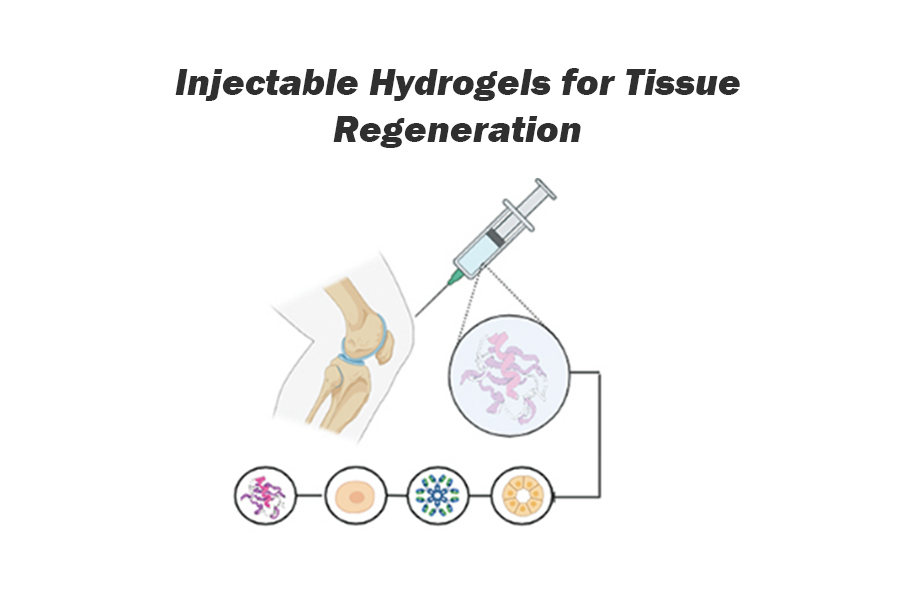
Imagine a liquid that turns into a solid scaffold inside your body—repairing damaged cartilage, healing a heart attack, or regenerating nerves. This is not science fiction. It is the promise of injectable hydrogels. Injectable hydrogels show a good mix of features. They are compatible with body tissues. They break down naturally in the body. These gels can keep their shape when injected. They are soft and flexible.
Their high water content—up to 90% in some formulations—creates an environment that supports cell growth. Common examples include alginate and gelatin-based hydrogels, both known for promoting cell adhesion in wound healing. Their stiffness can also be tuned to match specific tissues, from soft neural tissue to rigid cartilage.
Types of Injectable Hydrogels
There are many types of injectable hydrogels.
Some come from natural polymers. For example, hydrogels made from collagen or chitosan are common. These materials are familiar to the body. Others come from synthetic polymers. Polyethylene glycol-based hydrogels show a steady and predictable behavior. A mix of natural and synthetic materials gives the best of both worlds. Such blends improve the hydrogel strength without losing biocompatibility. Some hydrogels are designed to release drugs. They serve a dual role in tissue support and treatment. Each type has practical uses. The choice depends on the tissue type and the required strength of the repair.
Mechanisms of Gelation
Gelation can be triggered by body temperature (thermal gelation), by the presence of ions like calcium (ionic gelation), or through rapid chemical reactions. These mechanisms ensure that the hydrogel remains liquid during injection and solidifies only after reaching the target site, conforming precisely to the tissue defect.
Applications in Tissue Regeneration
The applications of injectable hydrogels are many.
- Cartilage repair: Surgeons use injectable hydrogels to treat knee injuries, filling defects and supporting tissue regrowth. A 2023 clinical study showed a 40% improvement in joint function after six months, with no second surgery needed.
- Dental surgery: Hydrogels fill extraction sockets, promoting bone preservation and reducing healing time.
- Skin repair: By maintaining a moist environment, hydrogels accelerate wound closure and minimize scar formation.
- Cardiac repair: After a heart attack, hydrogels can be injected into damaged muscle to provide mechanical support and promote vascularization.
- Drug delivery: Growth factor-loaded hydrogels provide localized, sustained release to stimulate cell proliferation.
- Nerve regeneration: In spinal cord injuries, hydrogels serve as a scaffold that guides axon growth across the lesion site.
Many research projects back these applications with clear data. Surgeons trust hydrogels due to their safe profile and ease of use.
Conclusion
Injectable hydrogels are transforming tissue regeneration by offering minimally invasive solutions for applications ranging from cartilage repair to nerve regeneration. Their tunable properties—degradation rate, mechanical strength, and bioactivity—allow them to be tailored to specific clinical needs. As research advances, these materials are poised to become a standard tool in regenerative medicine.
For more technical information and related products—including hyaluronic acid and other hydrogel precursors—please visit Stanford Advanced Materials (SAM).
Frequently Asked Questions
Q: What exactly is an injectable hydrogel?
A: It is a water-swollen polymer network that can be injected as a liquid and solidifies in situ to form a scaffold that supports cell growth and tissue regeneration.
Q: How is gelation triggered inside the body?
A: Gelation is triggered by physiological conditions such as body temperature (thermal gelation), the presence of ions like calcium (ionic gelation), or chemical reactions initiated upon injection.
Q: Which tissues can be treated with injectable hydrogels?
A: Current applications include cartilage (knee injuries), bone (dental sockets), skin (wound healing), heart (post-infarction repair), and nerve tissue (spinal cord injuries).
 Chin Trento