Products
 Bars
Bars
 Beads & Spheres
 Bolts & Nuts
 Crucibles
 Discs
Discs
 Fibers & Fabrics
 Films
Films
 Flake
Flake
 Foams
Foams
 Foil
Foil
 Granules
 Honeycombs
 Ink
Ink
 Laminate
 Lumps
Lumps
 Meshes
 Metallised Film
 Plate
Plate
 Powders
 Rod
Rod
 Single Crystals
 Sputtering Target
 Tubes
Tubes
 Washer
 Wires
Wires
 Converters & Calculators
 Write for Us



Custom Holmium-Iron Magnetic Alloy for High-Temperature Aerospace Applications

Customer Background
An established aerospace manufacturer based in the United States, with a strong history in developing specialized propulsion & control systems for commercial and defense applications, sought a tailored magnetic alloy solution. The customer, with rigorous quality and performance requirements, had pinpointed the need for a holmium-iron alloy that could maintain its magnetic properties under high temperatures while withstanding the mechanical and thermal stresses encountered during flight.
The manufacturer had a proven track record in integrating advanced materials into their systems but had faced challenges with commercially available alloys that did not meet the demanding criteria for consistent magnetic behavior under severe operating conditions. In discussions with various suppliers, they sought a partner capable of understanding both the material science and the operational realities of aerospace applications.

Challenge
The aerospace manufacturer's project required the development of a specialized magnetic alloy composed of holmium and iron. The technical challenges were multifaceted:
1. High-temperature stability was paramount. The alloy needed to sustain its magnetic performance at temperatures exceeding 400°C over extended flight durations.
2. The magnetic performance of the alloy was critical. The alloy had to exhibit precise magnetic field strengths to match control system requirements.
3. Dimensional precision and material integrity were essential for integration in a complex assembly environment where part-to-part variance directly impacted system performance.
4. Real-world constraints came into play. The customer required rapid turnaround with a lead time not exceeding four weeks. This was essential to sync with their production schedules amid a competitive market where delays could incur significant operational setbacks.
5. There was also a need to achieve bonding consistency between holmium and iron, ensuring the alloy did not suffer from phase separation or inconsistent material properties, which could compromise performance under cyclic thermal stress.
Why They Chose SAM
The customer's investigation into potential suppliers ended with Stanford Advanced Materials (SAM) being shortlisted due to our 30+ years of experience and our history of supplying over 10,000 global customers with advanced materials. Our detailed review process and hands-on approach to customer challenges allowed the manufacturer's technical team to trust our capability to deliver a holistic solution.
Early discussions were focused on key technical details including the alloy's purity, bonding methodologies, and the ability to meet stringent tolerance requirements. Our team provided detailed advice on optimizing the alloy composition while addressing the thermal and magnetic constraints inherent in aerospace applications. This proactive technical dialogue was instrumental in aligning expectations and refining the alloy design before production commenced.
Solution Provided
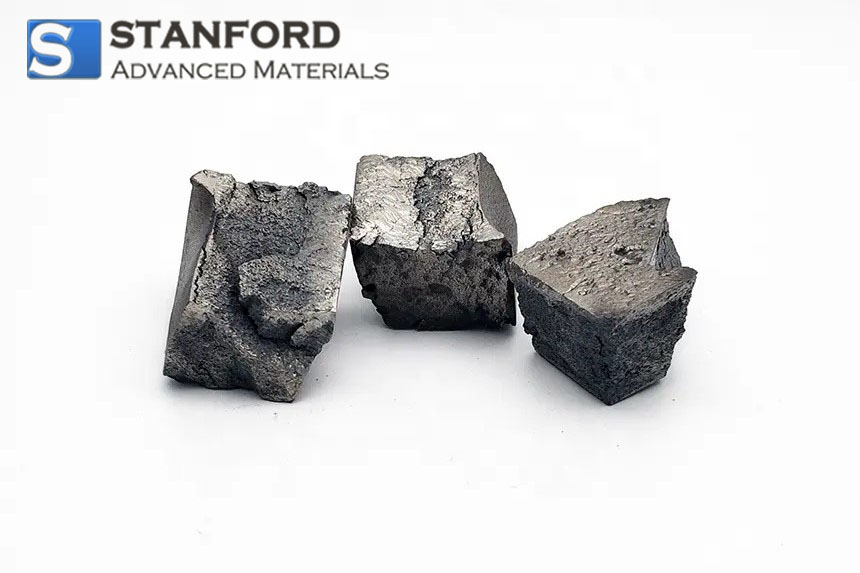
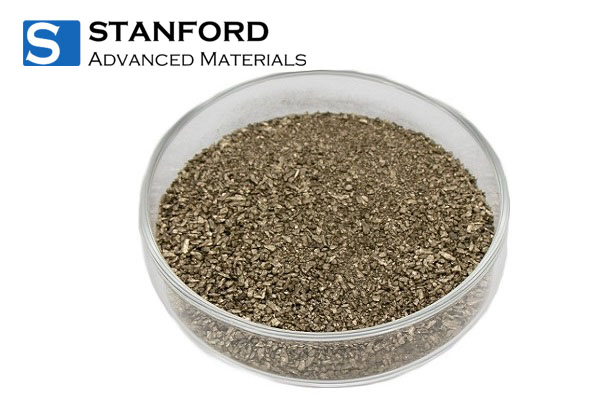
At SAM, we delivered a customized holmium-iron magnetic alloy that conformed closely to the demanding aerospace specifications. Our solution comprised multiple technical considerations:
· Material Purity & Composition: We formulated the alloy to contain holmium with a minimum purity of 99.8% and high-grade iron, ensuring minimal impurities that could adversely affect magnetic performance at elevated temperatures. The precise control of alloying elements resulted in consistent material behavior across production batches.
· Dimensional Control & Tolerance: The alloy was cast and processed to maintain a microstructure that promoted even thermal expansion and minimization of internal stresses. We maintained dimensional tolerances within ±0.05 mm on critical components to ensure that the alloy could be integrated seamlessly into the magnetic assemblies. This tight tolerance also helped in managing the internal grain boundaries which are crucial in preventing magnetic hysteresis under cyclic thermal loads.
· Bonding Methodology: Given the challenge of achieving a reliable bond between holmium and iron, the alloy was engineered with a unique interfacial layer that enhanced bonding consistency. The interfacial layer was developed with a specialized tempering process that maintained bonding integrity even when subjected to rapid temperature fluctuations. Detailed control during thermal processing ensured that bonding did not degrade over repeated cycles.
· Packaging & Handling: To prevent oxidation and preserve the material's surface quality, each alloy batch was vacuum-sealed in nitrogen-flushed packaging. This careful packaging ensured that the alloy maintained its properties from the point of manufacture through to installation.
Each step of the process underwent rigorous quality checks and validation. Compatibility with the customer's existing thermal and mechanical test rigs was confirmed through intermediate testing phases. We also incorporated customer feedback promptly, ensuring that any deviations from expected performance were corrected swiftly.
Results & Impact
The customized holmium-iron alloy delivered by SAM met or exceeded the demanding specifications. In field tests, the alloy demonstrated the following measurable improvements:
· The magnetic field strength remained stable over prolonged high-temperature exposure, with variation kept within a 2% range compared to previous materials which showed fluctuations upward of 5%.
· Dimensional consistency across alloy components was achieved, ensuring reliable interfacing with the aerospace system's assembly lines. The strict tolerance control resulted in negligible misalignment during system integration.
· The optimized bonding process prevented micro-cracking during thermal cycling, thereby reducing maintenance intervals and increasing the overall reliability of the system.
Furthermore, by achieving a lead time of less than four weeks, SAM aligned perfectly with the customer's production schedule. The reduced turnaround time minimized disruption to the manufacturing process while meeting critical project milestones. The end result was improved system stability and a marked reduction in performance variability during operational testing, confirming the technical viability of the solution in demanding aerospace applications.
Key Takeaways
In aerospace applications, where materials are subjected to extreme temperature and environmental conditions, the meticulous design of magnetic alloys can directly affect system performance. The case underlines several key technical points:
· Strict control over material purity and composition translates to reliable magnetic properties, essential for precise control systems.
· Maintaining tight dimensional tolerances is critical for ensuring compatibility with existing assembly processes, particularly under cyclic thermal conditions.
· Addressing bonding challenges through specialized process control is crucial to prevent performance degradation, especially in components that experience rapid temperature fluctuations.
· Communication and technical feedback during the design phase can prevent costly iterations and ensure that final products meet real-world operational demands.
· A rapid response to production scheduling constraints helps maintain overall project timelines in high-stakes industrial environments.
Stanford Advanced Materials (SAM) was able to combine these technical priorities seamlessly, demonstrating our commitment to addressing specific aerospace industry needs with rigorous engineering precision. This case reinforces our ongoing strategy to provide advanced materials that are reliable, customizable, and delivered on schedule, aligning with the complex demands of today's aerospace manufacturers.
 Dr. Samuel R. Matthews