Products
 Bars
Bars
 Beads & Spheres
 Bolts & Nuts
 Crucibles
 Discs
Discs
 Fibers & Fabrics
 Films
Films
 Flake
Flake
 Foams
Foams
 Foil
Foil
 Granules
 Honeycombs
 Ink
Ink
 Laminate
 Lumps
Lumps
 Meshes
 Metallised Film
 Plate
Plate
 Powders
 Rod
Rod
 Single Crystals
 Sputtering Target
 Tubes
Tubes
 Washer
 Wires
Wires
 Converters & Calculators
 Write for Us



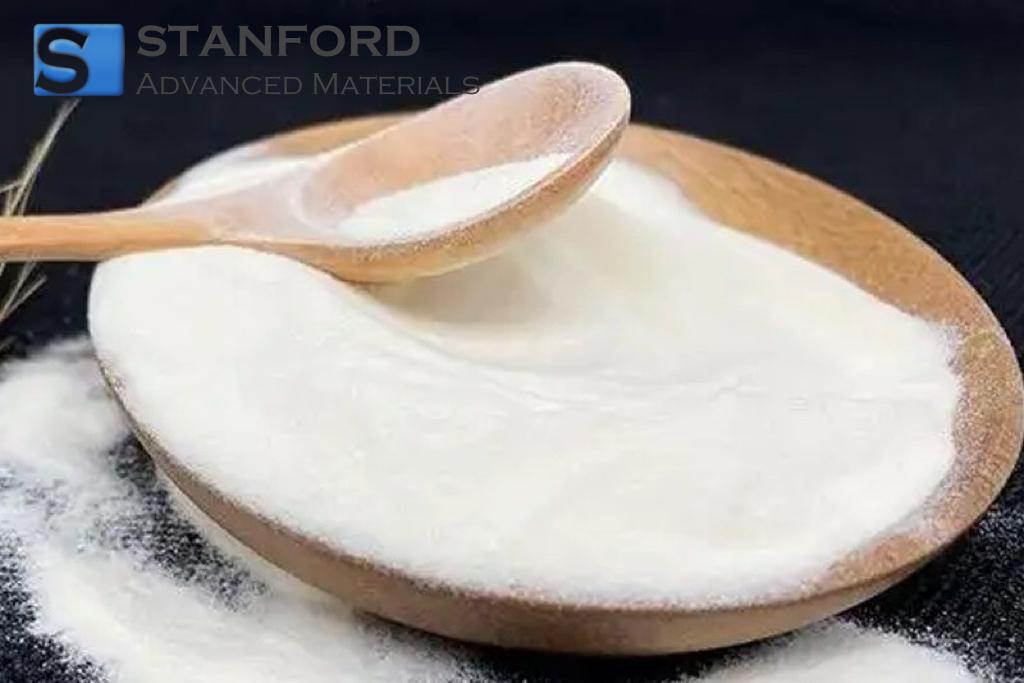
High Purity Yttrium Oxide for Ceramic and Optical Research in Laboratory Applications

Customer Background
Our client from a renowned research institute in France has been focused on ceramic and optical material research for over a decade. Their research includes work with phosphors, protective coatings, and advanced material synthesis. With in-depth expertise in their field, the institute has long demanded materials that meet robust technical specifications and can be delivered within tight project schedules.
This team had been exploring advanced material synthesis where the consistency of material properties was critical. They previously relied on commercially available yttrium oxide, but irregularities in purity and particle size significantly reduced reproducibility in their experiments. Facing these recurring technical challenges, the team decided to engage with Stanford Advanced Materials (SAM) for a tailored approach designed explicitly for high-purity laboratory applications.
Challenge
The research team required yttrium oxide for use in ceramic and optical experiments, emphasizing the following technical constraints:
· A minimum purity level of 99.99%, with impurity content carefully controlled to avoid any unwanted interactions in optical or ceramic applications.
· Specific control over the particle size, targeting a narrow range around 15 microns with a tolerance of ±2 microns to ensure consistent coating behavior and optimal phosphor performance.
· Engineering requirements for packaging and storage to avoid surface contamination or oxidation, which had been a recurring issue with previous supplies.
The instability of impurity profiles in earlier batches led to variance in the optical emission of phosphors and irregularity in the ceramic coating thickness. Additionally, the project timeline was strict, and the potential for lead time delays risked hampering critical phases of their experimental program. This technical and logistical blend of challenges necessitated a supplier who clearly understood the scientific and engineering parameters involved.
Why They Chose SAM
After evaluating multiple vendors, the team selected Stanford Advanced Materials (SAM) based on our approach to address both technical specifications and delivery constraints. We performed an in-depth consultation where we reviewed the required purity, particle size distribution, and packaging conditions. Instead of providing a standard response, we addressed specific technical points regarding:
· The controlled particle size distribution and the role it plays in achieving uniformity in thin film deposition.
· The influence of microstructure on the performance of ceramic and optical properties within their experiments.
· Stringent packaging protocols to prevent any material degradation upon receipt.
Our ability to tailor a solution based on the customer's technical drawings and research needs was a decisive factor that reinforced their confidence in our expertise.
Solution Provided
Our team delivered a customized high-purity yttrium oxide product formulated specifically for the laboratory environment. The solution featured several technical details:
· The material was refined to meet a purity specification of 99.99%, using controlled atmosphere processing to minimize contaminants.
· We produced a controlled particle size distribution, centering the average at 15 microns with a tolerance of ±2 microns to ensure high uniformity in the ceramic coating application.
· Packaging was a critical factor. We used vacuum-sealed, moisture-barrier packaging to maintain the material's pristine condition during transit. The packaging also included tamper-indicating seals, ensuring that the material's integrity was not compromised before use.
We also addressed a real-world constraint regarding the strict lead time. Understanding the customer's rigid experimental timeline, our production timeline was streamlined to deliver within six weeks, ensuring that the product reached them in time for their next phase of research. Our technical team coordinated with the client's engineering staff to confirm compatibility with their sample handling equipment, thereby reducing the risk of post-delivery handling discrepancies.
Results & Impact
The implementation of our high-purity yttrium oxide had a measurable impact:
· The consistent purity and controlled particle size provided improved repeatability in experimental setups, notably reducing variability in ceramic coating thickness.
· The enhanced performance in phosphor phase research was evident through stabilized optical emission profiles, directly correlating to lowered impurity levels.
· Reliable packaging ensured that there was no degradation, leading to consistent performance across multiple batches and eliminating unexpected delays in experimental timelines.
Although process optimization on the research side continued, the material-related uncertainties were significantly diminished. The team was able to conduct further process refinements without the need to readdress material inconsistencies, an important advantage for long-term research projects.
Key Takeaways
Our experience with this project reinforces the necessity of addressing both the technical properties and logistical aspects of advanced materials for research applications. Ensuring high purity, tightly controlled particle sizes, and secure packaging directly influences the reproducibility of complex experiments within ceramic and optical material research. The ability to deliver on strict lead times while meeting specific engineering criteria showcases the value of a highly responsive supplier. This project illustrates how detailed material customization can effectively support rigorous laboratory schedules and technical objectives.
 Dr. Samuel R. Matthews