
 Products
 Bars
Bars
 Beads & Spheres
 Bolts & Nuts
 Crucibles
 Discs
Discs
 Fibers & Fabrics
 Films
Films
 Flake
Flake
 Foams
Foams
 Foil
Foil
 Granules
 Honeycombs
 Ink
Ink
 Laminate
 Lumps
Lumps
 Meshes
 Metallised Film
 Plate
Plate
 Powders
 Rod
Rod
 Single Crystals
 Sputtering Target
 Tubes
Tubes
 Washer
 Wires
Wires
 Converters & Calculators
 Write for Us



General Applications of Beryllium Copper

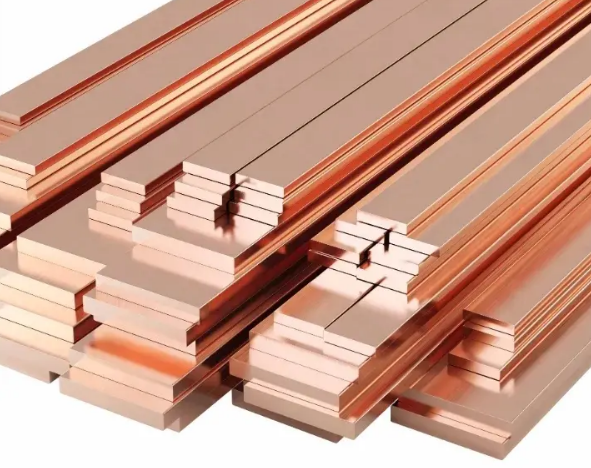
Beryllium copper, or BeCu, or beryllium bronze, is a high-performance copper alloy with a small percentage of beryllium—0.2% to 2%. This unique mixture gives the alloy an excellent set of characteristics: high strength, good electrical and thermal conductivity, corrosion resistance, non-magnetic behavior, and sparking resistance.
Therefore, beryllium copper is used in electronics, aerospace, and oil and gas. Below are the most common applications of beryllium copper:
1. Elastic and Conductive Components
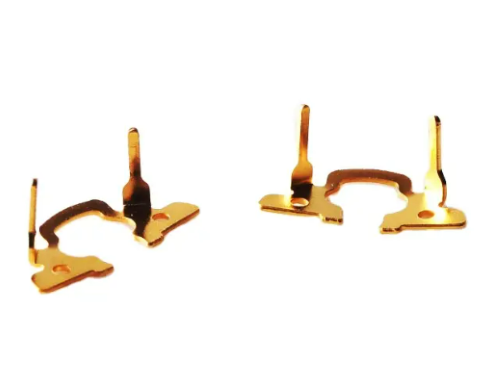
Beryllium copper alloys are used in the manufacture of conductive elastic components, such as switches, connectors, and spring contacts. Its strength is nearly twice that of other copper alloys. BeCu also comes with high conductivity. So, it could bear frequent bending or flexing without fatigue or deformation.
In the telecommunication and electronics industries, beryllium copper is often used to make signal connectors, electrical terminals, and battery contacts. These components need precision and durability in limited spaces.
2. Wear-resistant Bearings and Bushings
Because of its wear resistance, beryllium copper is commonly used to make sliding bearings and bushings. These parts usually go through friction, vibration, and heavy loads. The fatigue resistance of beryllium copper makes it suitable for extended use.
A well-known example is in the airline sector. American Airlines previously replaced traditional copper bearings with beryllium copper bearings. Then, there came an 8,000-hour to 28,000-hour improvement in service life. This kind of strength reduces downtime and maintenance costs greatly.
3. Explosion-proof Tools
Another excellent attribute of beryllium copper is that it is non-sparking. Tools made from normal metals, when struck against a hard surface, will emit sparks—creating a huge safety hazard in explosive environments like oil refineries, chemical plants, and mines.
Beryllium copper tools, however, eliminate that risk. They are used in wrenches, screwdrivers, hammers, and chisels where there may be flammable vapors or gases. These tools give employees a feeling of safety and satisfy strict safety requirements in hazardous work environments.
4. Precision Molds and Die Casting
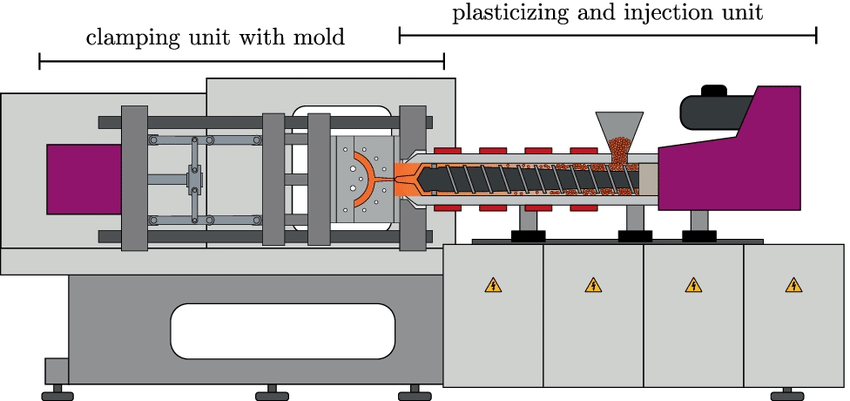
Beryllium copper possesses good thermal conductivity, high hardness, and resistance to heat deformation. So, it is suitable for mold use, especially for plastic injection and die casting molds. Good thermal conductivity allows rapid cooling of plastic parts as well.
Beryllium copper molds are also known for their good surface finish and low thermal fatigue. These alloys can also maintain close tolerances. Also, the reusability of the alloy reduces overall costs in mold manufacturing.
 [1]
[1]
5. High-conductivity Electrical Components
In strength and also in high electrical conductivity applications, certain beryllium copper alloys—viz., Cu-Ni-Be and Co-Cu-Be—are widely used. These can offer electrical conductivity up to a level of 50% IACS (International Annealed Copper Standard) and are utilized for electrical contacts, electrodes, as well as in high-performance relay elements.
For example, it finds use in resistance welding electrodes. These electrodes need to carry high electrical currents. They need to withstand mechanical wear and thermal stress as well.
Types of Beryllium Copper Alloys
Beryllium copper alloys are classified into two types:
•High-Conductivity Beryllium Copper (0.2%–0.6% Be): Focuses on conductivity at the expense of strength; finds use in electricity and electronics.
•High-Strength Beryllium Copper (1.6%–2.0% Be): Offers maximum strength with great conductivity; suitable for structural and mechanical applications;
They can also be classified into 4 key types according to the American Standard:
1. C17200 (1.8–2.0%Be)
- Highest strength (up to 200 ksi after heat treatment), great fatigue and wear resistance.
- Used in Aerospace, precision instruments, connectors, molds.
2. C17300 (0.2–0.6%Be, lead added)
- Lower strength but improved machinability.
- Used to make Electrical connectors, switches, fasteners.
3. C17500 (0.4–0.7%Be, cobalt added)
- Good electrical and thermal conductivity, moderate strength.
- Could be found in resistance welding components, electrical contacts.
4. C17510 (0.4–0.7%Be, nickel added)
- Higher strength than C17500, still good conductivity.
- Find applications in Automotive, aerospace electrical systems.
Further reading: Common Types of Beryllium Copper
Conclusion
The strength and properties of beryllium copper make it useful in many industries. You can find it in electronic connectors or as non-sparking tools. BeCu alloys never disappoint. For more beryllium copper alloys, please check Stanford Advanced Materials (SAM).
Summary Table: General Applications of Beryllium Copper
|
Uses |
Features |
Examples |
|
Elastic & Conductive Components |
High strength, elasticity, good conductivity |
Springs, connectors, switch contacts, battery terminals |
|
Wear-resistant Bearings & Bushings |
Super wear resistance, fatigue resistance |
Aircraft bearings, bushings |
|
Explosion-proof Tools |
Non-sparking, corrosion resistance |
Hammers, wrenches, chisels |
|
Precision Molds & Die Casting |
High hardness, thermal conductivity |
Plastic injection molds, die casting molds, precision tooling |
|
High-conductivity Electrical Parts |
Strength and conductivity (up to 50% IACS) |
Welding electrodes, electrical contacts, relay components |
Reference:
[1] Baum, Markus & Jasser, Fabian & Stricker, Michael & Anders, Denis & Lake, Simone. (2022). Numerical simulation of the mold filling process and its experimental validation. The International Journal of Advanced Manufacturing Technology. 120. 1-12. 10.1007/s00170-022-08888-9.
l8u7.jpg)
 Chin Trento