Products
 Bars
Bars
 Beads & Spheres
 Bolts & Nuts
 Crucibles
 Discs
Discs
 Fibers & Fabrics
 Films
Films
 Flake
Flake
 Foams
Foams
 Foil
Foil
 Granules
 Honeycombs
 Ink
Ink
 Laminate
 Lumps
Lumps
 Meshes
 Metallised Film
 Plate
Plate
 Powders
 Rod
Rod
 Single Crystals
 Sputtering Target
 Tubes
Tubes
 Washer
 Wires
Wires
 Converters & Calculators
 Write for Us



Fluorides for Ultraviolet and Vacuum Ultraviolet Optics: Types and Examples

Introduction
Fluoride materials are important in optical devices that work with short wavelengths of light. Ultraviolet light and vacuum ultraviolet light are used in advanced optical systems. These materials help to transmit light with minimal loss. Their low absorption rates and good durability make them a good choice. In many optical systems, they are used in lenses and windows. Their small differences in composition offer different properties. This article reviews four major fluoride materials and how they are used in optical applications.
Calcium Fluoride
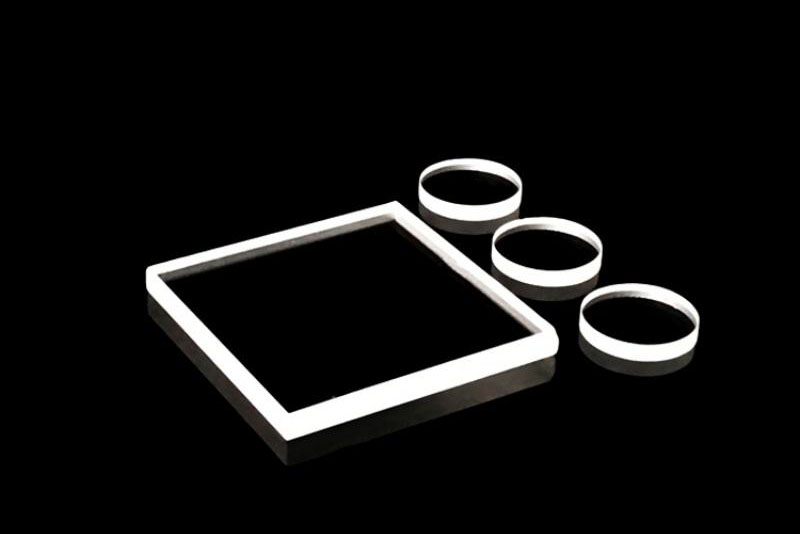
Calcium Fluoride is used in many ultraviolet optical systems. This material is known for its good transmission rate. It is stable even when exposed to high-power ultraviolet light. Many applications use Calcium Fluoride in lens components. Its high tolerance to laser radiation is a benefit. In addition, the material has a low refractive index. These properties reduce chromatic aberration in optical designs. Many scientific instruments and cameras take advantage of its qualities. Experiments in laser optics often use Calcium Fluoride due to its strong performance in the ultraviolet region.
Magnesium Fluoride
Magnesium Fluoride is another common fluoride material in optics. It shows excellent transparency down to the vacuum ultraviolet range. This material is used for windows and protective covers in optical systems. Its performance remains steady even under thermal stress. The material has a broad transmission range that makes it suitable for different applications. Many ultraviolet instruments include Magnesium Fluoride coatings. Its ability to handle extreme temperature changes is valued in high-precision experiments. The durability and optical clarity of Magnesium Fluoride are well known in both scientific and industrial setups.
Barium Fluoride
Barium Fluoride is chosen for systems that require transmission into the ultraviolet regions. It has a wide band pass that supports many wavelengths. Barium Fluoride shows a good balance between transparency and mechanical strength. However, this material can be softer than the others. It may need careful handling if used in harsh environments. Some optical instruments use Barium Fluoride lenses for their unique properties. The material finds use in spectroscopy and other scientific applications that demand a broad light transmission range.
Lithium Fluoride
Lithium Fluoride is valued for its high transparency in the ultraviolet range. This fluoride has a low refractive index. It is used in many optical windows and lenses. Its structure allows for minimal light loss during transmission. This property is important in laser applications and photolithography. Despite being a bit brittle, Lithium Fluoride is dependable in controlled environments. In many research setups, it is used when a high degree of purity and clarity is required. Its performance in the vacuum ultraviolet region makes it a practical choice for precise optical tasks.
Comparison of Fluoride Materials
Each fluoride material has its own strengths and limits. Calcium Fluoride is known for its durability and resistance to high-intensity light. Magnesium Fluoride stands out with its broad transmission, including the vacuum ultraviolet part of the spectrum. Barium Fluoride has a mixed quality of mechanical strength with a wide range of light transmission. Lithium Fluoride is best when high optical clarity is needed. These materials differ in their refractive indices and hardness.
When choosing a material, one must consider the wavelength of light to be used and the operating conditions. For example, in high-power laser systems, Calcium Fluoride is a reliable option. In systems that must transmit very short wavelengths, Magnesium Fluoride or Lithium Fluoride may be preferable. The choice depends on the balance between mechanical properties and optical performance. Many researchers and engineers use these comparisons to select the best material for their devices.
Conclusion
Fluoride materials play a key role in ultraviolet and vacuum ultraviolet optical systems. Their high transparency and low absorption make them fit for use in lasers, spectroscopy, and other scientific experiments. Calcium Fluoride, Magnesium Fluoride, Barium Fluoride, and Lithium Fluoride each bring unique advantages to optical design.
Frequently Asked Questions
F: What makes Calcium Fluoride suitable for ultraviolet optics?
Q: It has low absorption and high durability under intense laser light.
F: Why is Magnesium Fluoride often used in vacuum ultraviolet systems?
Q: It has excellent transmission and remains stable under high thermal stress.
F: When should Lithium Fluoride be preferred?
Q: It is best when high clarity and minimal light loss are required in controlled environments.
 Chin Trento