
 Products
 Bars
Bars
 Beads & Spheres
 Bolts & Nuts
 Crucibles
 Discs
Discs
 Fibers & Fabrics
 Films
Films
 Flake
Flake
 Foams
Foams
 Foil
Foil
 Granules
 Honeycombs
 Ink
Ink
 Laminate
 Lumps
Lumps
 Meshes
 Metallised Film
 Plate
Plate
 Powders
 Rod
Rod
 Single Crystals
 Sputtering Target
 Tubes
Tubes
 Washer
 Wires
Wires
 Converters & Calculators
 Write for Us



Common Carbides in Thermal Spray Coatings

Introduction
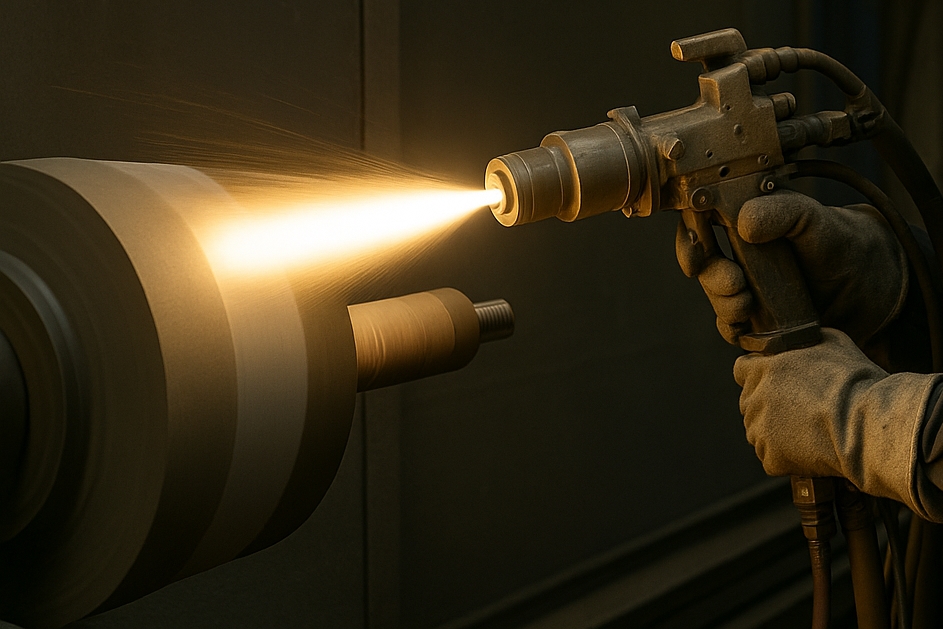
Thermal spray coatings are used in several industries to provide protection and wear resistance. A high-temperature spray softens or melts the coating material before it hardens. Carbides predominate such applications due to their hardness and resistance to wear. Carbides have been the popular choice for most engineers and technicians for decades.
Tungsten Carbide
Tungsten carbide is a very popular thermal spray coating material. It is very hard with very good wear characteristics. Tungsten carbide is used by specialists in fields such as metal cutting and mining. For instance, the majority of cutting tools employ tungsten carbide inserts. Owing to its high density, it is very effective in eroding resistance. Statistics show that tool life may be improved by 30% to 50% in heavy-duty machining operations using tungsten carbide coatings. It is used in most stores where downtime is costly. Its high-temperature resistance makes it suitable for hard jobs.
Chromium Carbide
Chromium carbide possesses high corrosion and oxidation resistance. It can handle high temperatures very well. These carbides are applied typically where the job demands wear resistance as well as corrosion. A typical application is in gas turbines when chromium carbide is employed to coat the engine components. It is resistant to chemical attack owing to its microstructure. Industry reports show chromium carbide coatings can reduce maintenance costs by up to 40%. It is utilized where industries work under acidic or salty conditions.
Titanium Carbide
Titanium carbide is denser than tungsten carbide but is harder. This carbide is used in various applications where weight and performance are crucial. Titanium carbide is favored by many engineers for application in the aerospace and automotive sectors. In these sectors, coatings must be light in weight along with the ability to resist friction. Various instances accounted for a 25% improvement in wear resistance when titanium carbide was used in engine components. Its high temperature as well as mechanical stress durability makes it a valuable asset in high-demand applications. Its stability in product reliability gives engineers confidence in their ability to work with this material.
Niobium Carbide
Niobium carbide is highly valued due to its hardness and favorable thermal stability. Although less common than tungsten and chromium carbides, it is applied where certain properties must be achieved. Applying in metal working, niobium carbide coatings have been found to reduce considerably wear and tear. It is found from research that niobium carbide can perform in less-than-ideal conditions for other carbides. Field experience reports less friction and a smoother surface finish. Even in cyclic thermal exposure, its performance remains consistent. This makes it an ideal selection for special applications in industry.
Other Carbides for Thermal Spray Coatings
There are other carbides, like molybdenum carbide and vanadium carbide, that also serve in thermal spray coatings. They may not be as commonly used as tungsten or chromium carbides but are useful in certain applications. For example, molybdenum carbide provides satisfactory protection against chemical attack as well as good wear. In metallurgy, molybdenum carbide coatings are sometimes used on furnace parts or on coal-fired boiler sections. Vanadium carbide is also found to be hard and has been utilized in cutting tools under high speeds. These carbides give an alternative option when cost or specific performance features are determining factors.
Factors Affecting Carbide Performance in Thermal Spray Coatings
Several factors affect how a carbide coating will work in reality. First, the spray technique plays a role. High-pressure, flame, or plasma spray methods change the coating's density and adhesion. Second, the surface onto which the coating is being applied is important. An irregular surface might attach more easily to a carbide coating than a polish one. Temperature of application is also important. If a material is too hot, its shape might change. The quality of feedstock also affects the end properties. Testing material purity before use is common for most engineers. Lastly, post-spray treatments like heat treatment and sealing can further improve the coatings performance. History has shown that accurate control of these parameters leads to more durable parts and less expensive maintenance.
Conclusion
Carbides are a key ingredient in thermal spray coatings. They bring in hardness, wear resistance, and stability to industrial components. Tungsten carbide is suitable for use in cutting tools and heavy-duty applications. Chromium carbide is superior in corrosive and high-temperature applications. Titanium carbide offers a trade-off of weight and toughness, while niobium carbide is prized for toughness. Other carbides have their own niches, each for a particular application.
Frequently Asked Questions
F: What is the function of a thermal spray coating?
Q: Thermal spray coatings convey wear resistance and thermal, corrosion, and erosion protection to industrial parts.
F: How does tungsten carbide improve performance?
Q: Tungsten carbide conveys high hardness and stability at high temperature, thus improving tool life and wear resistance.
F: Does chromium carbide exhibit good high-temperature performance?
Q: Yes, chromium carbide is resistant to oxidation and performs well in corrosive and high-temperature environments.
 Chin Trento