Products
 Bars
Bars
 Beads & Spheres
 Bolts & Nuts
 Crucibles
 Discs
Discs
 Fibers & Fabrics
 Films
Films
 Flake
Flake
 Foams
Foams
 Foil
Foil
 Granules
 Honeycombs
 Ink
Ink
 Laminate
 Lumps
Lumps
 Meshes
 Metallised Film
 Plate
Plate
 Powders
 Rod
Rod
 Single Crystals
 Sputtering Target
 Tubes
Tubes
 Washer
 Wires
Wires
 Converters & Calculators
 Write for Us



Top Materials with Strongest Compressive Strength

Introduction
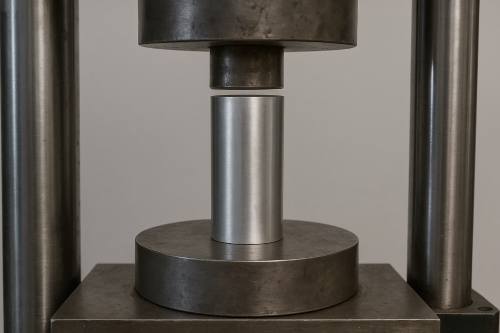
Compressive strength matters in many fields. Structures, cutting tools, and aerospace parts all rely on materials that can hold heavy loads. In this article, we go over a list of top materials known for their high compressive strength.
Which Material Has the Strongest Compressive Strength
Among the materials, diamond holds a top spot in compressive strength. Its atomic arrangement gives it a very tight lattice structure. Tungsten carbide and advanced ceramics follow closely behind. They offer excellent resistance to compressive forces and are well suited for various demanding uses. Each material has a track record of performing when stress is high.
Why These Materials Excel in Compressive Strength
The secret behind their performance lies in their structure and bonding. Diamond has a robust lattice made of carbon atoms. Tungsten carbide benefits from strong chemical bonds and has a fine grain structure. Advanced ceramics are sintered to create a uniform and dense product. These features avoid weak spots that may lead to fracture under load. The production methods and controlled environments further increase compressive strength. This results in materials that handle pressure very effectively.
Applications of Ultra-High Compressive Strength Materials
These materials serve well in different settings. Diamond is used in cutting tools and drilling equipment. Tungsten carbide forms the backbone of wear-resistant parts and industrial tools. Advanced ceramics make parts for engines and protective armor. Ultra-high performance concrete finds applications in bridges and tall buildings. In each case, high compressive strength plays a key role in sustainability and safety.
For example, diamond-coated drill bits cut through hard rock with ease. Tungsten carbide is ideal for machining metals due to its lasting toughness. In construction, ultra-high performance concrete lasts much longer than regular concrete under heavy loads. These materials have proven themselves in everyday applications with minimal failure rates.
Summary Table of Compressive Strength Values
|
Material |
Approximate Compressive Strength (Megapascals) |
|
Diamond |
10,000 |
|
Tungsten Carbide |
3,500 to 4,000 |
|
Advanced Ceramics (e.g., Silicon Carbide) |
2,500 to 3,000 |
|
Ultra-High Performance Concrete |
150 to 200 |
|
Carbon Fiber Reinforced Polymer |
500 to 600 |
For more information, please check Stanford Advanced Materials (SAM).
Conclusion
We have looked at several materials noted for their immense compressive strength. Diamond, tungsten carbide, and advanced ceramics are leaders in this field. Their performance comes from strong bonds and controlled manufacturing processes. Their wide range of applications confirms their suitability in harsh environments.
Frequently Asked Questions
F: Which material is best for cutting tools?
Q: Diamond is best due to its extreme hardness and high compressive strength.
F: Are advanced ceramics used in engine parts?
Q: Yes, advanced ceramics are used in engine parts for their strength and light weight.
F: Can ultra-high performance concrete sustain heavy loads?
Q: Yes, ultra-high performance concrete can bear heavy loads and is used in bridges and tall buildings.
 Chin Trento