Products
 Bars
Bars
 Beads & Spheres
 Bolts & Nuts
 Crucibles
 Discs
Discs
 Fibers & Fabrics
 Films
Films
 Flake
Flake
 Foams
Foams
 Foil
Foil
 Granules
 Honeycombs
 Ink
Ink
 Laminate
 Lumps
Lumps
 Meshes
 Metallised Film
 Plate
Plate
 Powders
 Rod
Rod
 Single Crystals
 Sputtering Target
 Tubes
Tubes
 Washer
 Wires
Wires
 Converters & Calculators
 Write for Us



Top 5 High Tensile Strength Plastics Explained

Polyamide-imide (Torlon) ~21,000 psi (145 MPa)
Polyamide-imide is one of the strongest plastics available. Known by the trade name Torlon, it shows excellent performance under heavy loads. It keeps its strength even at high temperatures. Engineers choose polyamide-imide for demanding tasks. This plastic works well in aerospace parts, high-performance gears, and compressor parts.
Its strength of approximately 21,000 pounds per square inch makes it ideal for portable devices and engines. Many industries use it to replace metal parts. With its low friction and high wear resistance, polyamide-imide is a solid choice when strength matters.
If you have a project that runs at high temperature with tight tolerances, polyamide-imide is a reliable option. Its performance has been proven over decades of use.
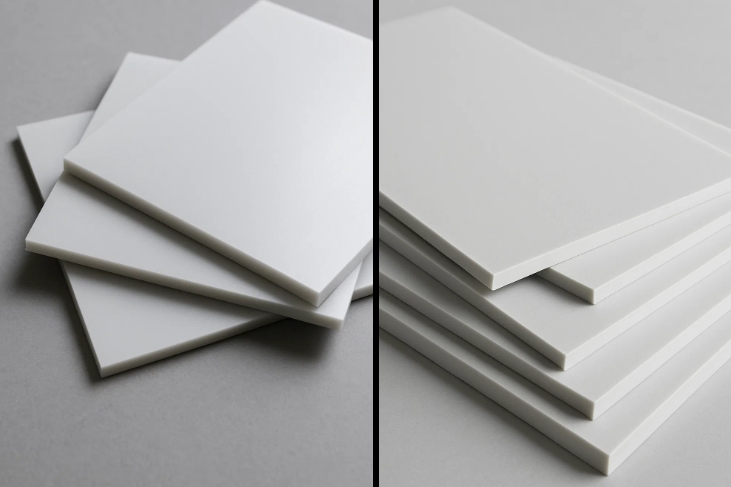
Polyetherimide (Ultem) ~16,000 psi (110 MPa)
Polyetherimide, often known by the brand name Ultem, is the second plastic on our list. It offers a tensile strength of about 16,000 psi. This plastic also handles heat well. It remains sturdy and does not deform under stress.
Ultem works well in medical devices, electrical connectors, and automotive parts. Many manufacturers choose polyetherimide for indoor applications. It comes in both clear and colored versions. The high temperature resistance also makes it a favorite in the electronics industry.
The plastic is lightweight yet strong. Its reliable performance comes from years of testing and use in critical applications. This makes polyetherimide a smart choice for designs where both heat and stress are concerns.
Polyetheretherketone ~14,000 psi (97 MPa)
Polyetheretherketone has earned its reputation as a high-performance engineering plastic. With an approximate tensile strength of 14,000 psi, it sits comfortably in the high-strength range.
This plastic is well known for its excellent chemical resistance and low wear properties. Polyetheretherketone is often used in aerospace, automotive, and medical implant components. Its stable performance makes it one of the most preferred plastics where stress and high temperature exist.
Due to its high melt temperature, polyetheretherketone can be used in harsh environments. It also resists fatigue and long-term deformity. Many precision parts and seals use this material with a high level of success.
Its application ranges from industrial gear to spinal implant components. Polyetheretherketone remains a robust solution for many modern engineering challenges.
Nylon (Polyamide) ~12,000 psi (83 MPa)
Nylon is a very common plastic that many people have heard of. It is also known as polyamide. This plastic delivers a tensile strength of about 12,000 psi. Nylon has been in use for decades in countless applications.
Its usage spans from clothing to mechanical parts. The automotive industry and consumer goods also benefit from the reliable strength of nylon. It is a flexible option that resists abrasion and light chemicals.
Nylon is easy to process and benefits from low production costs. Many fasteners, bearings, and gears use nylon in their design. Its warm performance in terms of toughness makes it a favorite for many industrial tasks.
For everyday mechanical functions, nylon stands up well against wear and tear. Its strength and durability continue to serve many design needs.
Polycarbonate ~9,500 psi (65 MPa)
Polycarbonate is known for its good strength and excellent impact resistance. With a tensile strength of about 9,500 psi, it ranks fifth on our list.
This plastic often finds its place in items that require toughness. For example, polycarbonate is widely used in the manufacturing of safety glasses, compact discs, and protective gear. It is also common in electronic housings.
Polycarbonate is clear and lightweight. Despite its lower tensile strength compared to others on this list, it remains popular due to its excellent optical clarity and temperature resistance.
It is a versatile material with a good balance between durability and ease of molding. Many products benefit from the combination of high impact resistance and decent tensile strength that polycarbonate offers.
Conclusion
Each of the plastics discussed has its own strengths. Polyamide-imide offers the highest tensile strength and is the go-to choice for extreme environments. Polyetherimide is perfect for applications requiring both heat resistance and durability. Polyetheretherketone finds use in challenging settings where chemical and temperature resistance is a must. Nylon provides a balanced approach that combines ease of processing with high toughness. Polycarbonate, while ranking lower in tensile strength, offers outstanding impact resistance and clarity.
Engineers and designers have different needs. The choice of plastic depends on the application, environment, and cost concerns. When you understand the working properties of these plastics, you can decide better on material selection. For more plastic materials, please check Stanford Advanced Materials (SAM).
Frequently Asked Questions
F: What makes high tensile strength plastics desirable?
Q: They resist high stress and perform well in demanding conditions.
F: Which industries use these strong plastics?
Q: Aerospace, automotive, medical devices, and electrical components use them.
F: Are these plastics easy to mold or shape?
Q: Yes, each plastic can be processed using methods like injection molding.
 Chin Trento