Products
 Bars
Bars
 Beads & Spheres
 Bolts & Nuts
 Crucibles
 Discs
Discs
 Fibers & Fabrics
 Films
Films
 Flake
Flake
 Foams
Foams
 Foil
Foil
 Granules
 Honeycombs
 Ink
Ink
 Laminate
 Lumps
Lumps
 Meshes
 Metallised Film
 Plate
Plate
 Powders
 Rod
Rod
 Single Crystals
 Sputtering Target
 Tubes
Tubes
 Washer
 Wires
Wires
 Converters & Calculators
 Write for Us



Neon: Element Properties and Uses

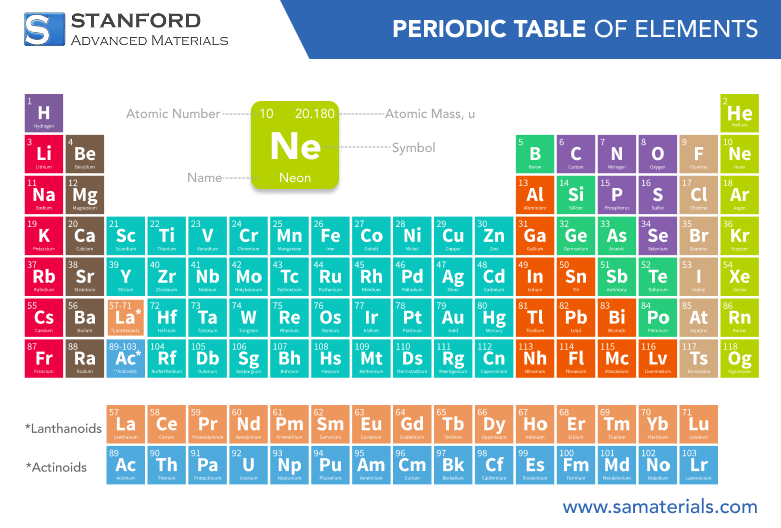
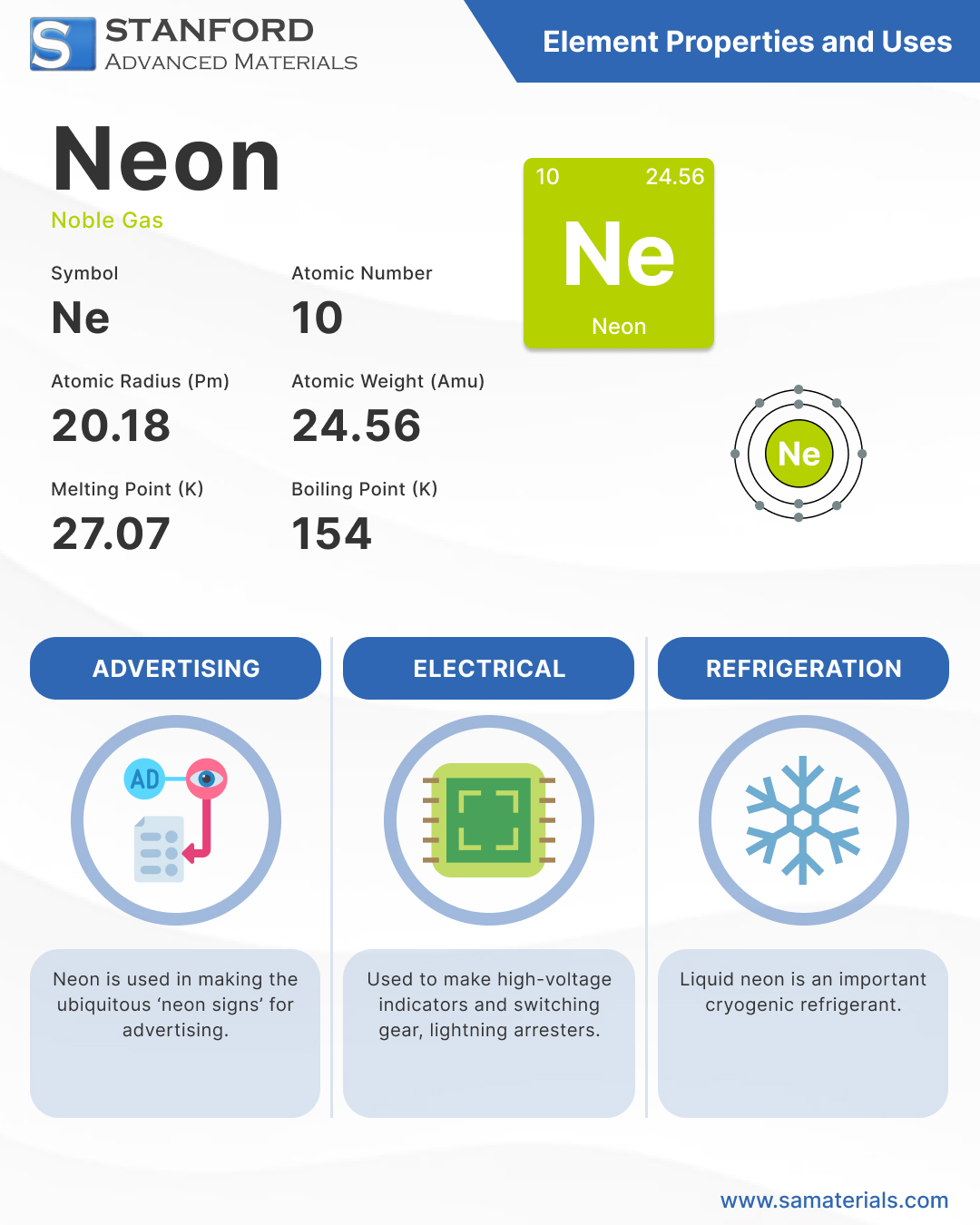
Neon (Ne) is a noble gas known for its bright red-orange glow in neon signs. With atomic number 10, it is chemically inert, non-toxic, and extracted from the Earth's atmosphere through fractional distillation. This guide covers neon's properties, uses, and how it compares to other noble gases like helium and argon.
Neon Quick Facts
- Atomic Number: 10
- Symbol: Ne
- Discovery: 1898 (Sir William Ramsay & Morris Travers)
- Boiling Point: -246.1°C
- Melting Point: -248.6°C
- Density: 0.8999 g/L (at 0°C)
- Abundance in Air: 0.0018%
- Glow Color: Red-orange
Neon vs. Other Noble Gases: A Comparison
| Noble Gas | Symbol | Glow Color | Boiling Point (°C) | Primary Use |
|---|---|---|---|---|
| Helium | He | Pink/Purple | -268.9 | Balloons, cooling, MRI |
| Neon | Ne | Red-Orange | -246.1 | Neon signs, indicators |
| Argon | Ar | Blue/Purple | -185.9 | Welding, light bulbs |
| Krypton | Kr | White/Blue | -153.2 | High-performance lighting |
| Xenon | Xe | Blue/Green | -108.1 | Automotive headlights, lasers |
| Radon | Rn | None (radioactive) | -61.7 | Medical treatment (rare) |
Chemical Properties Description
Neon is chemically inert due to its complete outer electron shell (1s² 2s² 2p⁶), which gives it a stable, non-polar, and unreactive nature. As a noble gas, it does not readily form compounds under normal conditions.
Under extreme conditions—such as very low temperatures—neon can form a few compounds like neon fluorides. However, its general lack of chemical reactivity makes it highly valuable in applications that require chemical stability, including gas discharge tubes, high-voltage indicators, and lighting.
Physical Properties Data Table
|
Property |
Value |
|
Density |
0.8999 g/L (0°C, 1 atm) |
|
-246.1°C |
|
|
Melting Point |
-248.6°C |
|
Atomic Mass |
20.1797 u |
|
Atomic Radius |
38 pm |
|
Electrical Conductivity |
Non-conductive |
|
Solubility in Water |
Very low |
Common Uses
Neon has various industrial and commercial uses, thanks to its unique physical properties. Some of the most common uses include:
- Neon Signs: Neon is widely used in signs and advertisements, glowing with its characteristic red-orange color when an electric current passes through it.
- Lighting: Neon lamps, especially in the form of neon bulbs, are used for decoration and lighting in art, entertainment, and even traffic lights.
- High-voltage Indicators: Neon is used in some high-voltage indicators and as a component in certain gas discharge tubes.
- Vacuum Tubes: Neon can be used in certain types of vacuum tubes due to its non-reactive nature.
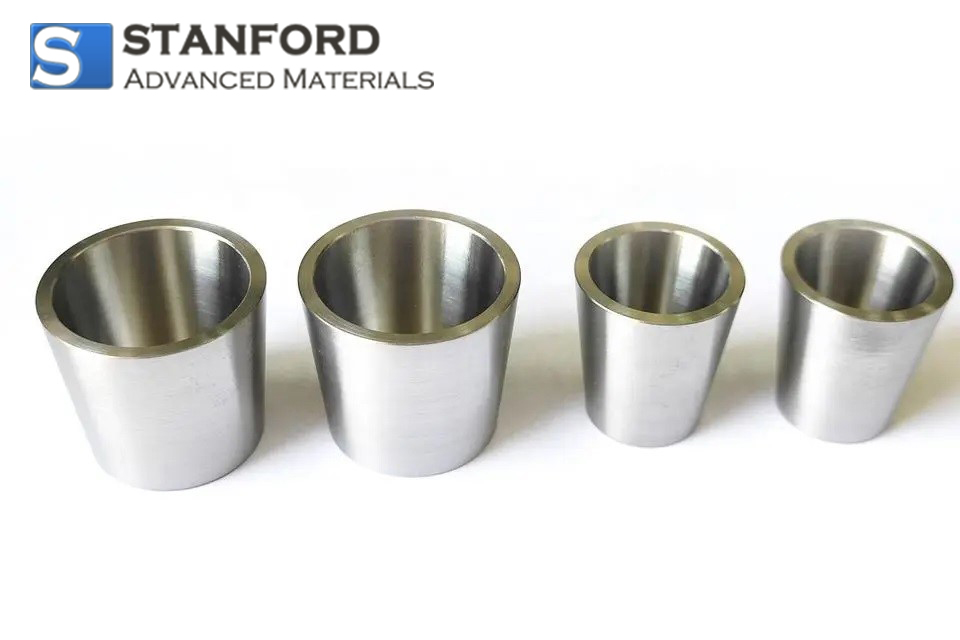
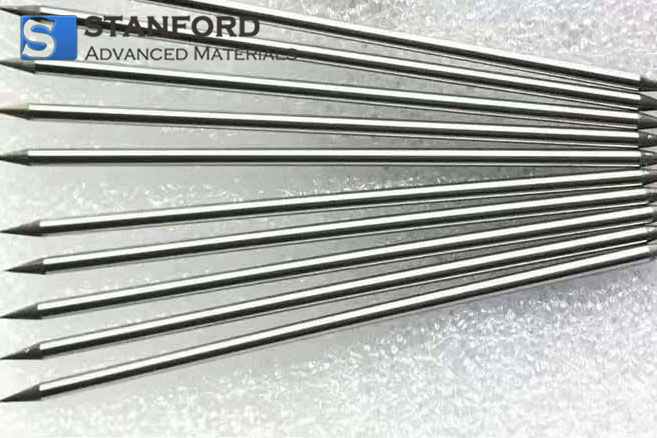
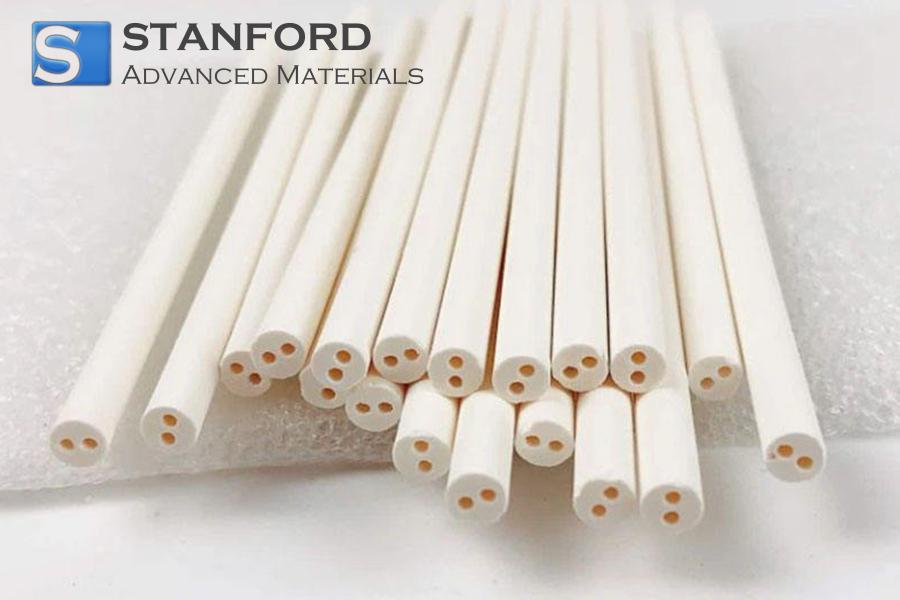
Many of these applications—such as high-voltage indicators, gas discharge tubes, and laser systems—require high-purity metals and ceramic components to function reliably. Tungsten electrodes, molybdenum crucibles, and precision ceramics are commonly used in these systems.
Preparation Methods
Neon is primarily extracted from the Earth's atmosphere. Since neon is found in trace amounts in the air, it is isolated through a process called fractional distillation of liquefied air. In this method, air is cooled to extremely low temperatures, causing the components of the air to liquefy. Neon is then separated from other gases due to its distinct boiling point.
Neon can also be isolated from natural gas, though this is a less common method. After extraction, the neon gas is purified and stored for various industrial uses.
Frequently Asked Questions
What is the most common use of neon?
The most common use of neon is in neon signs, where the gas glows with a characteristic red-orange light when an electric current passes through it.
Why is neon used in lights?
Neon is used in lights because it emits a bright, colorful light when electrically excited. Its glow is distinctive and can be controlled to create decorative lighting effects.
Is neon reactive?
Neon is chemically inert and non-reactive under standard conditions. It does not easily form compounds due to its stable electron configuration.
Can neon be found in nature?
Yes, neon is found in trace amounts in the Earth's atmosphere. It can be extracted through fractional distillation of liquefied air.
What other industries use neon?
Neon is also used in the creation of gas lasers, cryogenics, and certain vacuum tubes, in addition to its primary use in lighting.
Looking for advanced materials for industrial applications?
While Stanford Advanced Materials (SAM) specializes in high-purity metals, ceramics, and alloys used in related industries:
- Tungsten & Molybdenum — electrodes and crucibles for high-temperature processing
- Ceramic Materials — insulators and components for gas discharge tubes
- Sputtering Targets — thin film deposition for electronic devices
Explore our product catalog or contact our team to discuss your material needs.

 Chin Trento