Products
 Bars
Bars
 Beads & Spheres
 Bolts & Nuts
 Crucibles
 Discs
Discs
 Fibers & Fabrics
 Films
Films
 Flake
Flake
 Foams
Foams
 Foil
Foil
 Granules
 Honeycombs
 Ink
Ink
 Laminate
 Lumps
Lumps
 Meshes
 Metallised Film
 Plate
Plate
 Powders
 Rod
Rod
 Single Crystals
 Sputtering Target
 Tubes
Tubes
 Washer
 Wires
Wires
 Converters & Calculators
 Write for Us



ASTM E1149: Key Standards in Electroplating Metals

Introduction to ASTM E1149
ASTM E1149 is a main standard that was established by ASTM International and governs the electroplating of metals, providing detailed guidelines to ensure quality, consistency, and durability of metal coatings. The standard is specifically focused on chromium plating but can also be applied to nickel, zinc, and other common plating metals. Electroplating is of critical significance to companies that range from the auto and aerospace industries to electronics and decorative hardware, in which metal coatings ensure corrosion protection, raise wear resistance, and add appearance. By following ASTM E1149, manufacturers are capable of producing coatings that meet industry standards, regulatory regulations, and customer specifications.
Importance of ASTM Specifications in Metal Electroplating
ASTM standards like E1149 are important to standardize procedure and quality levels in the electroplating process. They enable consistent assessment of plating quality, process parameter control, and replicable results. Some of the most important benefits of adhering to ASTM standards are:
•Reduction of Defects: Complying with standardized procedure removes defects such as non-uniform plating, pitting, or peeling.
•Enhancing Product Life: Properly applied coatings are wear- and corrosion-resistant, thereby extending the life of the component.
•Boosting Consumer Confidence: Consistent quality control ensures that products remain at performance levels at all times.
•Acceptance in International Markets: Adherence to ASTM ensures international market compatibility via demonstration of compliance with set quality standards.
Electroplating Processes Covered by ASTM E1149
ASTM E1149 specifies procedures for most common electroplating processes:
• Chromium Electroplating: Provides corrosion resistance and a bright, decorative appearance. Chromium coatings are typically plated on vehicle trim, hardware, and industrial equipment.
• Nickel Electroplating: Enhances hardness, abrasion resistance, and adhesion for multilayers. Typically applied as a base coat for chromium plating to provide a hard layer.
• Zinc Electroplating: Protects metals from rusting and atmospheric corrosion, widely used in fasteners, vehicle parts, and construction materials.
Each process maintains specific requirements for electrolyte content, current density, plating thickness, bath temperature, and pH levels so that the final coat is both functional and aesthetically pleasing.
Electroplating Metals 101
How It Works
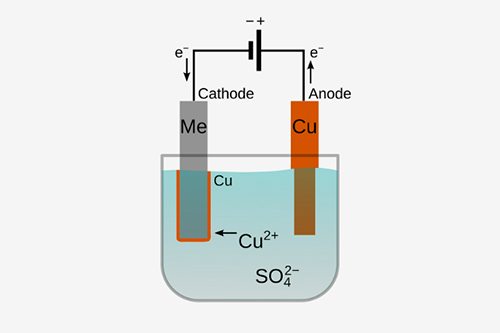
Electroplating is an electrochemical process in which a thin metal layer is plated onto a substrate utilizing an electric current. Metal ions of the electrolyte solution are reduced at the cathode (the article being plated) and form an even coating. The significant process parameters are:
•Current Density: The electrical current rate per unit area, determining deposition rate and quality of the layer.
•Electrolyte Composition: Chemical type and quantity within the plating solution regulate adhesion, brightness, and evenness.
•Plating Thickness: Regulates corrosion protection, abrasion resistance, and appearance.
•Temperature and pH: Regulate rates of deposition, finish on the surface, and bath stability.
Typical Metals Used
•Chromium: Offers corrosion protection, hardness, and reflective finish.
•Nickel: Offers wear resistance, is used as a base coat for multi-metal finishes.
•Zinc: Plating coats steel and iron against oxidation.
•Coppers and Silver: Sometimes used for specialty application where conductivity or beauty appearance is required.
General Uses of Electroplating
• Automotive: Bumpers, trimmings, engine parts, and fasteners.
• Aerospace: Aircraft parts that require corrosion-resistant finishes.
• Electronics: Contacts, connectors, enclosures, and printed circuit boards.
• Industrial Machinery: Gears, tools, and fittings that require wear resistance.
• Decorative Hardware: Furniture, plumbing components, and consumer products.
Table of Important Parameters in ASTM E1149
|
Parameter |
Description |
Standard Value |
|
Electrolyte Composition |
Specific chemicals used in plating solution |
As defined in ASTM E1149 |
|
Current Density |
Amount of electric current per unit area |
1-3 A/dm² |
|
Plating Thickness |
Thickness of the metal layer applied |
5-25 microns |
|
Temperature |
Operating temperature of the plating bath |
45-60°C |
|
pH Level |
Acidity or alkalinity of the plating solution |
2.5-4.5 |
For more information, please check Stanford Advanced Materials (SAM).
Frequently Asked Questions
1.What is the primary application of ASTM E1149?
ASTM E1149 provides standard guidelines for metal electroplating for quality, uniformity, and reliability.
2.Which metals are typically electroplated according to ASTM E1149?
Chromium, nickel, and zinc are the principal metals, with occasional use of copper and silver for certain uses.
3.How does ASTM E1149 improve the electroplating process?
Through establishing parameters and procedures, the standard enhances adhesion, uniformity, corrosion resistance, and visual appeal of the plated layers.
4.Is ASTM E1149 used in non-metal electroplating?
No, it is specifically designed only for metal substrates and coatings.
5.Why is chromium electroplating important to industry?
Chromium plating is characterized by superior corrosion resistance, high hardness, and bright finish and thus is required for functional as well as aesthetic applications.
6.What are some useful tips for conforming with ASTM E1149?
Clean substrates, accurate electrolyte composition, uniform current density, controlled bath temperature, and frequent monitoring guarantee repeatable high-quality results.
 Chin Trento