
 Products
 Bars
Bars
 Beads & Spheres
 Bolts & Nuts
 Crucibles
 Discs
Discs
 Fibers & Fabrics
 Films
Films
 Flake
Flake
 Foams
Foams
 Foil
Foil
 Granules
 Honeycombs
 Ink
Ink
 Laminate
 Lumps
Lumps
 Meshes
 Metallised Film
 Plate
Plate
 Powders
 Rod
Rod
 Single Crystals
 Sputtering Target
 Tubes
Tubes
 Washer
 Wires
Wires
 Converters & Calculators
 Write for Us



ASTM E2330: Standardizing Corrosion Protection in Coatings

Introduction
Corrosion protection plays a crucial role in extending the service life and structural integrity of both metal structures and parts. ASTM E2330 fulfills this requirement for a standardized, reproducible method of assessing coating performance relative to corrosion prevention. This standard is highly critical to manufacturers, engineers, and quality control professionals reliant upon consistent, non-partisan assessments that ascertain product durability-from vehicles and bridges to machinery and other equipment.
Importance of Corrosion Protection in Coatings
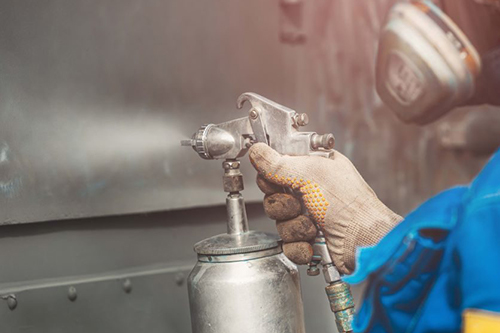
If unchecked, corrosion can cause serious structural failures, safety hazards, and tremendous losses. Corrosion protection by coatings is very important for prolonged product service life, lower maintenance costs, and improved safety. Coatings offer the following advantages:
- Longer Service Life: Coatings protect the metal surface against a corrosive environment; thus, increasing durability and operation life of structures and components.
- Cost Efficiency: Coatings reduce long-term operational costs since it requires minimal maintenance, repair, and replacement.
- Safety: Proper corrosion protection can help prevent catastrophic failures and thus protect human life as well as infrastructure.
- Aesthetic Maintenance: Coatings also provide an aesthetically pleasing finish, maintaining the visual appeal of products exposed to environmental stress.
How to Prevent Corrosion
The main contribution of coatings to corrosion prevention is that they act as a barrier-a protective layer-between the metal surface and its corrosive environment. Generally speaking, corrosion prevention can assume several forms, depending on the type of coating and specific application requirements:
- Barrier Coatings: These coatings work by serving as a physical barrier to prevent moisture, chemicals, and oxygen from coming in contact with the underlying metal. Common examples include paints, varnishes, and special polymer coatings.
- Sacrificial Coatings: Some coatings, such as zinc or galvanizing, are sacrificial. That is, the coating will corrode first in order to protect the underlying metal from rust and corrosion.
- Chemical Conversion Coatings: These are coatings applied to the metal surface where chemical changes occur on the metal to increase its corrosion resistance. Common substrate metals include aluminum, titanium, and steel.
When properly applied, coatings are an economically viable means of prolonging service life for metal components operating under hostile conditions, ranging from automotive parts to marine structures.
Overview of the Procedure
ASTM E2330 presents a systematic method by which corrosion protection provided by coatings is evaluated. This approach includes:
- Sample Preparation: Different metal substrates are prepared with care and coated by specified methods in order to ensure uniformity of test samples.
- Environmental Exposure: Coated samples are exposed to controlled corrosive conditions, simulating real-world environmental stresses like humidity, salt, and chemicals.
- Evaluation: The degree of corrosion protection after exposure is assessed by techniques such as visual examination, weight loss measurement, and other quantitative methods.
- Data Analysis: The results are analyzed according to the effectiveness of the coating in preventing corrosion. Evaluations will be done in order to comply with the standards of ASTM E2330.
Applications of ASTM E2330
ASTM E2330 is widely applied in industries where corrosion resistance is essential.
In the automotive industry, it is crucial for protecting vehicle parts from rust and corrosion, ensuring the durability and safety of automobiles. In marine engineering, the standard is applied to ships, offshore platforms, and other sea-based machinery, where constant exposure to aggressive saline environments makes effective corrosion protection necessary for longevity and safety.
In the construction sector, it is used to protect steel structures, bridges, and buildings from environmental corrosion, especially in coastal or industrial areas where exposure to corrosive elements is more prevalent. Aerospace applications rely on ASTM E2330 to ensure that aircraft components, which must withstand harsh environmental conditions, remain corrosion-resistant to maintain both safety and structural integrity.
Additionally, in industrial manufacturing, the standard helps protect equipment and machinery that are regularly exposed to corrosive substances, providing essential defense against wear and corrosion to extend their operational life.
Comparison of Standards of Corrosion Protection
|
Standard |
Focus Area |
Applications |
Advantages |
Limitations |
|
ASTM E2330 |
Corrosion protection |
Automotive, marine, construction |
Comprehensive evaluation methods |
Requires specialized equipment |
|
ISO 12944 |
Protective painting |
Construction, industrial |
Internationally recognized |
Broader scope, less specific |
|
NACE SP0169 |
Cathodic protection |
Pipelines, underground structures |
Detailed for cathodic methods |
Limited to specific protection type |
|
SSPC-PA2 |
Paint adhesion |
Industrial surfaces |
Focused on adhesion quality |
Does not cover corrosion testing |
|
ASTM B117 |
Salt spray corrosion |
General corrosion resistance |
Widely used for quick assessments |
Accelerated conditions may differ from real environments |
For further details, please visit Stanford Advanced Materials (SAM).
Frequently Asked Questions
What is ASTM E2330 used for?
ASTM E2330 standardizes the test methods to define corrosion protection by coatings, ensuring consistency and reliability in industries.
Why is corrosion protection important in coatings?
Protection against corrosion extends the useful life of metalwork, reduces expenditure on maintenance, enhances safety, and preserves the appearance of products that are kept in a corrosive environment.
Can ASTM E2330 be applied to all types of coatings?
Yes, ASTM E2330 applies to coatings, ranging from paints and primers to more specialized corrosion-resistant finishes, used to assess performance in a variety of applications.
What equipment is required for ASTM E2330?
The standard has requirements for controlled environmental chambers for exposure tests, apparatus for corrosion level evaluation, and facilities capable of applying uniform coatings on test samples.
How does ASTM E2330 ensure accurate corrosion protection assessments?
Detailed guidelines on sample preparation, environmental exposure, and evaluation methods are given in ASTM E2330 so that the tests conducted are consistent and reliable for comparing test results among coatings.

 Chin Trento