Products
 Bars
Bars
 Beads & Spheres
 Bolts & Nuts
 Crucibles
 Discs
Discs
 Fibers & Fabrics
 Films
Films
 Flake
Flake
 Foams
Foams
 Foil
Foil
 Granules
 Honeycombs
 Ink
Ink
 Laminate
 Lumps
Lumps
 Meshes
 Metallised Film
 Plate
Plate
 Powders
 Rod
Rod
 Single Crystals
 Sputtering Target
 Tubes
Tubes
 Washer
 Wires
Wires
 Converters & Calculators
 Write for Us



ASTM C33: Standards for Concrete Aggregates

Description
ASTM C33 was developed by the American Society for Testing and Materials as the standard specification covering the quality and grading of aggregates used in concrete. It ensures that fine or coarse aggregates conform to specific requirements that enhance the strength, durability, and performance of concrete in construction applications.
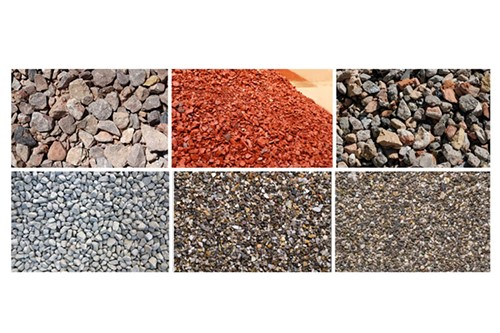
Key aspects of ASTM C33
Purpose and Importance
ASTM C33 gives the specifications for concrete aggregate selection, grading, and testing to make superior-quality concrete. The standard ensures the aggregates in the concrete mix contribute to the desired strength, workability, and longevity of the finished structure. This will give construction projects structural integrity, reduced risk of defects, and safety, now and in the future.
Aggregate Grading
The standard classifies aggregate into several grades according to particle size. Grading is the division of aggregates into different sizes, and it is one of the important factors in developing a homogeneous and workable mix that will lead to the general performance of concrete, such as its compressive strength and finishing qualities. ASTM C33 prescribes permissible limits of particle sizes for both coarse and fine aggregates to achieve concrete production consistency.
• Coarse Aggregates: This class comprises gravels, crushed stones, and recycled concretes, having their sizes from 4.75 mm to 75 mm. These aggregates provide the bulk and strength to the concrete.
• Fine Aggregates: Contains sand, with particle sizes less than 4.75 mm, filling the voids between coarse aggregates and enhancing workability.
Quality and Testing Requirements
ASTMC33 describes several quality tests for aggregates to ensure compliance, some of which include:
• Sieve Analysis: It determines the particle size distribution.
• Specific Gravity and Absorption – Measures the density and moisture absorption of aggregates.
• Organic Impurities: Checks if any impurities can potentially affect the concrete performance.
• Soundness – Checks the resistance of aggregate to weathering and decay.
These tests help confirm that aggregates meet the necessary criteria for producing high-performance concrete.
Impact on Steel and Iron Reinforcement
The quality of the aggregates called out in ASTM C33 has a direct impact on the performance of reinforced concrete. Properly graded aggregates will help to enhance bond to the concrete by the reinforcing steel, reducing instances of corrosion and creating reinforced concrete that is stronger and more durable. By meeting the ASTM C33 requirements, contractors can assure that concrete will perform in an exemplary manner under numerous types of stresses and environmental conditions.
ASTM C33 Sand
ASTM C33 Sand is a particular grade of fine aggregate that, in concrete mixes, must fulfill the requirements of this standard concerning particle size and quality. The sand is usually used to fill in the gaps between the larger coarse aggregates in the concrete mix, improving workability and giving a smooth finish to the concrete.
Key Characteristics of ASTM C33 Sand:
• Particle Size: Usually ranges from 0.075 mm to 4.75 mm, wherein it must be adequate for proper balance in filling the voids without adversely impacting the mix performance.
• Purity: Sand should be free from impurities like clay, salt, or organic substances. Impurities interfere with the bonding of cement and reduce the strength of concrete.
Shape: Angular particles are better for bonding in the concrete mix, while rounded particles can reduce strength since it allows particles to move freely in the mix.
•Moisture Content: ASTM C33 sand requires the moisture content to be controlled because excess moisture could compromise the concrete mix with the wrong water-cement ratio, which may affect the final strength and durability.
Applications:
ASTM C33 sand is an integral part in a wide range of applications, from building foundations and pavement to infrastructure projects such as bridges and roads, because high strength and durability of concrete are requisite. It is an essential ingredient in precast concrete products, where uniformity and high performance are crucial.
Aggregate Grades and Their Applications
|
Aggregate Grade |
Particle Size Range (mm) |
Common Uses |
|
1 |
4.75 - 19.0 |
General concrete, pavements |
|
2 |
4.75 - 37.5 |
High-strength concrete, highways |
|
3 |
19.0 - 37.5 |
Heavy-duty pavements, industrial |
|
4 |
37.5 - 75.0 |
Structural concrete, large infrastructure projects |
For more information, please check Stanford Advanced Materials (SAM).
Frequently Asked Questions (FAQs)
What is ASTM C33?
The ASTM C33 standard provides detailed specifications regarding the grading and quality of fine and coarse aggregates for use in concrete, ensuring appropriate performance for any construction project.
What is the function of ASTM C33 sand in concrete?
Fine aggregate added to the ASTM C33 sand used to fill the voids between coarse aggregates improves workability, finish, and strength of concrete.
How does ASTM C33 ensure concrete quality?
By specifying the required grading, quality, and testing methods for aggregates, ASTM C33 provides assurance that concrete mixes are apt to perform as required with respect to strength, durability, and workability.
Why is aggregate grading important in the production of concrete?
Proper grading ensures that the concrete mix is uniform and well-compacted, to which the strength and durability of concrete are directly related.
Can recycled concrete be used as an aggregate under ASTM C33?
Yes, recycled concrete can be used as an aggregate as long as the quality standards of ASTM C33 are met.
What happens if ASTM C33 standards are not followed?
Poor structural integrity, reduced performance, and possibly maintenance headaches-all these are the result of not adhering to ASTM C33 in concrete.


 Chin Trento