
 Products
 Bars
Bars
 Beads & Spheres
 Bolts & Nuts
 Crucibles
 Discs
Discs
 Fibers & Fabrics
 Films
Films
 Flake
Flake
 Foams
Foams
 Foil
Foil
 Granules
 Honeycombs
 Ink
Ink
 Laminate
 Lumps
Lumps
 Meshes
 Metallised Film
 Plate
Plate
 Powders
 Rod
Rod
 Single Crystals
 Sputtering Target
 Tubes
Tubes
 Washer
 Wires
Wires
 Converters & Calculators
 Write for Us



ASTM E380: International System of Units (SI)

Description
ASTM E380 gives detailed practices for both the use of the International System of Units and a review of the appropriate application of other metric units in scientific, industrial, and engineering publications. Since SI units are accepted as the worldwide standard for measurement, ASTM E380 plays a crucial role in facilitating uniformity in the preparation, calculation, and presentation of technical data.
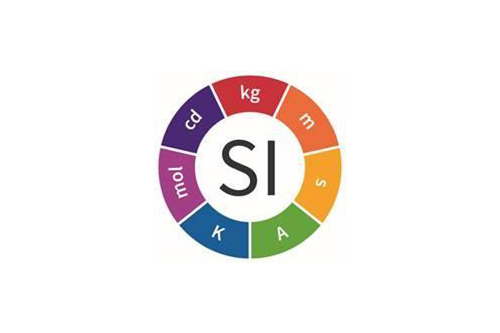
Key Objectives of ASTM E380
1. Standardization: The use of SI units in all technical, scientific and industrial areas should be encouraged.
2. Uniformity: To avoid inconsistency caused by the use of non-SI units or systems with mixed units.
3. Clarity: To ensure proper conversion and use of SI units in data, reports, and specifications.
Key Features of ASTM E380
1. SI Base Units
The standard focuses on the usage of seven basic SI base units that act as the basis for other derived units:
|
Quantity |
Base Unit |
Symbol |
|
meter |
m |
|
|
Mass |
kilogram |
kg |
|
Time |
second |
s |
|
Electric current |
ampere |
A |
|
Thermodynamic temperature |
kelvin |
K |
|
Amount of substance |
mole |
mol |
|
Luminous intensity |
candela |
cd |
For more information, please visit Stanford Advanced Materials (SAM).
2. Derived Units
ASTM E380 also describes the use of derived SI units, which are combinations of base units. For example:
• Force: Newton (N) = kg·m/s²
• Pressure: Pascal (Pa) = N/m²
• Energy: Joule (J) = N·m
3. Directives for Conversion
ASTM E380 provides guidelines for the conversion of quantities from non-SI units into SI units to facilitate the accurate conversion. It stipulates:
• Proper rounding techniques for converted values.
• SI and non-SI units should not be combined in the same calculation or report.
• Clear identification of converted values to maintain traceability.
4. Multiples and Submultiples
The standard supports the use of prefixes to represent multiples or submultiples of SI units in order to promote simplicity and clarity. For example:
• MP milli- for 10⁻³, such as millimeter: mm
• Kilo- (k) for 10³ (example: kilometer: km)
• Mega- (M) for 106 (e.g., megawatt: MW)
5. Best Practices for Documentation
ASTM E380 describes the correct application of SI units in reports, specifications, and labels:
• Always use the unit symbol instead of spelling the unit, e.g., "10 m" for meters.
• Do not add plural forms to unit symbols, e.g., write "10 kg," not "10 kgs."
• The numerical value and unit symbol should be separated by a space, for example: 5 N instead of 5N.
Applications of ASTM E380
• Engineering and Design: Utilized in technical drawing, calculations, and product specifications.
• Manufacturing: Ensures the use of consistent units in process control and material certification.
• Scientific Research: Promotes standardization of experimental data and reporting.
• International Trade: It helps communicate and comply with the international standards of doing business.
Frequently Asked Questions
Why is ASTM E380 important?
ASTM E380 serves to outline consistency and accuracy for the use of SI units in industries to further achieve standardization in technical documentation, calculations, and communications. It helps reduce errors and improves compatibility with international standards.
What are the SI base units included in ASTM E380?
The seven SI base units listed in ASTM E380 are as follows:
- Length: meter (m)
- Mass: kilogram (kg)
- Time: second (s)
- Electric current: ampere (A)
- Amount of substance: mole (mol)
- Luminous intensity: candela (cd)
Does ASTM E380 provide guidelines for converting non-SI units to SI?
Yes, ASTM E380 provides explicit recommendations for converting non-SI units (such as inch, pound) to SI units (such as meter, kilogram). Further, guidelines using the proper rules of rounding are emphasized to ensure accuracy during such conversions.
Can SI units be mixed with non-SI units in calculations or reports?
No, ASTM E380 discourages the mixing of SI and non-SI units in the same calculation or report. The use of consistent SI units ensures that confusion can be avoided and uniformity maintained among technical data.
 Chin Trento