
 Products
 Bars
Bars
 Beads & Spheres
 Bolts & Nuts
 Crucibles
 Discs
Discs
 Fibers & Fabrics
 Films
Films
 Flake
Flake
 Foams
Foams
 Foil
Foil
 Granules
 Honeycombs
 Ink
Ink
 Laminate
 Lumps
Lumps
 Meshes
 Metallised Film
 Plate
Plate
 Powders
 Rod
Rod
 Single Crystals
 Sputtering Target
 Tubes
Tubes
 Washer
 Wires
Wires
 Converters & Calculators
 Write for Us



ASTM E2652: Tensile Testing of Powder Metallurgy Products

Introduction
Tensile strength is one of the important properties in powder metallurgy that may affect mechanical performance and the durability of manufactured parts. Therefore, ASTM E2652 covers the standard operating practice for the correct measurement of the tensile properties of metal powders. These test procedures are conducted to serve four major purposes: to ensure product quality, material selection, consistency in the manufacturing processes, and maintaining the repeatable quality of the product.
Why Tensile Strength Matters in Powder Metallurgy
Tensile strength designates the resistance of a material to forces that would tear it apart. In powder metallurgy, it becomes very important, as the mechanical properties of a final part will largely depend on the tensile strength of the powder. Accurate measurement is required for the following:
Product Reliability: Metal components in demanding environments-for example, auto engines, medical devices, or aerospace applications-should not fail under operational stresses.
Material Selection: Manufacturing industries can use the knowledge of tensile properties of different metal powders to select appropriate materials for specific uses, based on performance and durability.
Quality Control: Consistent tensile strength among production batches ensures that each part will be able to meet the demands of being field-ready, free from defects that can compromise the integrity of the product.
Overview of the Procedure
The tensile strength determination using ASTM E 2652 is a simple, reproducible test method that yields accurate and reliable results for the tensile strength of the metal powders. Major steps in the procedure include:
1. Sample Preparation
The first step in conducting tensile strength tests is compacting the metal powder into standardized shapes, usually cylindrical or rectangular specimens. This is important for ensuring uniformity across samples, which helps eliminate differences that might affect the test results.
2. Tempering
Such specimens, after being prepared, are then conditioned by keeping them in a controlled environment of temperature and humidity. This eliminates environmental factors, such as the effects of moisture or temperature fluctuations that are likely to affect the tensile strength of the material. Consistent conditioning is important to ensure that results are accurate and reproducible.
3. Testing
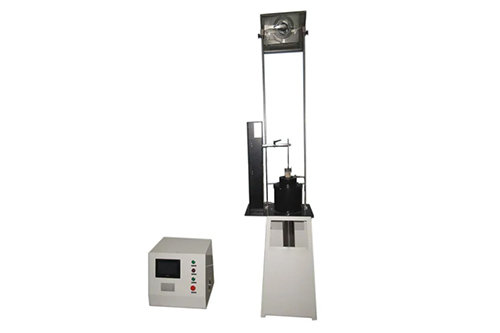
The conditioned specimen is then put into a tensile testing machine into which a controlled force is applied. The machine applies continuous pressure until the specimen fractures, and the force required to break the specimen is measured.
4. Data Recording
The force a specimen can resist before failure is recorded, and tensile strength is calculated as the division of recorded force by cross-sectional area. This provides an accurate, reproducible measurement of the resistance of materials to deformation under stress.
Applications of ASTM E2652
The ASTM E2652 standard applies to those industries where powder metallurgy plays a considerable part in producing high-performance parts made from metals. Some examples of common applications are as follows:
- Automotive Industry: Metal powders are applied for manufacturing high-strength parts such as gears, bearings, and structural parts. Precise tensile strength testing ensures that such parts will support the stresses they are exposed to in operation.
- Aerospace: In aerospace, the demand is for light but strong materials. It follows that metal powders for turbine blades, engine parts, and structural components would need to be of the highest tensile strengths to ensure safety and performance at extreme altitudes and temperatures.
- Medical Devices: Powder metallurgy is finding increasing use in making implants and surgical instruments that are durable. In the majority of such parts, tensile strength determines functionality and longevity within the human body.
- Electronics: In the manufacture of connectors, conductive components, and other precision parts, use should be made of ASTM E2652 in the metal powders of such components for sufficient strength and reliability.
Comparison of Standards in Tensile Strength Measurement
While the standard related to powder metallurgy is ASTM E 2652, numerous other standards exist in testing the tensile strength of metals and their alloys. A comparison of some key standards is given below.
|
Standard |
Material Type |
Applications |
Advantages |
Limitations |
|
ASTM E2652 |
Metal Powders |
Powder metallurgy, automotive |
Standardized method, high accuracy |
Requires precise equipment |
|
ISO 6892 |
General metal testing |
International recognition |
May not cover powder-specific needs |
|
|
ASTM E8 |
Metals |
Structural steel and alloys |
Comprehensive guidelines |
Not tailored for powdered materials |
|
JIS Z 2241 |
Metals |
Japanese industrial applications |
Specific to Japanese standards |
Limited global applicability |
Frequently Asked Questions
What is ASTM E 2652 used for?
ASTM E2652 is the standard test method for determining the tensile strength of metal powders with regard to the properties required for powder metallurgy applications.
Why is tensile strength important in powder metallurgy?
Tensile strength describes the material's resistance to forces acting to pull it apart. In powder metallurgy, tensile strength is a critical property as it essentially characterizes the mechanical properties and the durability of the parts produced.
Can ASTM E2652 be applied to all types of metal powders?
Yes, ASTM E2652 covers the determination of the tensile strength of many types of metal powders, both ferrous and non-ferrous, provided that they have been prepared by standard methods.
What kind of equipment does ASTM E2652 require?
A tensile testing machine, standardized specimen molds, controlled conditioning chambers for temperature and humidity, and data recording systems are required to capture the accurate tensile strength measurements in accordance with the standard.
How does specimen preparation affect the tensile strength results in ASTM E2652?
Proper specimen preparation is the very essence of ensuring uniformity and consistency among all tests. Variations in the shape, size, or surface finish of the specimens could yield incorrect results that may affect the reliability of the final assessment.
 Chin Trento