
 Products
 Bars
Bars
 Beads & Spheres
 Bolts & Nuts
 Crucibles
 Discs
Discs
 Fibers & Fabrics
 Films
Films
 Flake
Flake
 Foams
Foams
 Foil
Foil
 Granules
 Honeycombs
 Ink
Ink
 Laminate
 Lumps
Lumps
 Meshes
 Metallised Film
 Plate
Plate
 Powders
 Rod
Rod
 Single Crystals
 Sputtering Target
 Tubes
Tubes
 Washer
 Wires
Wires
 Converters & Calculators
 Write for Us



ASTM D257 for Electrical Properties Measurement

Introduction to ASTM D257
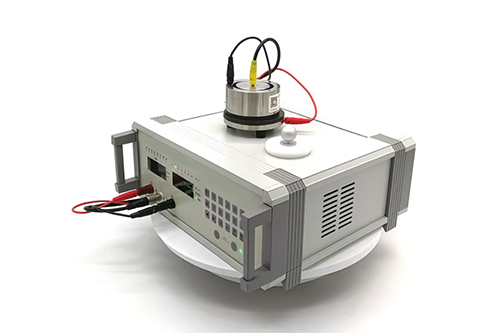
ASTM D257 is a long-standing standard test method of ASTM International for the measurement of the DC electric properties of materials. The standard is vital in deciding materials' conductance and resistance, including ceramics, metals, and polymers. With a standard approach, ASTM D257 ensures that electrical property measurements are consistent and comparable across laboratories and uses.
Application of ASTM D257 in Various Industries
ASTM D257 is applied across several industries to measure electrical properties of materials:
Electronics
In the electronics industry, precise measurement of resistance is essential to the functioning of components like resistors, capacitors, and semiconductors.
Automotive
Automotive firms apply ASTM D257 in measuring electrical properties of materials used in vehicle electronics, such as sensors and control units.
Aerospace
The aerospace industry employs ASTM D257 to describe materials for electrical conductance and insulation in aircraft and space vehicles.
How the Test Works
ASTM D257 testing involves passing a direct current (DC) through a test specimen and measuring the voltage drop that is caused by it. Based on these measurements, material resistance can be calculated by Ohm's law, with conductance being calculated as the reciprocal of resistance. The important steps are:
1. Sample Preparation: The sample is molded into a consistent size and surface wiped free of contaminants that can affect readings.
2. Environmental Conditioning: Temperature and humidity are controlled, since they play a big role in electrical properties.
3. Measurement Setup: Electrodes are placed on the sample surface and a DC voltage supplied. Careful current flow and voltage measurement is provided by specialized hardware.
4. Data Recording: Measurements are recorded repeatedly in controlled conditions for accuracy and reproducibility.
Key Parameters Examined
ASTM D257 primarily measures the following electrical properties:
• Resistance along the material surface, typically reported in terms of ohms per square.
•Resistance in bulk in the material, appropriate for understanding three-dimensional conductivity.
• Conductance: The reciprocal of resistance, quantifying the facility of the flow of electric current in the material.
Parameters Affecting Test Results
There are different parameters that might affect the accuracy and reliability of measurement by ASTM D257:
• Material Composition: Additives or impurities may cause substantial changes in conductance and resistance.
•Temperature and Humidity: Changes can result in conductivity variations in surface conductivity, especially for polymers and ceramics.
•Surface Condition: Surface roughness, contamination, or moisture can cause skewed results.
•Electrode Contact: Incorrect electrode pressure or position can result in variable results.
Table: Comparison of Electrical Properties Measurement Methods
|
Method |
Standard Reference |
Suitable Materials |
Key Parameters Measured |
|
ASTM D257 |
ASTM International |
Ceramics, Polymers, Metals |
Conductance, Resistance |
|
ASTM D149 |
ASTM International |
Conductors |
Conductivity, Resistivity |
|
IEC 60093 |
International Electrotechnical Commission |
Insulators |
Dielectric Strength, Permittivity |
|
IEEE 383 |
Institute of Electrical and Electronics Engineers |
Electronic Components |
Impedance, Capacitance |
Frequently Asked Questions
What is the application of ASTM D257?
ASTM D257 is a standard method for the measurement of the DC electrical properties, that is, conductance and resistance, of various materials in the interest of uniformity and reproducibility in results.
What type of materials can be tested using ASTM D257?
ASTM D257 is applicable to a wide range of materials, including ceramics, polymers, and metals, hence it has application in numerous industries and applications.
Why are conductance and resistance important when selecting materials?
Conductance and resistance establish the characteristics of material performance in electrical application, and thus their suitability for specific purposes such as insulation, conduction, or incorporation as part of electrical devices.
How does ASTM D257 ensure accurate measurements?
The standard offers detailed procedure for sample preparation, environmental condition, and calibration of equipment, which all collectively are accountable for correct and reproducible readings.
Is ASTM D257 suitable for high-frequency electrical properties?
No, ASTM D257 is for DC electrical properties. For high-frequency testing, other standards and techniques are more appropriate.
 Chin Trento