
 Products
 Bars
Bars
 Beads & Spheres
 Bolts & Nuts
 Crucibles
 Discs
Discs
 Fibers & Fabrics
 Films
Films
 Flake
Flake
 Foams
Foams
 Foil
Foil
 Granules
 Honeycombs
 Ink
Ink
 Laminate
 Lumps
Lumps
 Meshes
 Metallised Film
 Plate
Plate
 Powders
 Rod
Rod
 Single Crystals
 Sputtering Target
 Tubes
Tubes
 Washer
 Wires
Wires
 Converters & Calculators
 Write for Us



Graphene Holographic Disks Allow A New of Looking at Things

When the first set of Star Wars films was released in the 1980’s, seeing the wonderful aircrafts, the deadly and yet stable light sabres, interested people. Another thing that made a mark was the use of holographic images, where the images would appear in three-dimensional form. It was considered to be just a mere science fiction that could never be made possible. Like the famous author, Isac Asimov’s science fiction ideas were made into a reality, similarly it is perhaps a time where Lucas, too, would see his dreams turn real.
However, perhaps the “force” is now with some scientists who are managing to convert these imaginary ideas in to reality. Scientists in Melbourne, Australia and other parts of the world have conducted research and used Graphene, the wonder material, to come up with holographic disks.
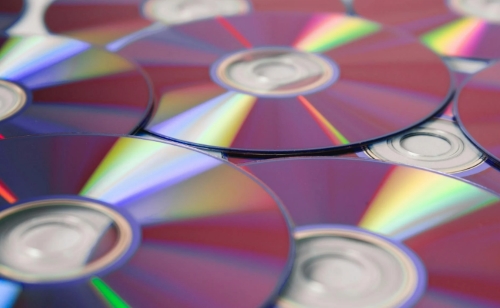
The holographic disk turns out to provide for far more storage than a normal computer hard disk. Moreover, these disks are capable of producing better images than a blu- ray DVD. The best part is that these disks can protect the information in a safe and sound manner. This means that it is less vulnerable to scratch and have other issues associated with disks. Normal disks used as storage devices, are not efficient, as they cannot store massive amounts of data. Even a slight distortion may cause the data to be lost. The new disk would allow data recovery even from broken pieces of that disk.
Thanks to the use of Graphene, it is now possible to have a more advanced version of disks. The images in the disks would mainly consist of four layers. One would be having multiple optical encoding, while the next layer would have two photon volumetric images. The next layer would be consisting of recorded holograms, while the final layer would be mainly consisting of holographic encoded images.
To add to its glory, the holographic disk would be able to produce an image of 3.2 terabits per cubic inch. This means that the image would be clear enough to view. However, the problem is that such an image cannot generate high definition images yet.
Graphene is certainly going to change the way we look at technology in more ways than one. It is certainly the key to the future of humankind. Graphene could actually help in turning a fiction into ground reality.
 Chin Trento