Products
 Bars
Bars
 Beads & Spheres
 Bolts & Nuts
 Crucibles
 Discs
Discs
 Fibers & Fabrics
 Films
Films
 Flake
Flake
 Foams
Foams
 Foil
Foil
 Granules
 Honeycombs
 Ink
Ink
 Laminate
 Lumps
Lumps
 Meshes
 Metallised Film
 Plate
Plate
 Powders
 Rod
Rod
 Single Crystals
 Sputtering Target
 Tubes
Tubes
 Washer
 Wires
Wires
 Converters & Calculators
 Write for Us



When Titanium Was Discovered

Discovery of titanium
Reverend William Gregor:1791, Ti was found in the form of Ti containing minerals in Cornwall, England, the founder is England amateur mineralogist Reverend William Gregor. He found some black sand in the neighboring parish of Manaccan small brook, then he found the sand can be attracted by the magnet, he realized that this mineral contains a new element. It was found that there were two metal oxides in the sand: iron oxide and a white metal oxide that he could not recognize. At the same time, Franz-Joseph M ller von Reichenstein also created a similar material, but it cannot be recognized.
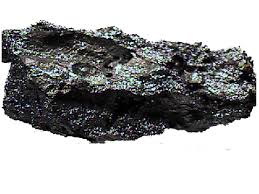
Martin Heinrich Klaproth: in 1795, German chemist Klaproth discovered this oxide when analyzing the red rutile produced in Hungary. He advocated the naming method of uranium, named the new element "Titanium". When he heard the earlier discovery from Gregor, Klaproth made some manaccan mineral samples and confirmed it with titanium.
Matthew A. Hunter: the titanium that Gregor and Crabbe discovered at the time was powdery titania rather than metallic titanium. Because titanium oxide is extremely stable, and titanium metal can be directly combined with oxygen, nitrogen, hydrogen, and carbon, so it is difficult to make titanium. In 1910, that Hunter, an American chemist, first made TiCI with a purity of 99.9% by reducing it with sodium.
In 1940, Luxemburg scientist W.J.Kroll made pure titanium with magnesium reduction TiCl4. Since then, magnesium reduction and sodium reduction have become the industrial methods for producing titanium sponges. In 1948, the United States produced 2 tons of sponge titanium with the magnesium reduction method and then began the industrial production of titanium.
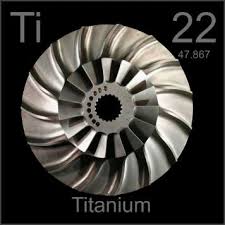
Titanium industry development process
In 1789, scientists discovered the titanium element, but until 1908, Norway and the United States began production of titanium dioxide by sulfuric acid method, in 1910, sodium was prepared by titanium sponge for the first time in the lab. In 1948, the United States DuPont Co began to produce tons of titanium sponge with the magnesium method, which marks the beginning of the industrial production of titanium sponge titanium.
Preparation of titanium
Titanium smelting
Melting titanium raw material and adding material, titanium preparation, and titanium alloy ingot dense process, is the first process of titanium material preparation.
General titanium materials can be obtained by two self-consumable smelting. Some titanium alloys for important uses, such as aviation, need to be smelted 3 times.
Sponge titanium smelting process
Magnesium reduction process
The process of producing titanium by reduction of four titanium chloride (TiCl4) with magnesium is one of the main methods for the production of titanium. The reduction operation was carried out in high temperature and inert gas atmosphere, and the residual metal magnesium and MgCl2 were separated by vacuum distillation to obtain sponge metal titanium.
Sodium (Na) reduction method
It is also known as the Hunter method, which is the earliest study used to prepare titanium metal.

 Chin Trento