
 Products
 Bars
Bars
 Beads & Spheres
 Bolts & Nuts
 Crucibles
 Discs
Discs
 Fibers & Fabrics
 Films
Films
 Flake
Flake
 Foams
Foams
 Foil
Foil
 Granules
 Honeycombs
 Ink
Ink
 Laminate
 Lumps
Lumps
 Meshes
 Metallised Film
 Plate
Plate
 Powders
 Rod
Rod
 Single Crystals
 Sputtering Target
 Tubes
Tubes
 Washer
 Wires
Wires
 Converters & Calculators
 Write for Us



Selenium: Element Properties and Uses

Description
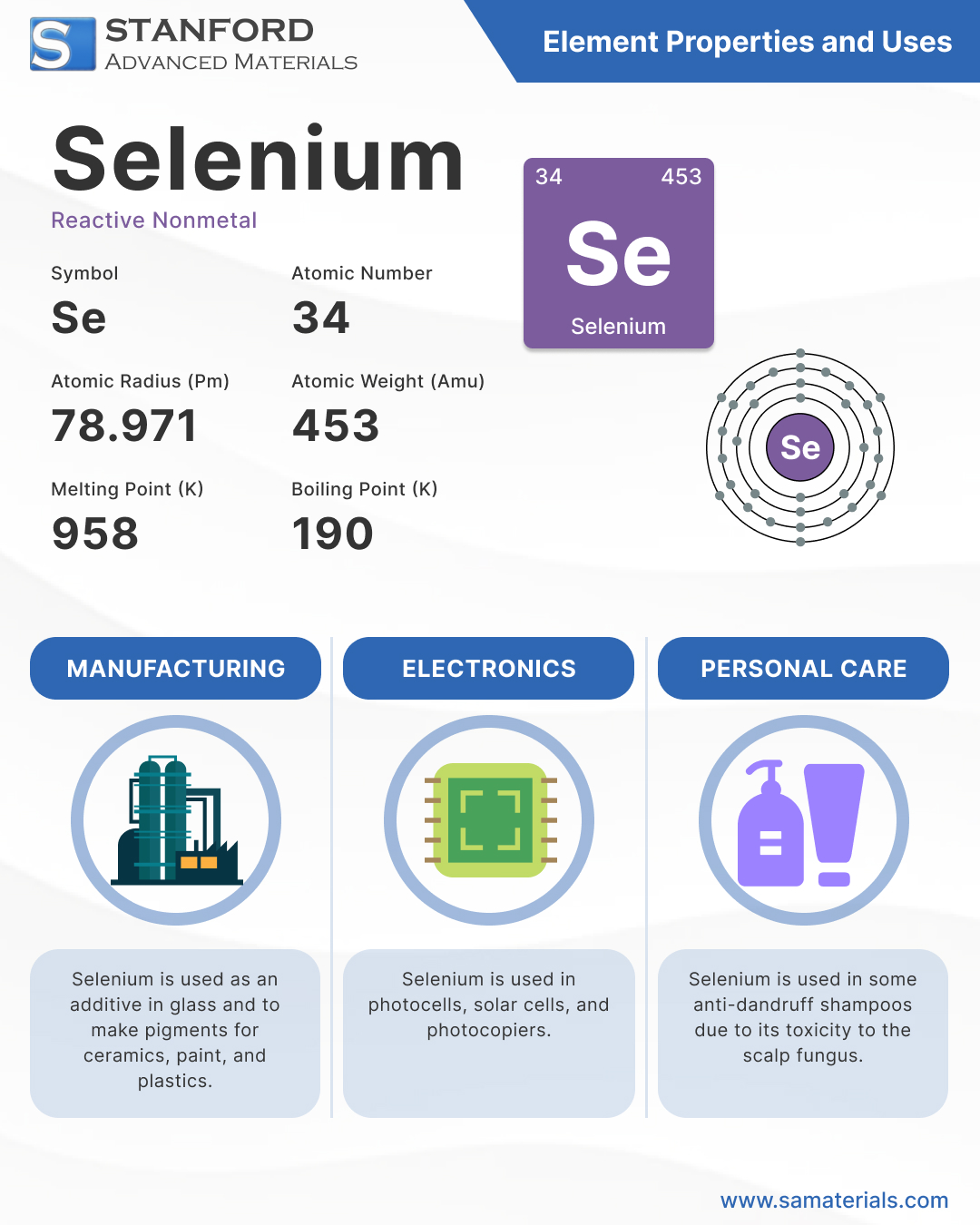
Selenium is an essential trace element, possessing exclusive chemical and physical characteristics. It has various applications in industries, medicine, and electronics across the world.
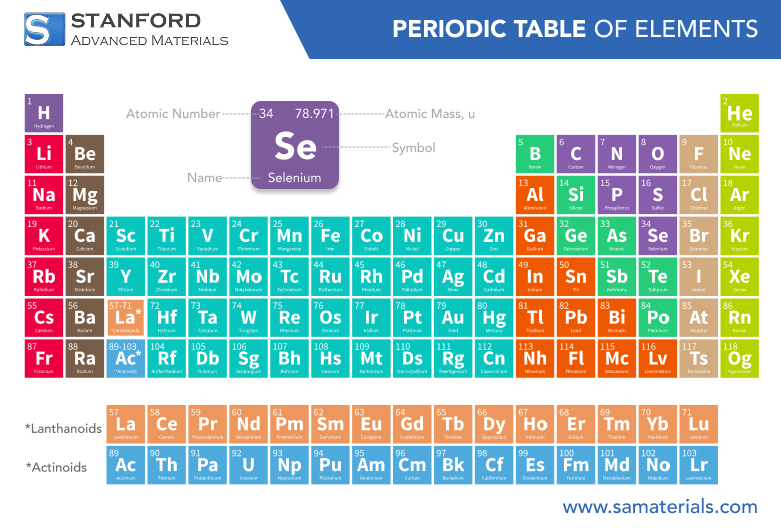
Introduction to Selenium
While Selenium is found primarily in mineral deposits in nature, it is one of the trace elements that are essential to living organisms, but industrial applications of the element go much further. Being capable of forming compounds in different oxidation states has made this element particularly feasible in chemical reactions and processes. Researchers and engineers have long recognized Selenium, due to its unique properties that let it be integrated into everything from solar cells to electronic circuits.
Chemical Properties Description
Selenium represents a variable oxidation state, normally from -2 to +6. It is within this range that makes it possible for the formation of several compounds with other elements. In chemical reactions, Se is capable of taking part in redox processes; its compounds are also studied for semiconductor properties and as catalysts. The electron configuration of the element endows it with a peculiar reactivity among non-metals, enabling the synthesis of both organic and inorganic compounds.
Selenium compounds are frequently used in experimental research related to photocatalysis and corrosion inhibition, underlining their importance in the modern chemical industry. Knowledge of the chemical properties of selenium becomes vital for understanding its interaction with other materials and optimization in both academic and industrial performance.
Physical Properties
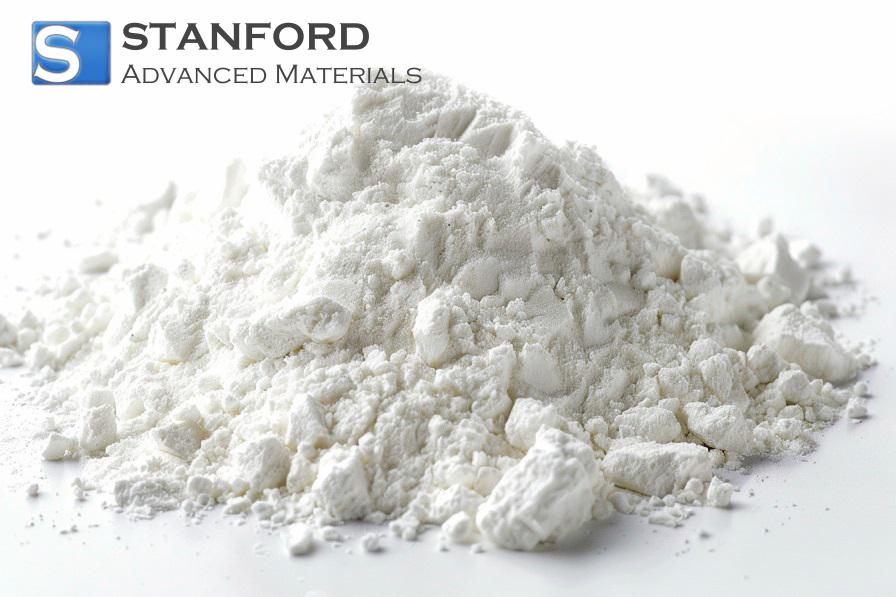
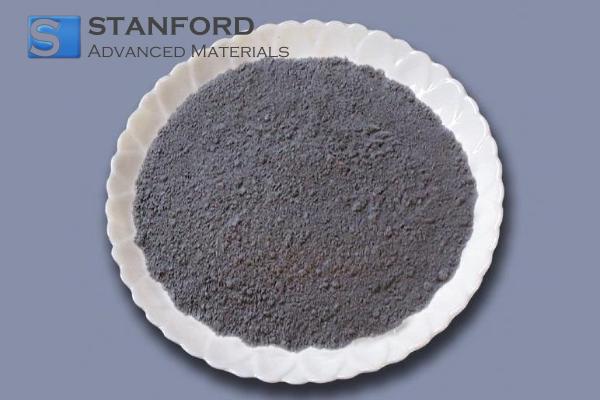
Physically, Selenium has some interesting features: it can adopt either metallic or nonmetallic properties, depending on its allotrope. The element exists in several amorphous and crystalline forms that assume different colors and textures. For example, while some allotropes of Selenium assume a metallic gray brightness, other forms have a reddish color. These differences are important during the selection of an appropriate form for particular industrial uses.
|
Property |
Value |
Notes |
|
Atomic Number |
34 |
Standard element number |
|
Atomic Weight |
~78.96 |
Average weight based on isotopic composition |
|
Density |
4.81 g/cm³ |
Measured in solid state |
|
Melting Point |
220 °C |
Varies with different allotropes |
|
Boiling Point |
685 °C |
Typical value for the crystalline form |
|
Appearance |
Metallic gray to red |
Allotrope-dependent variations |
For further details, please refer to Stanford Advanced Materials (SAM).
Common Uses
Selenium is included in a broad range of applications that make use of this element's special characteristics.
In electronics, it is used in photocopiers and solar cells as a result of its photoelectric sensitivity.
In the glass industry, Selenium helps to remove the greenish tint in glass and can impart a reddish hue when desired.
Moreover, Selenium, being an essential micronutrient, is added to various dietary supplements to support metabolic functions and enhance the immune system.
Its compounds are also used in pigments for ceramics and plastics, as well as in lubricants to increase machinery performance.
The various applications of Selenium across these industries underpin its importance both in everyday products and specialized industrial systems.
Preparation Techniques
Care is taken in the preparative methods of Selenium to ensure its purity and effectiveness for use in many applications.
Selenium is usually produced as a byproduct in the refining of ores, for instance, those of copper. The extraction generally consists of roasting the ore in a way that converts Selenium into a volatile compound, which is then condensed and purified. Other ways of preparation might involve the chemical reduction of selenium to its elemental form.
Both of these methods have been optimized to produce Selenium with minimum impurities so that chemical and physical properties can be preserved. Detailed procedures and new technological levels have upgraded these processes, making Selenium widely available for both laboratory research and industrial production.
Frequently Asked Questions
What is Selenium?
Selenium is a nonmetal element, essentially required in trace amounts for biological functions, and widely used in various applications within industries.
How is Selenium generally prepared?
It is mostly extracted from selenide ores during the refining of metals like copper, using roasting and purification techniques.
What are the common uses of Selenium?
Selenium is used in solar cells, photocopiers, glass manufacturing, pigments, and as an important micronutrient in dietary supplements.
How do the chemical properties influence applications?
This ability of Selenium to exhibit multiple oxidation states makes it useful in a wide range of compounds for semiconductors and catalytic processes.
Which industrial products does Selenium form a part of?
The unique properties of selenium are utilized in the production of high-performance alloys, electronic circuits, specialized pigments, and glass products.
 Chin Trento