
 Products
 Bars
Bars
 Beads & Spheres
 Bolts & Nuts
 Crucibles
 Discs
Discs
 Fibers & Fabrics
 Films
Films
 Flake
Flake
 Foams
Foams
 Foil
Foil
 Granules
 Honeycombs
 Ink
Ink
 Laminate
 Lumps
Lumps
 Meshes
 Metallised Film
 Plate
Plate
 Powders
 Rod
Rod
 Single Crystals
 Sputtering Target
 Tubes
Tubes
 Washer
 Wires
Wires
 Converters & Calculators
 Write for Us



Bromine: Element Properties and Uses

Description
Bromine stands out for its versatility among halogens due to its unique chemical and physical properties, finding applications in industry and research for performance and safety improvements.
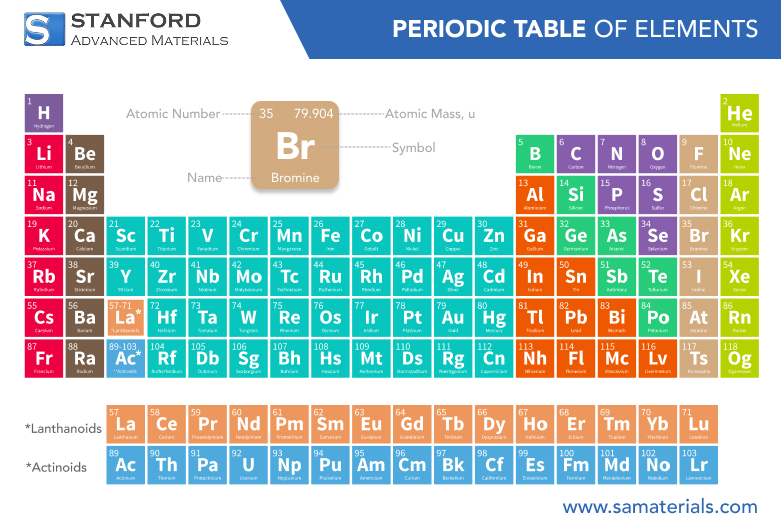
Bromine the Element
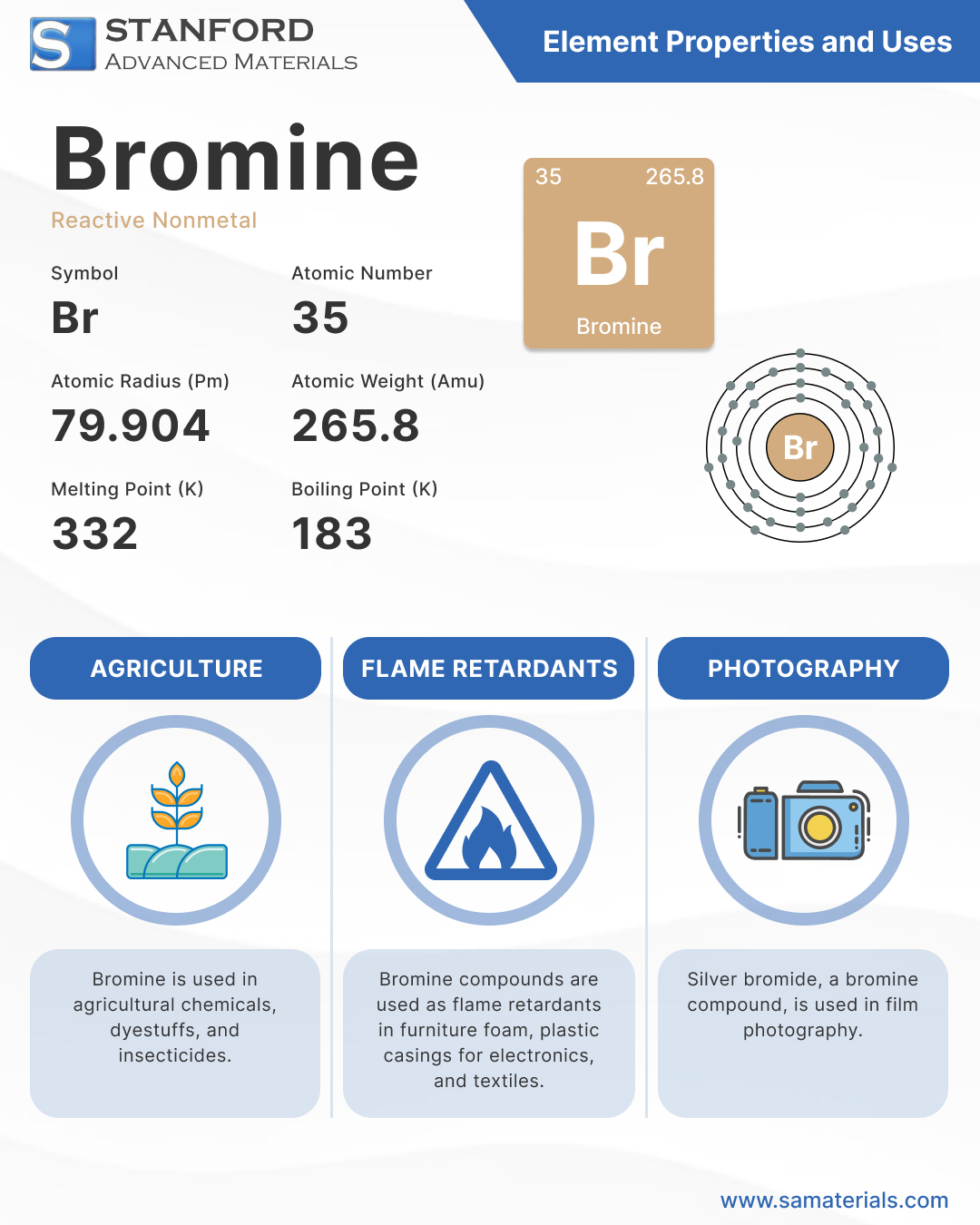
Bromine is a member of the halogens and its chemical symbol is Br; it has an atomic number of 35. Bromine is one of only two elements that exist as a liquid at room temperature; thus, it differs from most other nonmetals, which are either gases or solids at room temperature. Bromine occurs naturally in seawater and as salt deposits, is known to have been used for centuries, and today finds significant uses both scientifically and industrially. This introduction to the element outlines its occurrence, basic characteristics, and historical significance in both nature and technology.
The peculiar reddish-brown color and high density of bromine make it a very attractive subject among scientists and industrial chemists. The uniqueness of its state at room temperature has led to many uses that take advantage of the rare liquid state among elements in the periodic table. Scientists have long recognized its potential, and its versatility in chemical applications has led to a wide variety of uses.
Chemical Properties Description
The chemical properties of Bromine include complexity and diversity. The element belonging to the halogens expresses variable oxidation states, usually -1, +1, +3, +5, and +7 in various compounds. Such diversity enables this element to combine with a wide range of elements and compounds. According to the Description of Chemical Properties of Bromine, this element is capable of forming compounds with metals, nonmetals, and even organics. Its high reactivity is reflected in its role as an oxidizer, especially in reactions with organic substrates.
Bromine is one of the most common halogens used in the addition reaction to organic molecules. Many of its reactions are important in the synthesis of pharmaceuticals and agrochemicals. It also takes part in substitution reactions due to its electronegativity. These properties are important to know for the safe handling of Bromine in both the laboratory and industry.
Preparation Methods
Preparation methods for Bromine usually involve the extraction of the element from naturally occurring sources. Industrial production usually starts either with salt brine or seawater, where Bromine is present in the form of bromide ions. These are subjected to oxidation to produce elemental Bromine. One of the common techniques involves the treatment of solutions containing bromide with chlorine gas that liberates Bromine. Other techniques include electrolysis and the use of oxidizing agents to release Bromine from its compounds.
All these preparation methods have been refined over the years for maximum yield and purity. Safety is very important during the extraction process because of Bromine's volatility and corrosiveness, which require careful handling. The methods that are used ensure high-quality Bromine suitable for various industrial and research purposes.
Common Uses
Large amounts of bromine go into a variety of uses, reflecting its unique properties. One common application for bromine is in the manufacture of flame retardants. Brominated organic compounds are used to impart non-flammability upon plastics and textiles. Bromine also finds significant use in the preparation of pesticides and disinfectants, useful in the disinfection of water supplies besides serving to inhibit the spread of harmful microorganisms.
Other common applications include its use in the manufacture of photographic chemicals, some types of pharmaceuticals, and even as a catalyst in many chemical reactions. The fact that it reacts with organic compounds ensures its role in modern advanced material development, including the production of polymers. These varied applications demonstrate the importance of Bromine within today's industrial and research environments.
Related Industrial Products
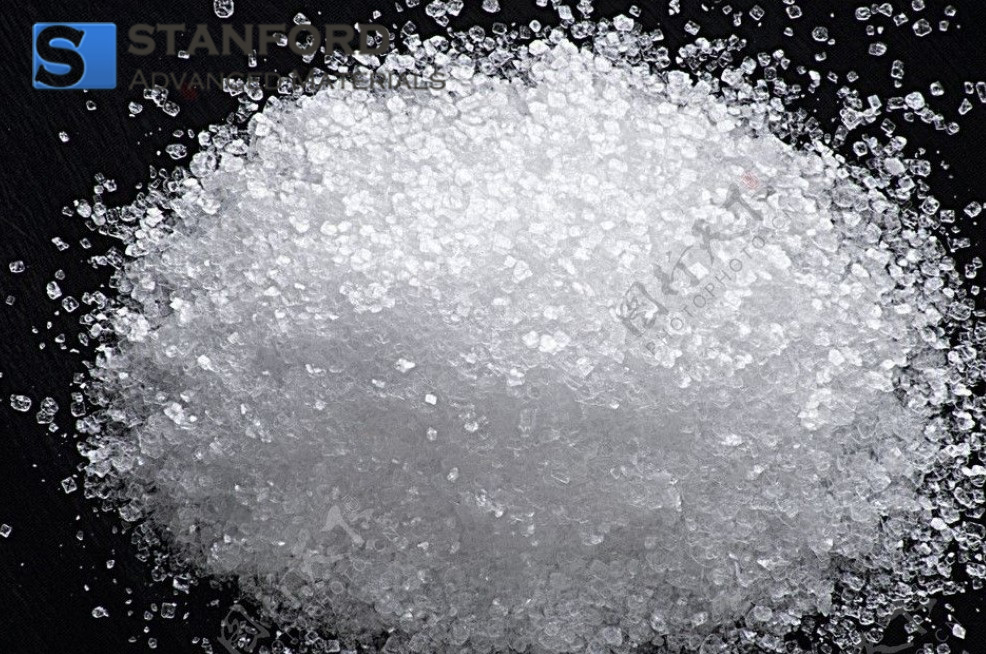
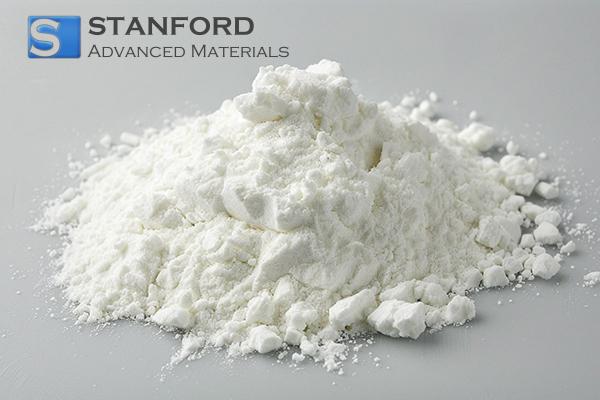
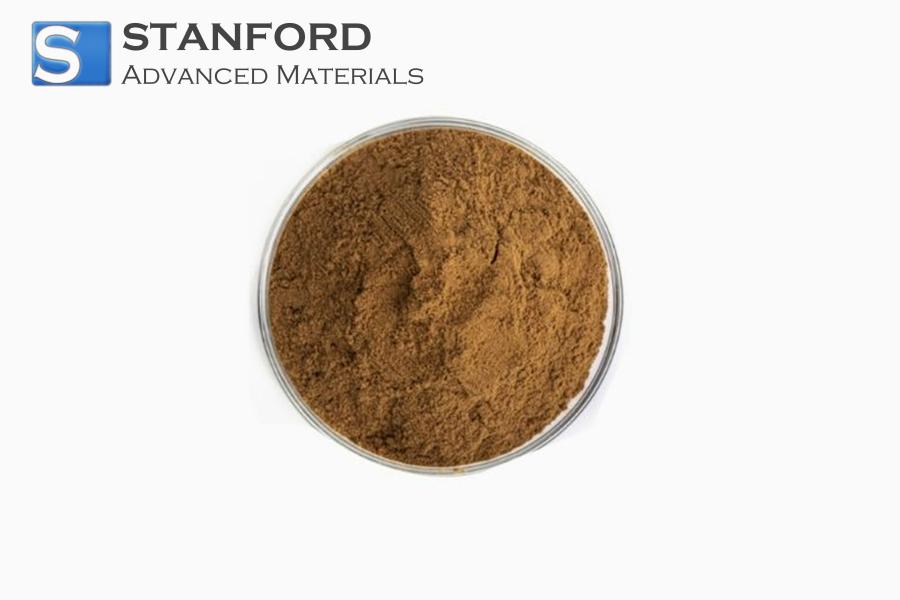
The chemical versatility of Bromine has stimulated the development of many related industrial products. One of the most important product groups is the brominated flame retardants, which save electronic devices, furniture, and construction materials from fire hazards. Among related industrial products are brominated solvents for cleaning and degreasing in many manufacturing processes.
Bromine compounds are also vital for the pharmaceutical industry where they are used in the synthesis of drugs and therapeutic agents. Besides this, chemicals with Bromine as an active element are found in various agrochemicals, which protect crops from pests and diseases. The array of associated industrial products makes Bromine a critical chemical reagent and industrial raw material. For more information, please check Stanford Advanced Materials (SAM).
Frequently Asked Questions
What is the atomic number of Bromine?
The atomic number of Bromine is 35.
How is bromine usually obtained industrially?
It is produced by the oxidation of seawater or salt brines, usually with chlorine gas or by electrolysis.
What are the major applications of bromine compounds?
They are primarily used in flame retardants, pesticides, water treatment chemicals, and in the synthesis of organic compounds.
How do physical properties of Bromine influence its applications?
Its liquid state, distinctive color, and high density allow for unique handling and application in a few specific industrial processes.
Are Bromine compounds used within the pharmaceutical industry?
Yes, many Bromine compounds are necessary for the synthesis of pharmaceuticals and other therapeutic agents.
 Chin Trento