
 Products
 Bars
Bars
 Beads & Spheres
 Bolts & Nuts
 Crucibles
 Discs
Discs
 Fibers & Fabrics
 Films
Films
 Flake
Flake
 Foams
Foams
 Foil
Foil
 Granules
 Honeycombs
 Ink
Ink
 Laminate
 Lumps
Lumps
 Meshes
 Metallised Film
 Plate
Plate
 Powders
 Rod
Rod
 Single Crystals
 Sputtering Target
 Tubes
Tubes
 Washer
 Wires
Wires
 Converters & Calculators
 Write for Us



Arsenic: Element Properties, Toxicity, and Industrial Uses

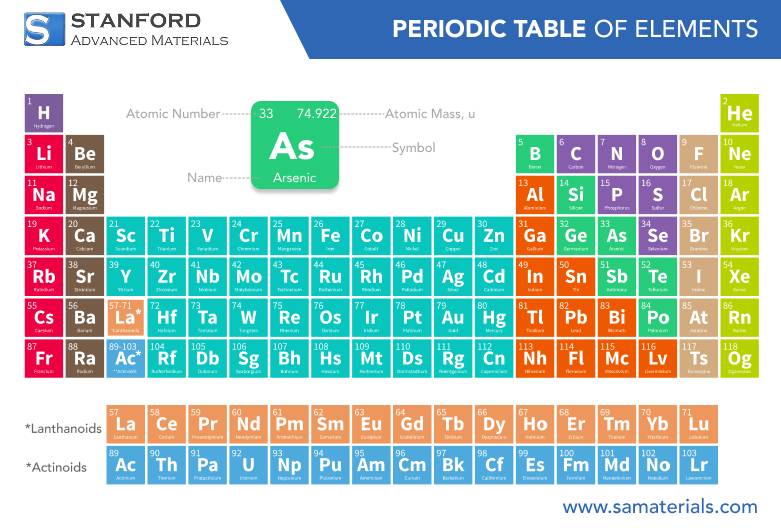
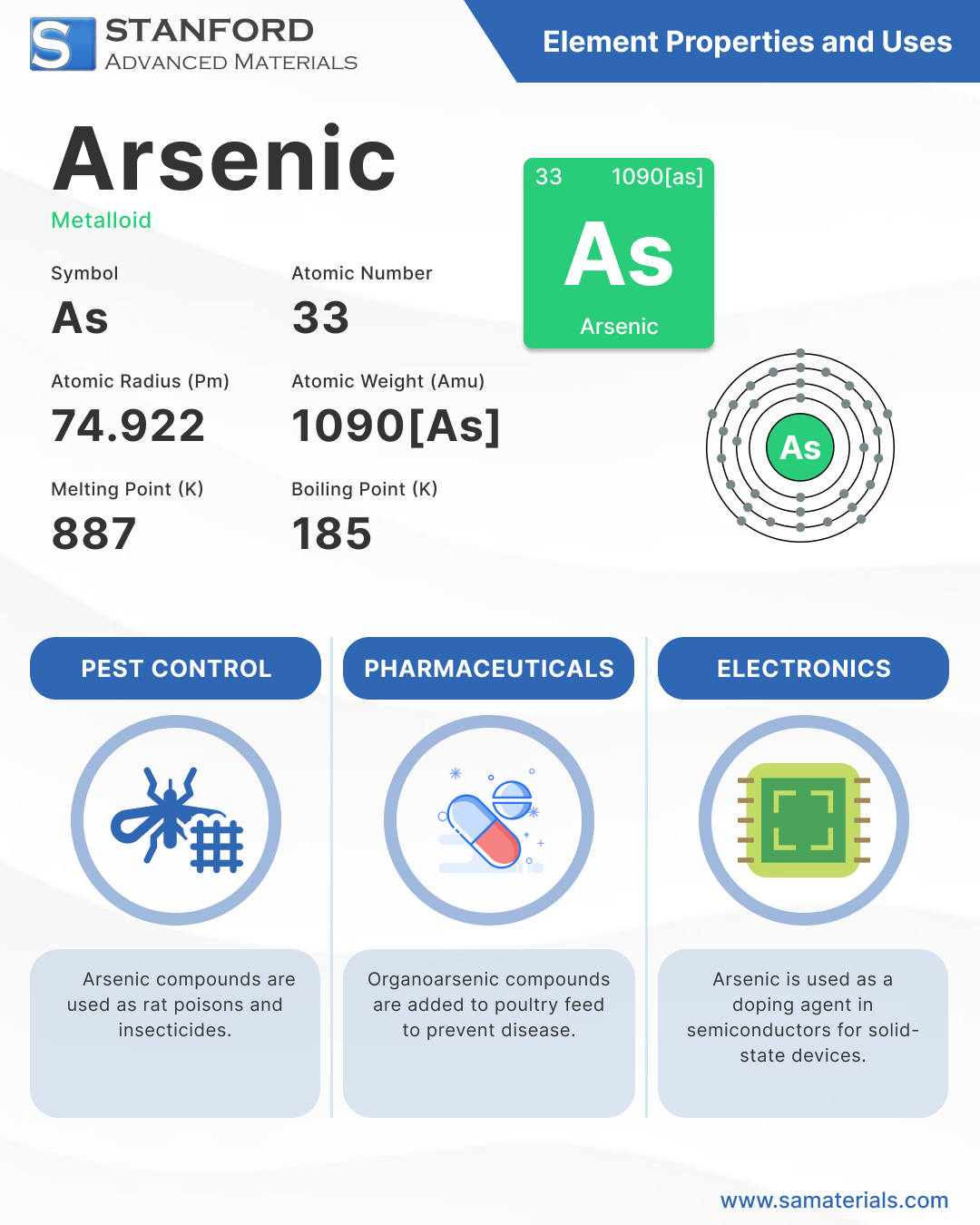
Arsenic is a chemical element with the symbol As and the atomic number 33. Arsenic exists as a metalloid chemical element that finds a special position in the periodic table due to its dual characteristics of metals and non-metals; as a result of these dual aspects, arsenic has been historically both scientifically significant and useful as well as dangerously toxic within the natural environment.
Arsenic has had both positive and negative uses through its history: technology enabler in recent electronics and medicine, or toxic killer in major environmental and health disasters. To use it or to deal with it effectively, one has to be aware of its properties.
Chemical Properties and Reactivity
Arsenic displays an interesting range of chemical properties related to its tendency to display a variety of oxidation states. Its three main known oxidation states comprise the -3, +3, and +5 class compounds.
In its −3 oxidation state, arsenic forms arsenides, typically as a result of a chemical reaction with metals like gallium and indium. Arsenic compounds are very important in semiconductor applications. Arsenites and arsenates are referred to as arsenic compounds when they have oxidation states of +3 and +5, respectively. Arsenites are more reactive and toxic, while arsenates are chemically very similar to phosphate compounds and thus disrupt the phosphate metabolism of bodies.
Arsenic readily combines with oxygen, sulfur, and halogens and produces arsenic trioxide (As₂O₃), arsenic pentoxide (As₂O₅), and arsenic sulfides. In general, arsenic compounds are thermally stable but are chemically hazardous if soluble in water or can volatilize.
Physical Properties
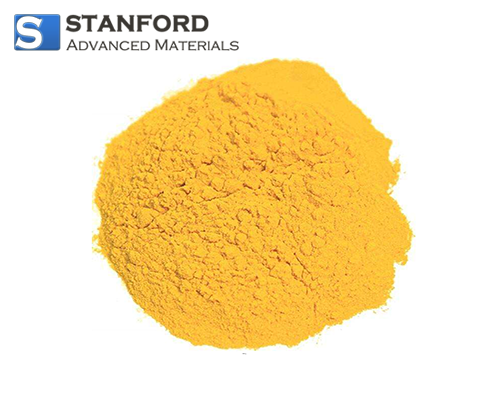
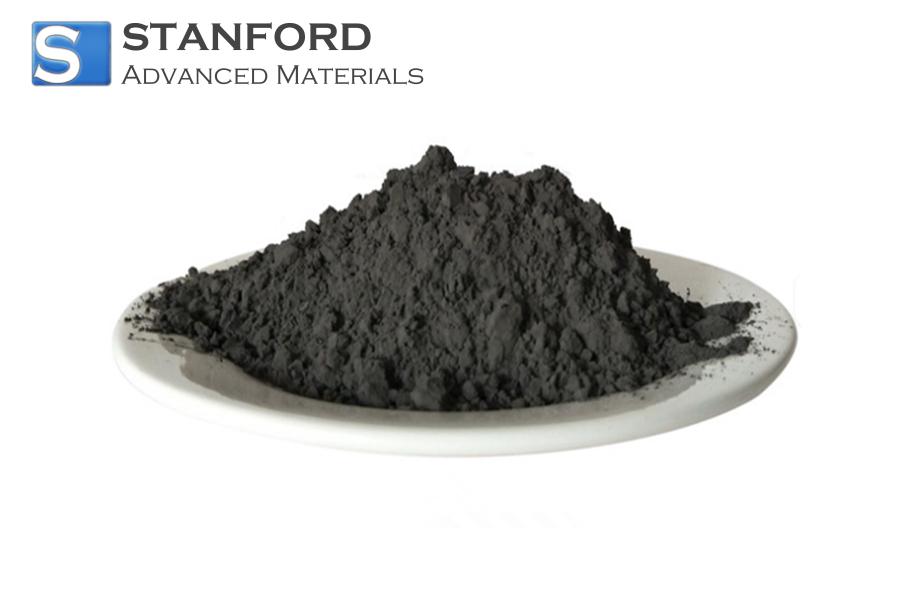
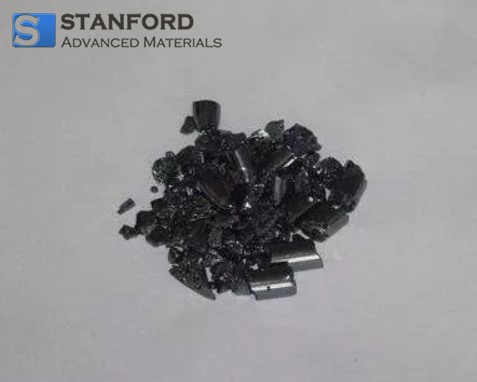
Arsenic exists in several allotropic forms, the most common being gray arsenic, which has a metallic appearance and crystalline structure. Less stable forms include yellow arsenic, which is amorphous and highly reactive, and black arsenic, which has properties similar to phosphorus.
|
Property |
Value |
|
Density |
5.776 g/cm³ (at 20°C) |
|
817 °C (1090 K) |
|
|
Boiling Point |
613 °C (886 K) |
|
Color |
Gray metallic or yellow in powder form |
|
State |
Solid at room temperature |
For more information, please check Stanford Advanced Materials (SAM).
Toxicity and Health Effects
One of the key defining characteristics of arsenic is its toxicity. Inorganic arsenic compounds, for instance, like arsenic trioxide and arsenite salts, have been found to be very toxic. They have been classified under Group 1 Carcinogens by the WHO.
Arsenic affects critical biological chemistry through its ability to bind to sulfhydryl groups in enzymes and proteins. Binding of sulfhydryl to these enzymes causes problems in cellular respiration. Prolonged exposure to arsenic can produce serious health problems:
- Skin lesions and hyperpigmentation
- Cardiovascular disease
- Peripheral neurop
- Liver and kidney damage
- Lung, bladder, and skin cancers
Perhaps the most common arsenic-related health issue that emerges is the issue of groundwater contamination, especially in locations such as South Asia, where naturally occurring arsenic is dissolved into the local water table. This leads to cumulative toxicity after consumption.
Organic arsenic compounds found in seafood have been found to be much less toxic and are readily removed by the body, which again emphasizes the role of chemical form in the biological effects of arsenic.
Preparation and Industrial Production
Arsenic is typically produced from smelter waste from copper, lead, and gold smelting operations, rather than from being mined in its own right. One of the most significant arsenic-containing minerals is arsenopyrite FeAsS.
Industrial extraction of the metal typically involves the roasting of the arsenic sulfide ore in the presence of oxygen. Arsenic trioxide vapor is formed and condensed to obtain the pure metal. Additionally, the reduction of the trioxide using carbon or hydrogen produces pure arsenic.
Due to the volatility and toxicity of arsenic compounds, modern facilities have adopted appropriate measures in their production systems to keep the environment manageable.
Specific Industrial and Technological Applications
Semiconductor and Electronics Industry
One of the most important modern uses of arsenic is in the electronics industry. Gallium arsenide (GaAs) is a key semiconductor material used in:
- High-speed integrated circuits
- Microwave frequency devices
- Satellite communication systems
- Infrared LEDs and laser diodes
Compared to silicon, gallium arsenide offers higher electron mobility and superior performance at high frequencies, making it essential for advanced telecommunications and aerospace applications.
Photovoltaics and Optoelectronics
Arsenic-based compounds are used in multi-junction solar cells, particularly in space applications. These cells achieve high conversion efficiencies and are resistant to radiation damage, making them ideal for satellites and space probes.
Medical Applications
Despite its toxicity, arsenic has legitimate medical uses. Arsenic trioxide (As₂O₃) is an FDA-approved treatment for acute promyelocytic leukemia (APL). In controlled doses, it induces apoptosis in cancer cells and has significantly improved survival rates for this otherwise aggressive leukemia subtype.
Glass and Materials Processing
Arsenic compounds are used in glass manufacturing to remove air bubbles and improve optical clarity. In specialty glass, arsenic contributes to controlled refractive indices and improved surface quality.
Wood Preservation and Alloys
Historically, arsenic was widely used in chromated copper arsenate (CCA) for pressure-treated wood, providing resistance to insects and fungal decay. Due to environmental and health concerns, its use has been significantly restricted in many countries, though legacy materials remain in use.
Arsenic is also added in small quantities to lead and copper alloys to improve hardness, corrosion resistance, and casting behavior.
Environmental and Regulatory Considerations
Due to its toxicity and persistence, arsenic is heavily regulated worldwide. Strict limits exist for arsenic concentrations in drinking water, industrial emissions, and consumer products. Environmental monitoring and remediation efforts focus on reducing exposure while managing existing contamination.
Conclusion
Arsenic is an element defined by contradiction—technologically indispensable yet biologically dangerous. Its unique chemical and physical properties enable advanced applications in electronics, medicine, and materials science, while its toxicity demands careful control and responsible use.
 Chin Trento