
 Products
 Bars
Bars
 Beads & Spheres
 Bolts & Nuts
 Crucibles
 Discs
Discs
 Fibers & Fabrics
 Films
Films
 Flake
Flake
 Foams
Foams
 Foil
Foil
 Granules
 Honeycombs
 Ink
Ink
 Laminate
 Lumps
Lumps
 Meshes
 Metallised Film
 Plate
Plate
 Powders
 Rod
Rod
 Single Crystals
 Sputtering Target
 Tubes
Tubes
 Washer
 Wires
Wires
 Converters & Calculators
 Write for Us



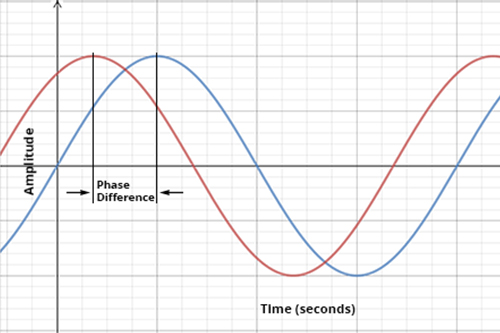
Phase: Basics and Examples

Introduction
In engineering and science, the phase theory is convenient in describing how matter would behave under different conditions. Water melting into water, steam powering a turbine, or plasma transporting electricity in a fusion reactor are just a few examples of matter phases each exhibiting a unique set of physical and chemical properties.
A phase is merely an area of uniform matter—one that has the same composition and properties across. When we talk of solids, liquids, gases, or plasma, we're really talking about different phases of the same substance, created by pressure, temperature, and energy.
States of Matter and Their Characteristics
Each state—or phase—has distinct structural and behavioral traits that determine how it responds to energy or force.
|
Property |
Solid |
Liquid |
Gas |
Plasma |
|
Shape |
Fixed |
Variable |
Variable |
Variable |
|
Volume |
Fixed |
Fixed |
Variable |
Variable |
|
Density |
High |
Moderate |
Low |
Varies |
|
Molecular Motion |
Vibrational |
Translational + Vibrational |
Rapid Translational |
Highly Energetic (Ionized) |
|
Examples |
Ice, metal blocks |
Water, oil |
Steam, air |
Lightning, solar plasma |
Solid Phase
In solids, atoms or molecules are tightly packed in a fixed arrangement. This structure gives solids a definite shape and volume. Metals, ceramics, and crystalline materials all exhibit solid-phase behavior. For example, copper remains solid and stable at room temperature, allowing it to conduct electricity efficiently in power lines without deforming.
Liquid Phase
Liquids have a definite volume but take the shape of their container. Their molecules move freely, allowing them to flow. Water and molten salts are common examples. In energy systems, liquid coolants (like liquid sodium or silicone oils) are used to transfer heat efficiently in power plants and high-temperature reactors.
Gas Phase
Gases have neither fixed shape nor volume. Their molecules move rapidly and spread out to fill any available space. Steam in turbines, for instance, is water in the gas phase—it expands, drives blades, and generates mechanical energy. This behavior is at the heart of thermal power generation.
Plasma Phase
Plasma is often called the fourth state of matter. It forms when gases are energized enough that electrons are stripped from atoms, creating an ionized mixture. Plasmas are found in lightning, fluorescent lights, and the sun. In modern technology, plasma arcs are used for welding and in fusion energy research, where they conduct electricity and respond strongly to magnetic fields.
Phase Transitions: How Matter Changes State
Phase transitions occur when temperature or pressure changes cause matter to shift from one phase to another. Each transition involves energy exchange—either absorbing or releasing heat.
|
Transition |
From |
To |
Example |
|
Melting |
Solid |
Liquid |
Ice → Water |
|
Freezing |
Liquid |
Solid |
Water → Ice |
|
Evaporation |
Liquid |
Gas |
Water → Steam |
|
Condensation |
Gas |
Liquid |
Steam → Water |
|
Sublimation |
Solid |
Gas |
Dry ice → CO₂ gas |
|
Deposition |
Gas |
Solid |
Frost formation |
These processes are not just laboratory curiosities—they power much of modern industry. For example, in steam turbines, the evaporation and condensation of water drive energy cycles that produce electricity. Similarly, in cryogenic systems, gases like nitrogen and helium are condensed into liquids for cooling superconductors and electronic systems.
Phase Diagrams: A Map of Material Behavior
A phase diagram shows how a material’s phase changes with temperature and pressure. It tells you where solid, liquid, and gas phases exist and where they can coexist.
For example:
- Water’s triple point occurs at 0.01°C and 611.657 Pa, where solid, liquid, and vapor phases coexist.
- Iron’s phase diagram is essential in metallurgy—it guides how steel is heated and cooled to achieve desired hardness and strength.
Understanding these diagrams is critical in designing materials for power plants, where metals must endure both high temperatures and rapid thermal transitions.
Applications in Electrical Power and Materials Science
Phases and phase transitions directly influence how materials perform in electrical and energy systems:
- Solid Conductors: Metals like copper and aluminum maintain a solid phase under normal operation, providing stable electrical pathways.
- Superconductors: At very low temperatures, some materials enter a new phase—the superconducting phase—where electrical resistance drops to zero.
- Phase-Change Materials (PCMs): Used in thermal energy storage, PCMs absorb and release heat as they switch between solid and liquid phases, stabilizing temperature in power systems or electronic devices.
- Plasma in Energy Generation: In fusion reactors, plasma is confined and heated to millions of degrees to enable nuclear fusion—the same process that powers the sun.
Each of these examples shows how understanding phase behavior is key to advancing energy efficiency, safety, and performance in modern technologies.
Frequently Asked Questions
What is a phase in scientific terms?
A phase is a region of matter with uniform physical and chemical properties—like a solid, liquid, gas, or plasma.
Can a substance exist in multiple phases at once?
Yes. At specific temperature and pressure conditions (e.g., the triple point), a material can exist simultaneously as a solid, liquid, and gas.
Why is plasma considered a separate phase?
Because it consists of charged particles (ions and electrons) that behave differently from neutral gases, responding to electromagnetic fields.
How are phases relevant to electrical power systems?
Phases influence conductivity, cooling efficiency, and material stability—key factors in turbines, transformers, and superconductors.
Why is understanding phases important in materials science?
It helps predict how materials respond to temperature, pressure, and energy—vital for designing durable, high-performance systems.




 Chin Trento