

 Products
 Bars
Bars
 Beads & Spheres
 Bolts & Nuts
 Crucibles
 Discs
Discs
 Fibers & Fabrics
 Films
Films
 Flake
Flake
 Foams
Foams
 Foil
Foil
 Granules
 Honeycombs
 Ink
Ink
 Laminate
 Lumps
Lumps
 Meshes
 Metallised Film
 Plate
Plate
 Powders
 Rod
Rod
 Single Crystals
 Sputtering Target
 Tubes
Tubes
 Washer
 Wires
Wires
 Converters & Calculators
 Write for Us



Polymorph: Multiple Forms of Matter

Description
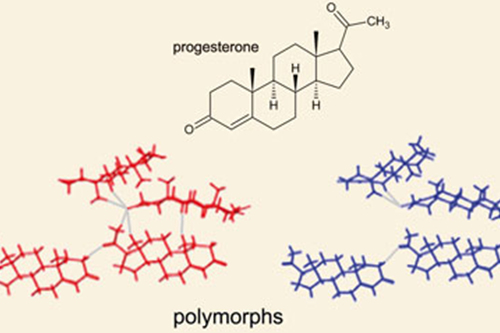
It is a phenomenon whereby a substance can exist in more than one form or crystal structure, with the same chemical composition. The various forms, otherwise known as polymorphs, will come about because of differences in the way atoms or molecules are arranged in the solid structure. Polymorphism plays an important role in chemistry, materials science, and pharmaceuticals because these different forms can exhibit distinct physical, chemical, and mechanical properties.
Basics of Polymorphism
At its core, polymorphism occurs when a material can crystallize in more than one arrangement, even though its molecular or atomic makeup remains unchanged. The unique crystal structures are called polymorphs. These distinct arrangements affect how the substance behaves, including its solubility, stability, melting point, and optical properties. The particular arrangement of the molecules in the crystal lattice defines the material's macroscopic properties and can vary significantly with the polymorph.
The techniques to identify the polymorphs include X-ray diffraction, showing crystalline structure, and thermal analysis methods such as differential scanning calorimetry, which detect differences in melting points and thermal behaviors.
Types of Polymorphs
The conditions under which they form can classify polymorphs into different categories:
- Stable Polymorph: This is the thermodynamically most stable form at a certain temperature and pressure. This tends to be the most abundant and persistent form of the material under ordinary conditions.
- Metastable Polymorph: These polymorphs are stable only under specific conditions and may transform into the stable polymorph over time or under changes in temperature or pressure.
- Amorphous Forms: Although not strictly considered a polymorph, amorphous solids such as glasses have no ordered internal structure compared to crystalline polymorphs. They too can still show polymorphism relative to crystalline forms.
Examples of Polymorphism
- Carbon: Carbon is one of the best-known examples of polymorphism, existing in several polymorphs, including diamond and graphite. Both diamond and graphite are made completely of carbon atoms, but their properties are strikingly different. Diamond has a rigid three-dimensional tetrahedral lattice structure and is the hardest known material, whereas graphite consists of layers of carbon atoms arranged in flat planes and can be soft, slippery, and a good conductor of electricity.
- Sulfur: Sulfur also occurs in several polymorphic modifications, with the most common one being rhombic sulfur, stable at ordinary temperatures. At elevated temperatures, it usually transforms into the monoclinic sulfur modification, which is denser. The transformation between the two aforementioned forms depends on the temperature and hence leads to changes in the crystal structure of sulfur.
- Titanium Dioxide (TiO₂): One of the well-known examples of polymorphism in inorganic compounds is titanium dioxide, TiO₂. It occurs in many different polymorphs, including anatase, rutile, and brookite-the most common. These polymorphs differ in crystal structure and properties. For example, rutile is the most stable and common form of TiO₂, widely utilized in pigments, whereas anatase finds many applications in photocatalysis because of its higher surface area.
- Pharmaceuticals: In this industry, polymorphism has great importance. Many drugs occur in several polymorphs that can have big influences on their solubility, dissolution rates, and bioavailability. For instance, the drug theophylline is utilized for cases of asthma and occurs in a number of polymorphs, the effectiveness and stability of which can vary. All drug development methodology requires the eventual discovery and selection of the ideal polymorph.
- Salts and Organic Compounds: Polymorphism is also reflected in a variety of inorganic and organic salts. Classic examples include copper sulfate, CuSO₄, which can exist in several polymorphs, like pentahydrate and monohydrate, simply based on different water content. Organic compounds such as ibuprofen and paracetamol exhibit polymorphism, and one form may have higher solubility compared to another or faster dissolution rates, hence becoming important during the development and formulation processes in the design of drugs.
Applications of Polymorphism
Applications of polymorphism are innumerable and vary greatly among various fields:
- Pharmaceuticals: Polymorphs of drugs can affect their effectiveness, stability, and manufacturing processes. Pharmaceutical companies study polymorphism with care in order to optimize the solubility and bioavailability of drugs. A suitable polymorph is selected for the formulation of drugs to ensure their better absorption in the body.
- Materials Science: Polymorphism plays a role in the creation of advanced materials, particularly in the development of new polymers, semiconductors, and nanomaterials. The different physical properties of polymorphs, such as hardness, conductivity, or transparency, can be tailored for specific uses.
- Food Industry: Polymorphism can also be seen in some food ingredients such as cocoa butter and sugar. The different crystal forms of these substances could affect the texture, mouthfeel, and quality of food products. For example, chocolate's crystalline form will affect its smoothness and melting point, hence its quality in its final product.
- Chemistry and Catalysis: Some chemical reactions may have a predisposition toward the formation of one polymorph over the other according to the reaction conditions. Study of polymorphism in catalysis enables the preparation of more active and selective catalysts, especially for industrial applications.
Frequently Asked Questions
What is the difference between polymorphs and allotropes?
Whereas allotropes are structural forms of an element, polymorphs refer to different forms in which a particular substance might crystallize. Carbon is said to have different allotropes, namely diamond and graphite. In most cases, however, the term polymorph is used for compounds that are crystallizing in more than one form.
Why is polymorphism important in the pharmaceutical industry? The reason is that the different polymorphic forms of one and the same drug have different properties, like solubility and bioavailability. The correct polymorph can enhance a drug's effectiveness, stability, and manufacturing process.
Can polymorphs change from one form to another?
Yes, polymorphs can undergo transformation from one form to another, especially upon variation of temperature, pressure, or environmental conditions. That mostly happens with metastable polymorphs converting to the most stable forms gradually.
Are polymorphs always stable?
No, not all polymorphs are stable; some of them are metastable and exist only under particular conditions, transforming into the most stable form when the conditions change.
How do scientists identify polymorphs?
The crystal forms of many substances are investigated by scientists using techniques such as X-ray diffraction. Other techniques like thermal analysis and spectroscopy can also help in the identification of polymorphs by detecting differences in properties like melting points and solubility.

 Chin Trento