Products
 Bars
Bars
 Beads & Spheres
 Bolts & Nuts
 Crucibles
 Discs
Discs
 Fibers & Fabrics
 Films
Films
 Flake
Flake
 Foams
Foams
 Foil
Foil
 Granules
 Honeycombs
 Ink
Ink
 Laminate
 Lumps
Lumps
 Meshes
 Metallised Film
 Plate
Plate
 Powders
 Rod
Rod
 Single Crystals
 Sputtering Target
 Tubes
Tubes
 Washer
 Wires
Wires
 Converters & Calculators
 Write for Us



Oxidation States: Key Concepts, Factors, and Real-World Applications

Introduction
In chemistry, the concept of oxidation state serves as a vital tool for tracking the flow of electrons—an invisible but essential process governing everything from rusting iron to battery performance. Whether you are studying biological respiration, designing industrial catalysts, or predicting environmental reactions, understanding oxidation states allows you to describe, balance, and manipulate chemical transformations with precision.
What Is the Oxidation State?
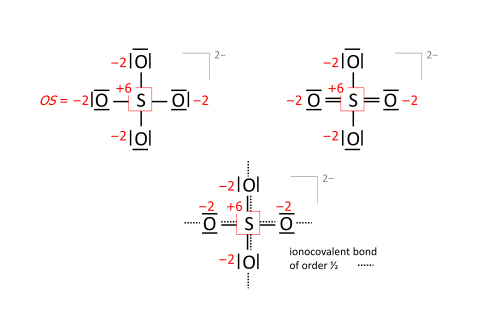
An oxidation state (or oxidation number) describes the effective charge of an atom within a compound. It reflects the number of electrons an atom has lost (positive oxidation state) or gained (negative oxidation state) relative to its elemental form.
For example:
- In H₂O, each hydrogen has an oxidation state of +1, and oxygen is –2.
- In Fe₂O₃, iron is +3, balancing oxygen’s –2 to maintain neutrality.
Tracking these values reveals how electrons move in redox reactions—those involving reduction and oxidation.
Key Concepts and Rules
Chemists use several standard rules to assign oxidation states:
- Pure elements have an oxidation state of 0. (e.g., O₂, N₂, Fe)
- Monatomic ions have oxidation states equal to their charge. (e.g., Na⁺ = +1)
- Oxygen is usually –2, except in peroxides (–1) or with fluorine (+2).
- Hydrogen is +1 with nonmetals and –1 with metals.
- Fluorine is always –1 due to its highest electronegativity (3.98 on the Pauling scale).
- The sum of oxidation states equals zero in neutral compounds or equals the ion’s charge in polyatomic ions.
For instance, in KMnO₄, K is +1 and O is –2. Solving for Mn gives +7—its highest stable oxidation state.
Factors Affecting Oxidation States
1. Electronegativity
An element’s electronegativity determines whether it tends to lose or gain electrons. Higher electronegativity elements (like oxygen, fluorine, and chlorine) attract electrons, giving them negative oxidation states.
For example:
- Sulfur ranges from –2 (in H₂S) to +6 (in H₂SO₄), depending on the presence of electronegative oxygen.
- Chlorine can vary from –1 (in NaCl) to +7 (in HClO₄), a property that makes it both a strong oxidizer and a disinfectant.
This variability helps explain why halogens and transition metals are so chemically versatile.
2. Valence Electrons and d-Orbital Involvement
Transition metals often exhibit multiple oxidation states because of their accessible d-orbitals.
For instance:
- Iron (Fe): +2 in FeCl₂, +3 in FeCl₃.
- Manganese (Mn): +2 in MnCl₂, +4 in MnO₂, +7 in KMnO₄.
- Copper (Cu): +1 in Cu₂O, +2 in CuO.
This flexibility is exploited in industrial catalysis. For example, vanadium(V) oxide (V₂O₅) cycles between V⁵⁺ and V⁴⁺ in the Contact Process for sulfuric acid production—one of the world’s largest chemical industries, producing over 150 million tons of H₂SO₄ annually.
Common Oxidation States
|
Element |
Common Oxidation States |
Example Compound |
Electrode Potential (V) |
Key Application |
|
Hydrogen |
+1, –1 |
H₂O, NaH |
— |
Fuels, acids, hydrides |
|
Carbon |
–4, +2, +4 |
CH₄, CO₂ |
— |
Organic and CO₂ chemistry |
|
Nitrogen |
–3, +3, +5 |
NH₃, HNO₃ |
–0.28 (NO₃⁻/NO₂) |
Fertilizers, explosives |
|
Oxygen |
–2 |
H₂O, CO₂ |
+1.23 (O₂/H₂O) |
Energy conversion, corrosion |
|
Iron |
+2, +3 |
Fe²⁺/Fe³⁺ |
+0.77 |
Batteries, metallurgy |
|
Copper |
+1, +2 |
Cu⁺/Cu²⁺ |
+0.34 |
Electrical conductors, catalysis |
|
Manganese |
+2, +4, +7 |
MnCl₂, MnO₂, KMnO₄ |
+1.51 (MnO₄⁻/Mn²⁺) |
Oxidants, dry cells |
|
Chromium |
+2, +3, +6 |
CrCl₂, Cr₂O₃, CrO₃ |
+1.33 (Cr₂O₇²⁻/Cr³⁺) |
Pigments, stainless steel |
|
Sulfur |
–2, +4, +6 |
H₂S, SO₂, H₂SO₄ |
+0.45 (SO₄²⁻/S) |
Environmental chemistry |
This table demonstrates how oxidation state correlates with redox potential—a measure of an element’s tendency to gain or lose electrons, essential in designing energy systems and electrochemical cells. For more information, please check Stanford Advanced Materials (SAM).
Applications of Oxidation States
1. Redox Reactions and Energy Storage
In electrochemical systems such as batteries and fuel cells, oxidation states dictate how energy is stored and released.
- In a Zn–C battery, zinc oxidizes from 0 to +2 (Zn → Zn²⁺ + 2e⁻), while manganese dioxide reduces from +4 to +3.
- In lithium-ion batteries, lithium cycles between 0 (in Li metal) and +1 (in Li⁺ within the electrolyte), while cobalt in LiCoO₂ fluctuates between +3 and +4 during charge/discharge cycles.
These oxidation-state changes underpin battery voltage and capacity. For instance, the LiCoO₂/Li half-cell operates at around 3.9 V, offering high energy density because each cobalt atom can reversibly change oxidation state.
2. Catalysis and Industrial Chemistry
Variable oxidation states are central to catalytic activity.
- Fe²⁺/Fe³⁺ redox cycling enables the Fenton reaction, producing hydroxyl radicals for wastewater treatment.
- V⁵⁺/V⁴⁺ pairs in V₂O₅ catalysts oxidize SO₂ to SO₃ at over 98% efficiency.
- Pt and Pd catalysts, shifting between 0 and +2 states, accelerate the conversion of CO and NOₓ in car exhaust systems.
These mechanisms show how oxidation-state manipulation leads to cleaner energy, efficient synthesis, and environmental protection.
3. Environmental and Biological Systems
Nature is full of oxidation-state transitions:
- The nitrogen cycle involves nitrogen shifting from –3 (NH₃) → 0 (N₂) → +5 (NO₃⁻). These transitions are driven by microbial enzymes and are vital for agriculture and atmospheric balance.
- In biological respiration, iron in hemoglobin alternates between Fe²⁺ and Fe³⁺ as it binds and releases oxygen—a process essential for life.
- Atmospheric oxidation of SO₂ to SO₄²⁻ (ΔE° ≈ +0.45 V) contributes to acid rain formation, a key environmental challenge.
Conclusion
Oxidation states form the invisible framework behind every chemical transformation. By tracking how elements shift between oxidation levels, scientists can design better catalysts, optimize energy storage, and understand processes from cellular respiration to industrial synthesis.
In a world increasingly driven by electrochemical and sustainable technologies, mastering oxidation-state behavior isn’t just academic—it’s essential.
For further technical data and advanced materials for oxidation and redox applications, visit Stanford Advanced Materials (SAM).





 Chin Trento