
 Products
 Bars
Bars
 Beads & Spheres
 Bolts & Nuts
 Crucibles
 Discs
Discs
 Fibers & Fabrics
 Films
Films
 Flake
Flake
 Foams
Foams
 Foil
Foil
 Granules
 Honeycombs
 Ink
Ink
 Laminate
 Lumps
Lumps
 Meshes
 Metallised Film
 Plate
Plate
 Powders
 Rod
Rod
 Single Crystals
 Sputtering Target
 Tubes
Tubes
 Washer
 Wires
Wires
 Converters & Calculators
 Write for Us



Magnetic Properties of Materials: What You Need to Know

Origin of Magnetic Behavior (Electron Spin and Orbital Motion)
Magnetism originates in the behavior of electrons within materials. An electron has a property called spin, which effectively generates a small magnetic field. The orbit of the electrons around the nucleus also contributes to this effect. To put it simply, the motion and spin of electrons determine whether a material exhibits magnetic behavior. This rather simple explanation provides a good basis for more involved magnetic behavior exhibited by different materials.
Types of Magnetic Materials
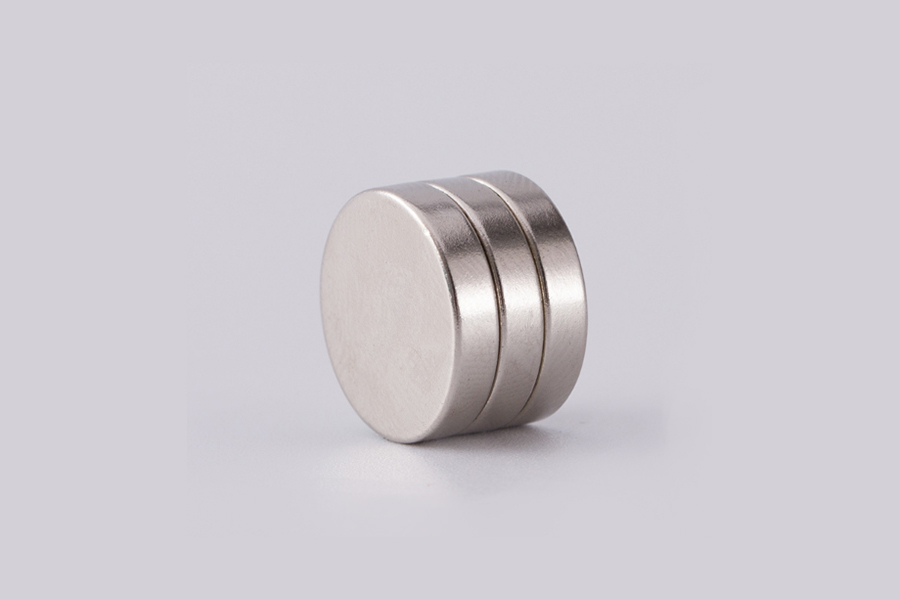
Magnetic properties make certain materials fall into different categories. Some of the materials are naturally attracted to magnets. These are generally known as ferromagnetic materials. Others are either repelled or only weakly attracted to magnets. This category includes paramagnetic and diamagnetic materials. Some materials have mixed properties. Their characteristics depend on how their atomic magnetic moments interact, acting as antiferromagnetic or ferrimagnetic. Each category has different properties and practical uses.
Key Magnetic Properties Explained
• Magnetic susceptibility
Magnetic susceptibility is defined as the degree to which a material will become magnetized in an external magnetic field. In simple terms, it tells us how easily a material responds to a magnetic force. A higher susceptibility means a stronger response.
• Permeability and hysteresis
Magnetic permeability can be explained as the ease with which a magnetic field can pass through a material. Hysteresis is the term used to explain lag in the change of magnetization on applying or removing the external field. Along with the other properties, these help in the design of transformers, electric motors, etc.
• Coercivity and remanence
Coercivity is the measure of a material's resilience to an external magnetic force without losing its magnetization. Remanence is the residual magnetism left in a material after an external magnetic field has been removed. These two properties are both of great importance when engineering permanent magnets or magnetic recording media.
• Curie temperature
The Curie temperature is the point at which a magnetic material loses its magnetism when heated. Above this temperature, the material is no longer in an orderly magnetic state. This temperature is critical for applications of magnets where there are extremely high temperatures.
Factors Affecting Magnetic Behavior
- Temperature
Temperature plays an important role. An increased temperature can raise atomic vibrations. These atomic vibrations disturb magnetic moments alignment. Thus, the magnetic order is weakened. Lower temperatures usually help in sustaining magnetic properties.
- Material structure and composition
Magnetism is influenced by both the ordering of atoms and the type of elements present. Often, a well-ordered crystal structure favors strong magnetic interactions. Mixing different elements into an alloy can change the overall behavior. It depends also on the chemical bonds and the composition of alloys.
- Impurities and microstructure
Small impurities or defects in the material can produce magnetic effects. These can disturb the alignment of electrons. Thus, even small deficiencies in the microstructure lead to changes in coercivity or remanence. Careful processing of the material is necessary for limiting these effects.
Mass Susceptibilities of Some Common Paramagnetic Materials
Mass susceptibility is measured to understand the response of a material to a given magnetic field per unit mass. Common paramagnetic materials, such as aluminum and platinum, show moderate mass susceptibility. For example, the mass susceptibility of aluminum is about 2.2×10⁻⁵ in SI units. Similarly, platinum shows a mass susceptibility near 2.9×10⁻⁴. Such data are useful when selecting materials for magnetic components in sensors, medical devices, or scientific instruments.
The numbers might be different for different purities and methods of preparation. Equipment design can be enhanced if materials of known mass susceptibility are used. These values often form the basis for instrument calibration and safety measures.
Conclusion
Magnetism is a fundamental property with many applications in modern life. The electrons' behavior is very critical concerning this property. Engineers and scientists make use of key differences in magnetic susceptibility, permeability, coercivity, remanence, and Curie temperature to select the right material for their needs. Temperature, structural arrangement, and impurities further influence these properties. For more strong magnet products and tech support, please check Stanford Advanced Materials (SAM).
Frequently Asked Questions
F: What is magnetic in a material?
Q: Materials exhibit magnetic behavior due to the motion and spin of electrons.
F: How does temperature affect magnetism in materials?
Q: Increasing temperature disrupts magnetic alignment and reduces magnetism.
F: What is Curie temperature?
Q: Curie temperature is the temperature when a material loses its magnetism because of heat.





 Chin Trento