Products
 Bars
Bars
 Beads & Spheres
 Bolts & Nuts
 Crucibles
 Discs
Discs
 Fibers & Fabrics
 Films
Films
 Flake
Flake
 Foams
Foams
 Foil
Foil
 Granules
 Honeycombs
 Ink
Ink
 Laminate
 Lumps
Lumps
 Meshes
 Metallised Film
 Plate
Plate
 Powders
 Rod
Rod
 Single Crystals
 Sputtering Target
 Tubes
Tubes
 Washer
 Wires
Wires
 Converters & Calculators
 Write for Us



Water for pH Measurement: What and How

Description
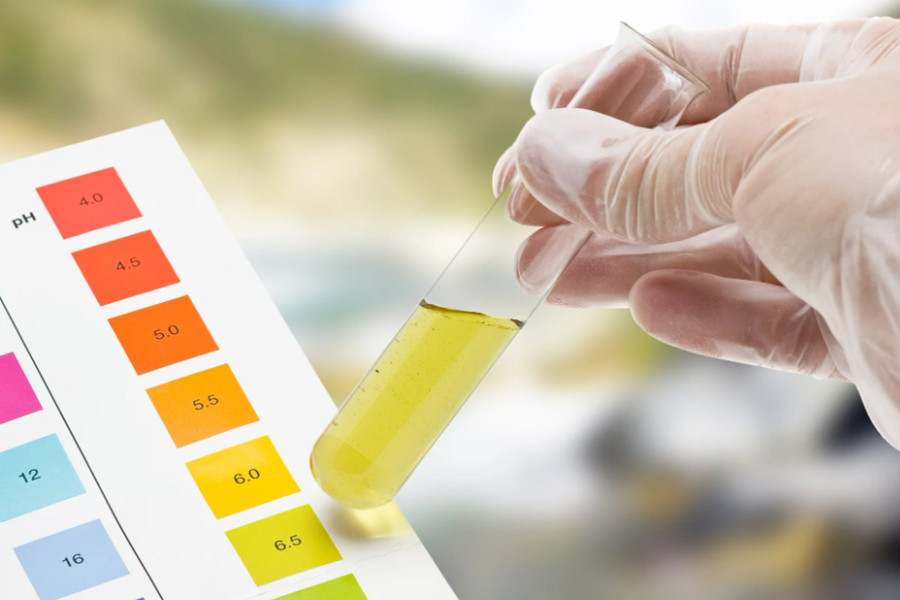
Water is central to pH measurement. Laboratory pH measurement tells us the level of alkalinity or acidity of a solution. Such water used for testing must be of high quality.
Why is pH Measured?
pH is measured by scientists because it is among the most significant indicators of chemical balance. pH guides decision-making in environmental monitoring, industrial processes, and quality control. A change in pH can signal trouble in wastewater discharge or water treatment. In many cases, pH measurement is needed for safety. For chemical plants, it ensures operation within safe pH ranges. In applications like agriculture, pH can determine if water is appropriate for irrigation. Water that's either too acidic or too alkaline can corrode equipment and living tissue. In brief, pH measurement allows workers to track the characteristics of a solution effectively and quickly.
Effect of Water Contaminants on pH
Low concentrations of water contaminants can affect pH. Some common contaminants include dissolved carbon dioxide, organic material, and heavy metals. These contaminants may be due to industrial wastewater or natural processes. Carbon dioxide is soluble in water and forms a weak acid. Heavy metals also react with water and alter its pH. Organic compounds also have the same effects. Very strict water quality standards have been implemented in most laboratories to avoid such instances. Even minimal changes can lead to pH reading inaccuracies. Proper filtering and treatment are necessary in areas where accuracy is required. This measure is especially important in research centers and production facilities. Pure water ensures pH meter calibrations are accurate and the results are trustworthy.
What is Ultrapure Water pH?
Ultrapure water is extremely purified water to remove most impurities. It is common in scientific labs and manufacturing setups. It is possible to imagine that ultrapure water will be of pH 7. Its pH will be different, however. When ultrapure water comes in contact with air, it dissolves carbon dioxide. This absorption can lower its pH and make it slightly acidic. Under laboratory controlled conditions, ultrapure water should have a pH of near 7. In most cases, however, it may show readings ranging from 5.5 to 7. This is depending on factors like storage time, exposure to air, and temperature. These realities make it important to treat ultrapure water appropriately before use.
Wet Chemical Analysis and pH Measurement
Wet chemical analysis offers another method of understanding pH. Although pH electrodes and meters are routine, wet chemical methods may cross-check or confirm readings. In such procedures, chemicals are added to water and the color change on the resultant is noted. With a proper titration, one can gauge the acidity or alkalinity. For instance, indicators like phenolphthalein provide visual cues when the pH passes critical thresholds. Wet chemical techniques are valued for their accuracy where equipment can fail or need assistance. In many applications, a combination of both gives a more definite picture. Such a combination is successful in environmental monitoring and quality control in industrial processes. The use of simple chemical reagents in conjunction with modern pH instrumentation is often the best result.
Conclusion
Water quality is crucial in pH measurement. Whatever the application, whether industrial, environmental, or laboratory research, contaminants must be managed. Filthy water can lead to erroneous pH readings. Ultrapure water also has its own quirks under exposure to air. Wet chemical analysis remains a useful support technique for measuring pH. For more information, please check Stanford Advanced Materials (SAM).
Frequently Asked Questions
F: Why do we measure pH?
Q: pH is a measure of the acidity or alkalinity of a solution, which is vital for safety, environmental monitoring, and process control.
F: How do impurities in water affect pH measurements?
Q: Impurities like heavy metals and carbon dioxide can change pH by creating weak bases or acids.
F: Why is the pH of ultrapure water different from what it is supposed to be?
Q: Exposure to air causes the uptake of carbon dioxide, which can lower the pH below neutral.




 Chin Trento